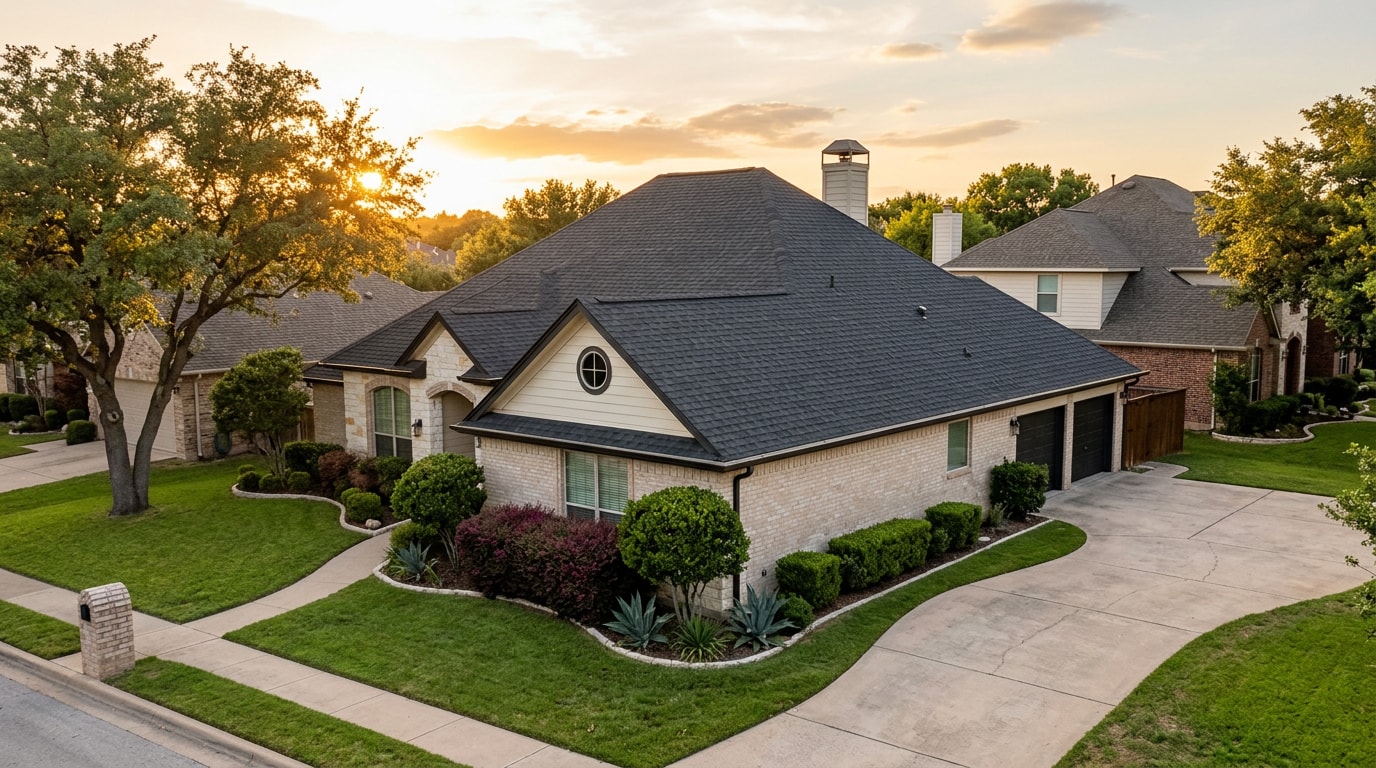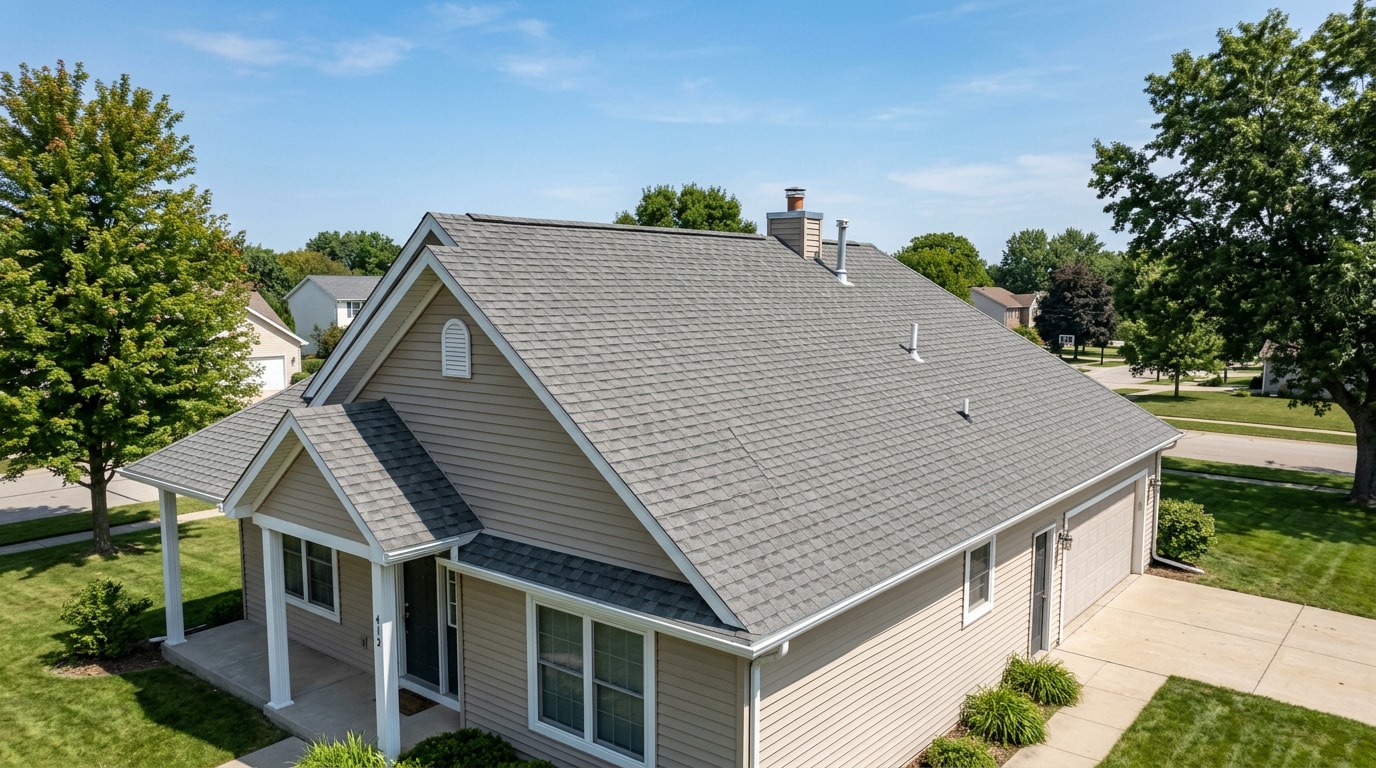
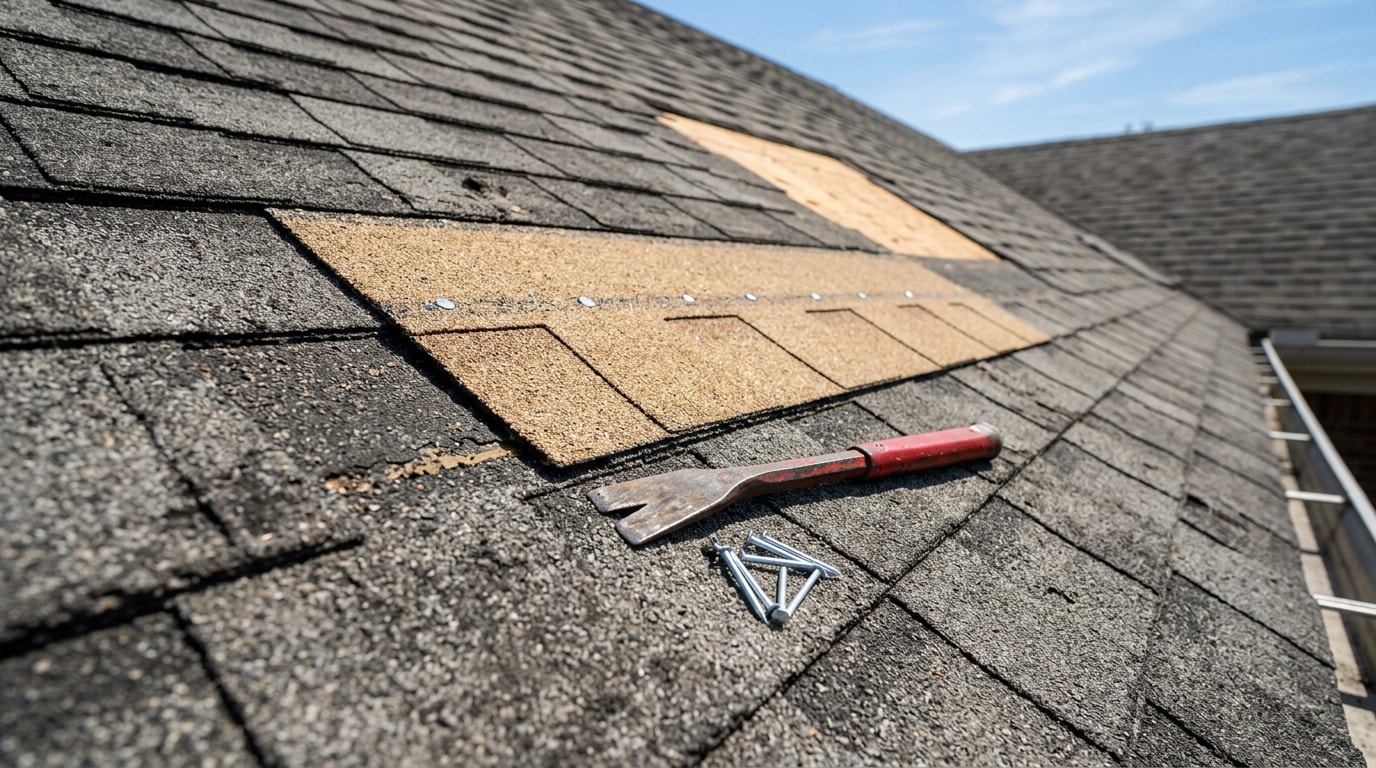
Knowing how to repair a roof shingle stops a small crack or curled edge from becoming an attic leak and a drywall repair bill. A single replacement shingle costs only a few dollars in materials, and the fix itself usually takes under an hour once you're set up safely. This guide covers diagnosis, tools, safety, and the exact steps for replacing, resealing, or patching a damaged shingle yourself.
Common Types of Roof Shingle Damage
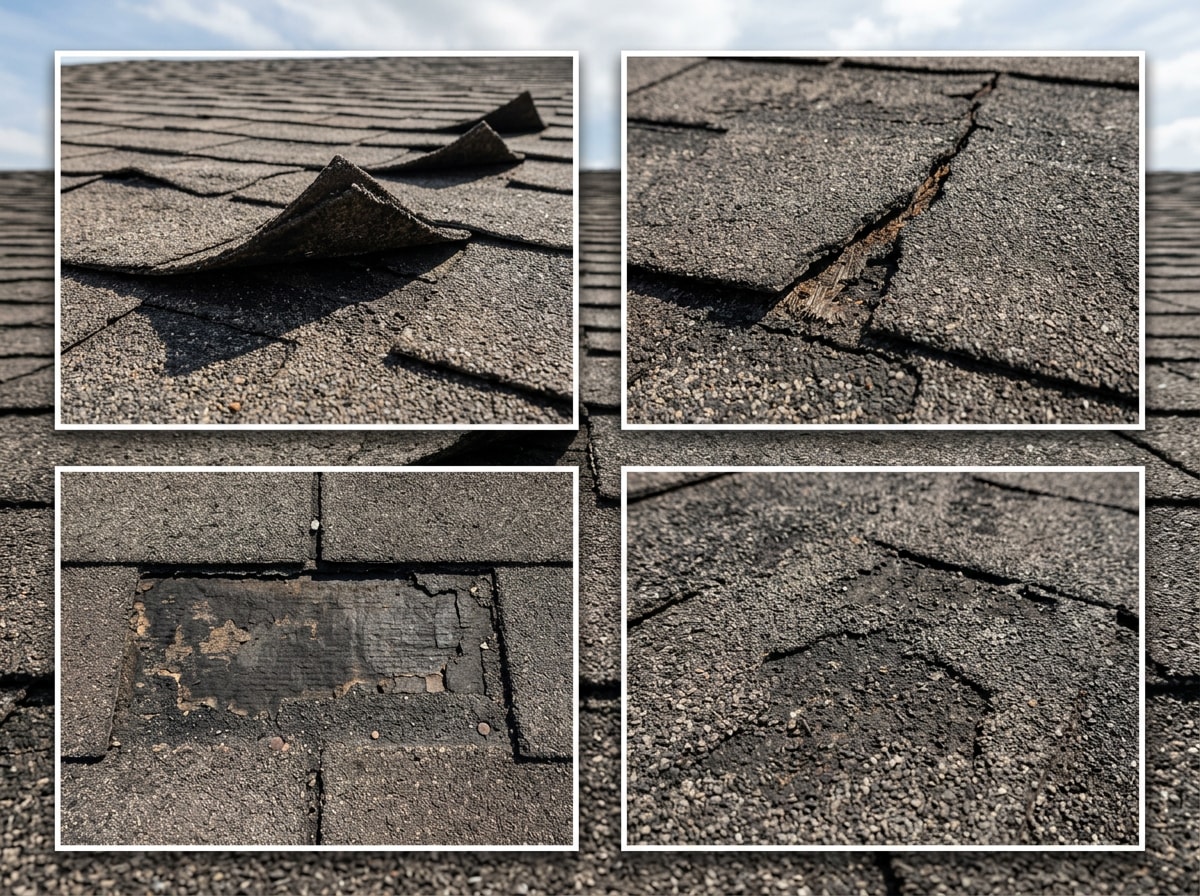
Most shingle problems fall into four categories: cracking or splitting, curling, blistering with granule loss, and shingles that have gone missing or loose entirely. The damage type you're dealing with determines which repair method applies, so identify it correctly before you climb up with tools in hand.
| Issue | Likely Cause | Fix | Repair vs. Replace? |
|---|---|---|---|
| Curling shingles | Age, poor attic ventilation, UV exposure | Sealant applied underneath, weighted flat | Repair if isolated |
| Cracked shingles | Thermal cycling, foot traffic, age | Sealant sandwich technique | Repair if minor; replace if widespread |
| Missing shingles | Wind uplift, failed nails, storm damage | Full shingle replacement | Replace |
| Blistering/granule loss | Trapped moisture, manufacturing wear, aging asphalt | Monitor; replace once bare mat shows | Replace once mat is exposed |
Granule loss isn't automatically a red flag. Shedding is usually most severe right after shingles are installed and gradually reduces over time, which is normal and not a manufacturing defect , according to GAF's own technical bulletin on the subject. Heavy, uneven loss concentrated on one section, especially on an older roof, is the pattern worth climbing up to check.
Tools and Materials Needed to Repair a Roof Shingle
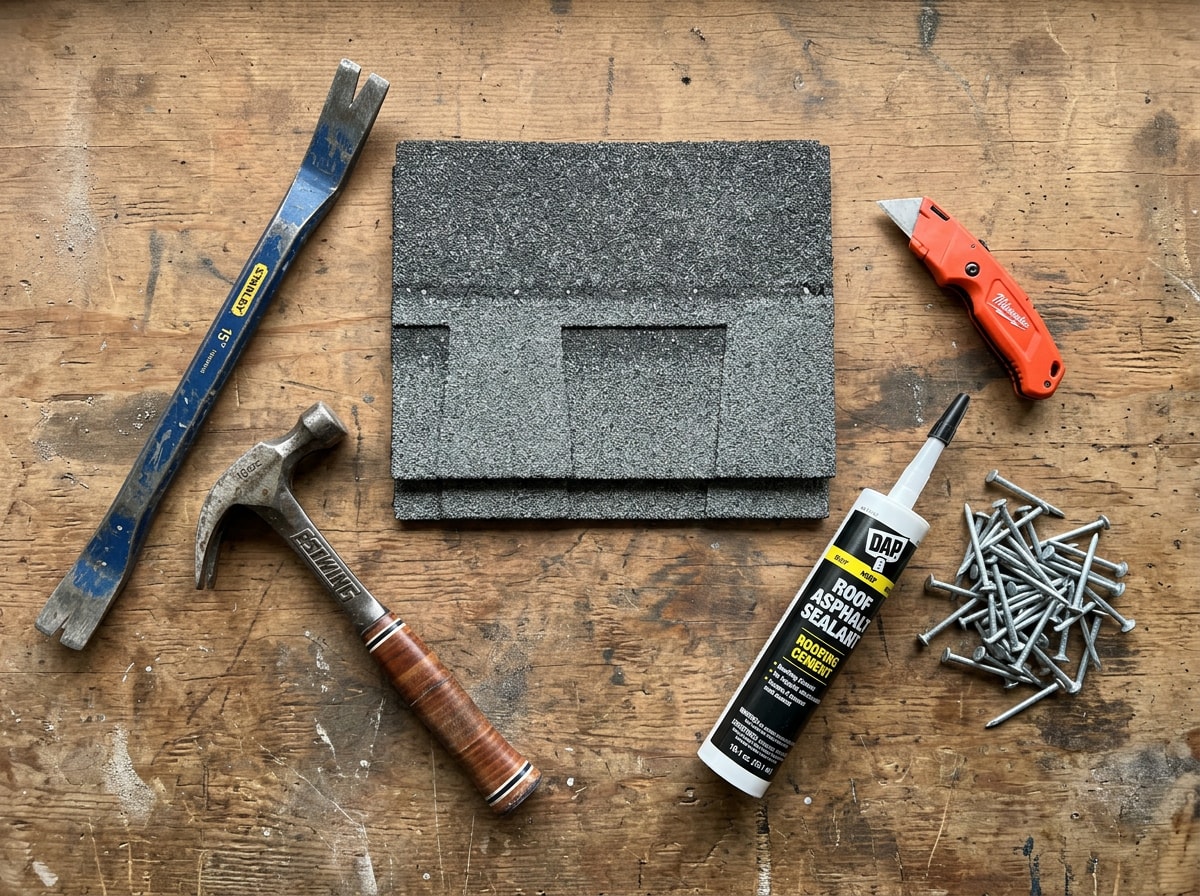
A basic shingle repair doesn't require a contractor's toolbox, but a few specific items make the job far easier.
Tools:
- Flat pry bar
- Hammer
- Utility knife
- Roofing nails (2 to 3 inches long, so they bite into solid decking rather than old nail holes)
Materials:
- Replacement shingles that match your existing color and style
- Roofing cement or sealant
- A putty knife for smoothing sealant
Matching the color and style of your existing shingles matters more than people expect. A mismatched patch stands out and can even affect resale appeal. If you're unsure which product matches your roof, our guide on the best shingles for a roof walks through the most common options before you buy.
Roof Repair Safety Tips
Roof work is a fall hazard even on a single-story home with a gentle slope. Before any repair, think through access, weather, and gear. Skipping this step is where most DIY injuries happen.
- Check your slope and height honestly. Steep or high roofs are often better left to a professional.
- Skip wet, icy, or windy days. Shingles get slippery and footing becomes unreliable fast.
- Set up your ladder on flat, stable ground, extending it at least three feet above the roofline, and stay alert for nearby power lines.
- Wear basic roofing PPE: a hard hat, safety glasses, non-slip gloves, and a harness for anything beyond a quick patch.
Residential construction employers generally must ensure that employees working six feet or more above lower levels use guardrails, safety nets, or personal fall arrest systems , per OSHA's fall protection standard. That threshold is a useful gut check for homeowners too: if you're six feet or higher off the ground, treat the job as one that needs real fall protection, not just caution. If your roof doesn't meet that bar for a confident DIY fix, our roof repair team can handle it safely instead.
How to Remove a Damaged Roof Shingle
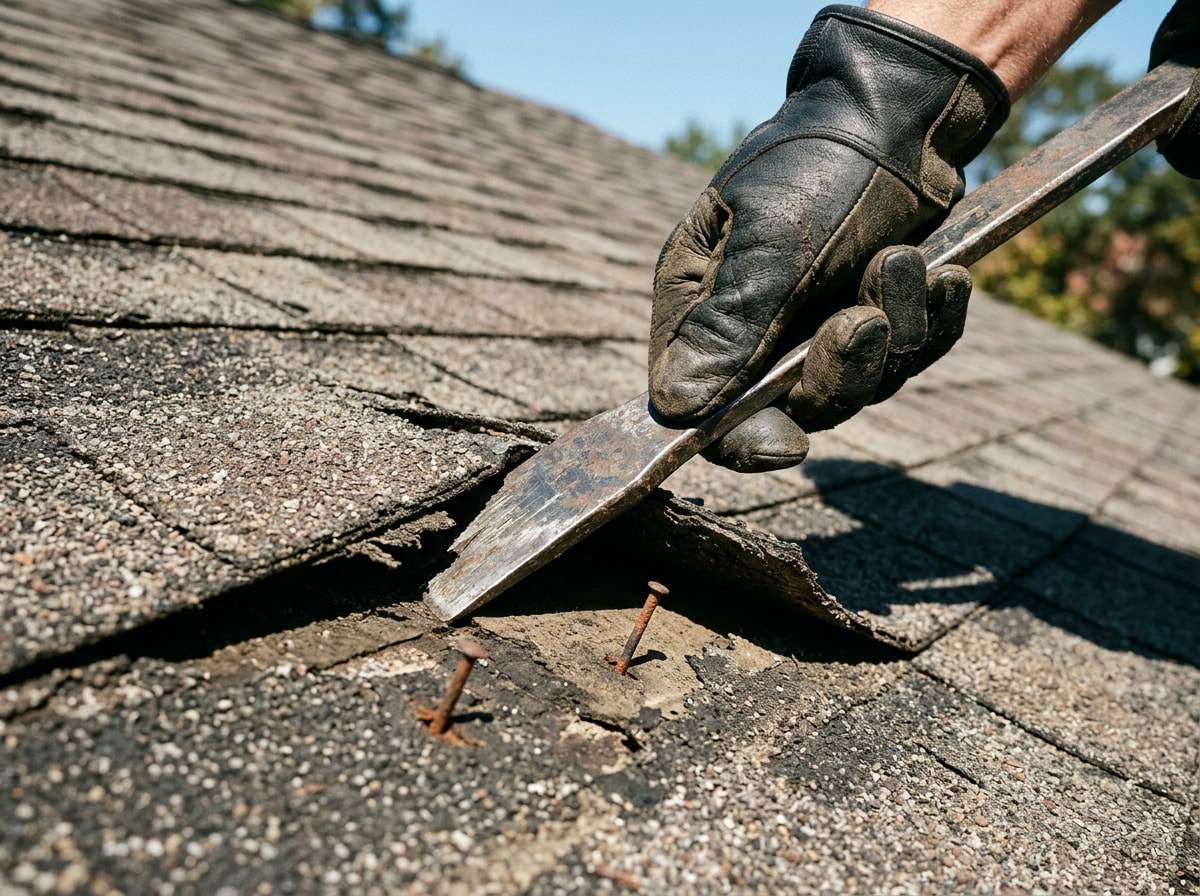
- Slide a pry bar or trowel under the shingle directly above the damaged one and work it back and forth gently until the sealer strip releases.
- Lift the shingle above to expose the nails holding the damaged shingle in place, typically 4 to 6 nails.
- Pry each nail loose, remove it, and set the old shingle aside.
- Clear any leftover roofing cement from the opening so the new shingle sits flush.
If the damage extends across several courses, or you find soft, spongy decking underneath, stop and have the area assessed. Widespread rot usually means a professional roof inspection before any patch goes back on.
Step-by-Step Guide to Replacing a Damaged Shingle
This covers the full replacement process for a shingle that's missing, torn beyond patching, or too deteriorated to seal in place. It picks up right after the removal steps above.
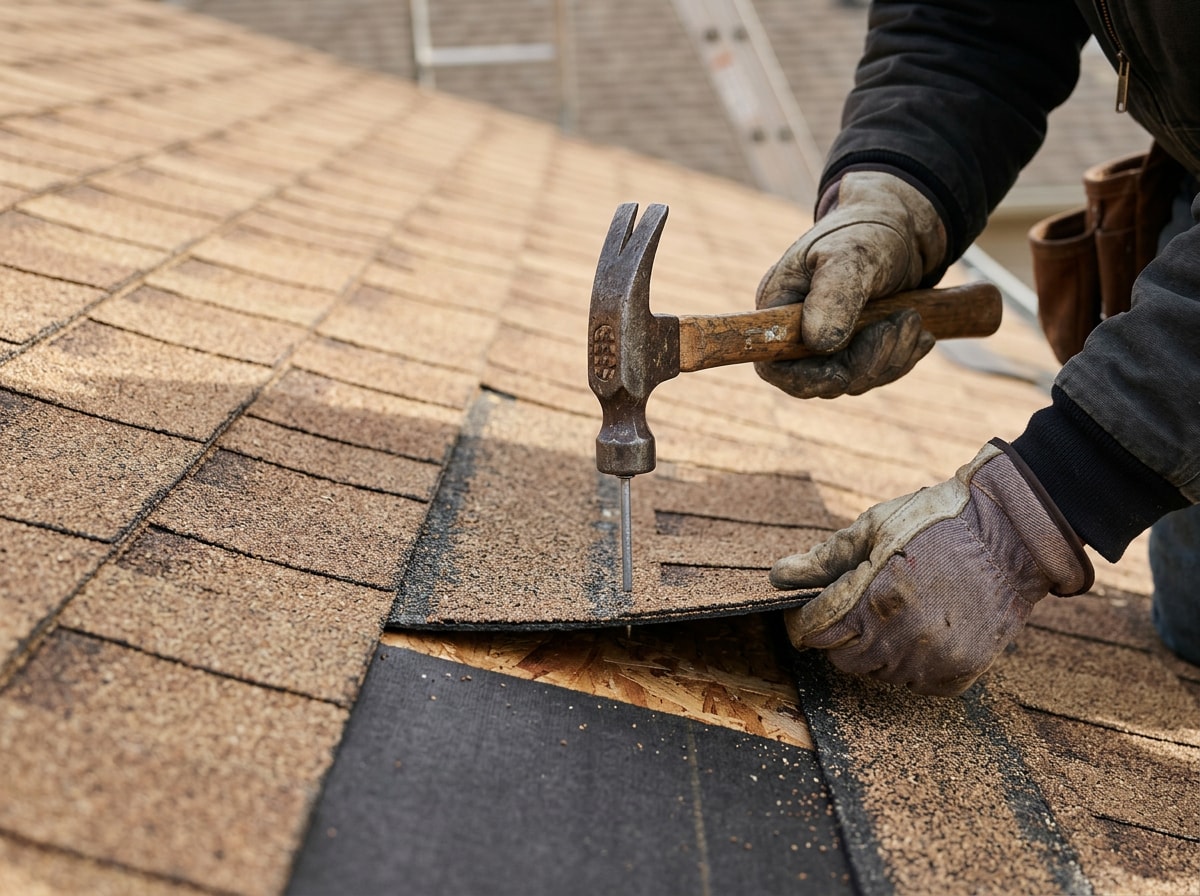
- Slide the replacement shingle into the vacant spot, aligning its edges with the surrounding course.
- Confirm it sits flush and matches the exposure of neighboring shingles before nailing.
- Drive nails into the designated nail line, usually marked by a factory strip or tab cutouts, without hammering hard enough to crack the shingle.
- Position the nails so the overlapping shingle above will cover them completely. Exposed nail heads are a direct path for water intrusion and tend to work loose faster under freeze-thaw cycles.
- Apply a thin, even layer of roofing cement to the underside of the shingle before pressing it into its final position.
- Press along the full length of the shingle, not just the center, so the cement bonds everywhere it needs to.
How to Repair Curled Roof Shingles
Curled shingles don't always need full replacement. A sealant fix often works if the curling is caught early.
- Clear away any debris trapped under the curled section.
- Apply roofing sealant underneath the lifted edge.
- Press the shingle down firmly and hold it flat.
- Weight it with a brick or similar object for at least 24 hours so the adhesive cures without the shingle cupping back up.
How to Fix Cracked or Torn Shingles
Cracked shingles respond well to a layered sealant technique rather than full replacement.
- Apply a thick bead of roofing sealant underneath the crack.
- Press the shingle down to close the gap.
- Apply a second bead on top and smooth it evenly with a putty knife.
- Collect loose granules from your gutters and sprinkle them over the wet sealant so the patch blends in instead of standing out.
On jobs our crews have gone out to inspect after a homeowner tried this fix, cracking that's isolated to one or two shingles almost always holds. Cracking spread across multiple courses is usually a sign the whole field is aging out, not a sealant problem. If that's what you're seeing, read our guide on how to patch a shingle roof for a closer look at when patching stops making sense.
Preventative Maintenance to Extend Shingle Life
Catching shingle problems early starts with routine inspections rather than waiting for a leak to show up indoors. Scheduled inspections are the foundation of a roof system maintenance program, and the NRCA recommends performing them at least twice per year, preferably in the spring and fall .
- Walk the roofline, or use binoculars from the ground, checking for damaged or missing shingles.
- Clear debris and clogged gutters so water drains instead of backing up under shingle edges.
- Look in the gutters for granule buildup after storms as an early warning sign.
Homeowners across our North Texas service area, including Plano, TX, deal with enough summer heat cycling and spring hail that this twice-yearly habit catches more than it misses. For ongoing care or a full assessment, visit our homepage to see how we can help, or get a free estimate if you'd rather have a pro take the ladder time off your hands.
FAQ
Can you replace just one shingle?
Yes. You can replace a single shingle without redoing the entire roof when the damage is isolated to one or a few spots. This is standard practice for minor wind or age-related damage.
Will a roof leak with one shingle missing?
A single missing shingle can expose the underlayment to rain and sun, creating a real leak risk. It's usually fine short-term, but don't leave it unaddressed through a storm season.
How much does it cost to repair a roof shingle?
Based on jobs we quote across the Dallas-Fort Worth area, minor shingle repairs typically run $150 to $450 for professional labor and materials, though cost varies with the number of shingles, roof pitch, and accessibility. DIY materials alone often cost under $50. For a broader breakdown, see our guide on average roof cost in 2026.
What is the best time of year to repair roof shingles?
Moderate, dry weather is ideal. Shingles stay flexible enough to lift and reposition without cracking, while sealants stay workable instead of hardening too fast in extreme heat.
How long does a shingle repair last?
A properly sealed or replaced shingle should last as long as the surrounding roof, often 15 to 20+ years for architectural asphalt, as long as the underlying decking and underlayment are sound. A patch over damaged decking will fail much sooner no matter how well it's sealed.
Do I need a permit to repair a few shingles?
No. Most jurisdictions don't require a permit for a spot repair of a few shingles. Permits typically come into play for full tear-offs or roof replacements, not patch jobs.
---
About the author: This guide was written and reviewed by the roofing team at Project Revitalize, a licensed roofing and remodeling contractor serving Frisco, Dallas, McKinney, Plano, Fort Worth, Denton, and Allen, TX. Our crews repair and replace shingle roofs across North Texas year-round. Questions about a specific repair? Contact us and we'll help you figure out if it's a DIY fix or a job worth handing off.