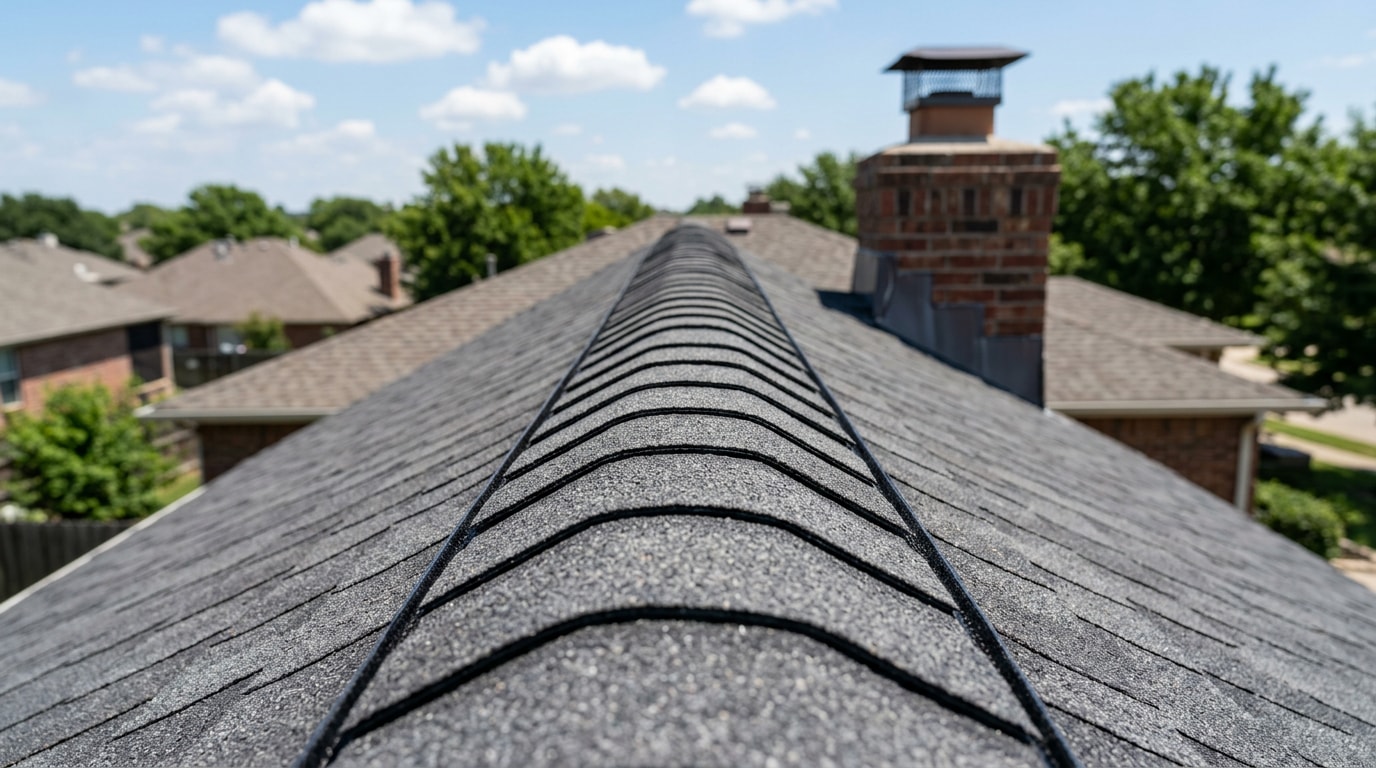

Learning how to patch a shingle roof correctly can turn a $50 materials run into a fix that holds for years instead of weeks. A sloppy patch, on the other hand, just relocates the leak until it shows up on your ceiling. This guide covers the full process, real cost numbers, and the point where a weekend DIY job should become a phone call instead.
Signs You Need to Patch a Shingle Roof
Most shingle damage is visible from the ground if you know where to look.
- Cracked, curled, or lifted shingle edges
- Bald patches where granules have worn away
- Shingles missing entirely after wind or storms
- Granules collecting in gutters or at the base of downspouts
- Water stains on ceilings or a musty smell in the attic
- Daylight visible through the roof deck from inside the attic
- Nail pops, small bumps where a fastener has worked loose under a shingle
Scan the roof with binoculars from the ground before you ever touch a ladder. This confirms the extent of cracked, missing, or granule-stripped shingles without the risk of climbing onto a roof that might already be compromised underfoot. If the granule buildup is heavy enough to be clogging your downspouts, it's worth a look at your gutter repair service at the same time. For anything beyond a single obvious trouble spot, a roof inspection will confirm how far the damage actually extends before you start cutting into anything.
Tools and Materials You'll Need
Gather everything before you climb up so you're not making repeated trips down the ladder.
For a basic single-shingle patch:
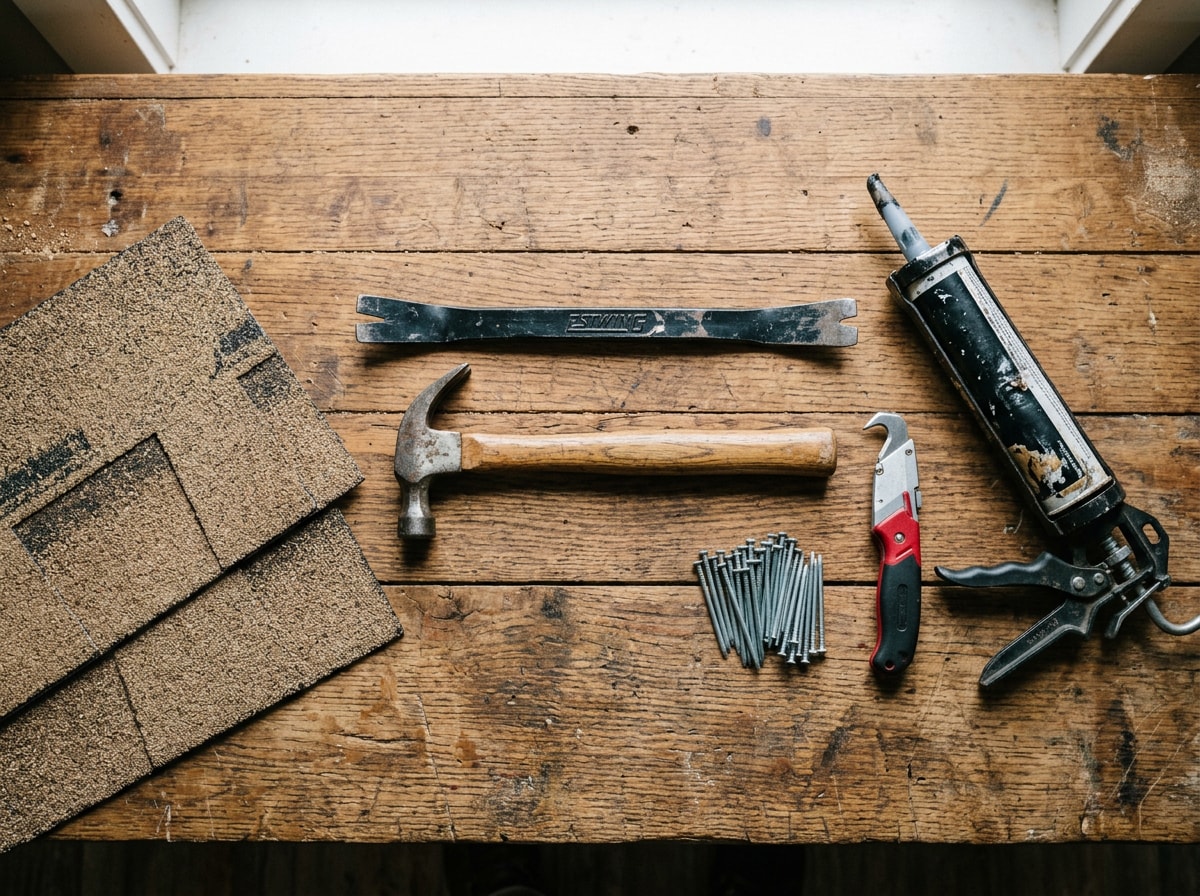
- Pry bar and hammer
- Utility knife (a hooked blade cuts asphalt shingles cleaner than a straight one)
- Caulk gun and roofing cement
- Replacement shingles matching your existing color and style
- Galvanized roofing nails
- A few strips of roofing underlayment, in case the felt tears during removal
If you're also repairing decking:
- Plywood or OSB sheathing matched to your existing thickness
- 2x4 lumber for bracing
- Tar paper or synthetic underlayment
- Circular saw
Bring a piece of the damaged shingle with you to the hardware store. Matching color and granule texture exactly is harder than it sounds once a roof has weathered for a few seasons.
How Much Does It Cost to Patch a Shingle Roof?
Cost is usually the deciding factor between grabbing a ladder yourself and calling a contractor. A straightforward single-shingle swap is cheap in materials; a professional visit costs more because it includes diagnosis, travel, and a warranty on the work.
| Repair Scope | DIY Materials Cost | Typical Professional Cost |
|---|---|---|
| Replace 1–5 shingles | $20 – $60 | $150 – $350 |
| Replace 6–20 shingles | $50 – $150 | $250 – $600 |
| Decking repair + reshingle | $100 – $300 | $500 – $1,500+ |
Professional pricing typically includes a service call fee that covers travel, inspection, and diagnosis, with the repair itself often completed the same visit for minor patches. If your estimate starts creeping toward several hundred dollars for a small area, that's usually a sign the damage is bigger than it looks from the ground, and it's worth getting a second opinion before you buy materials. You can get a free estimate to compare against any DIY budget you've put together.
How to Patch a Shingle Roof (Step-by-Step)
Patching a shingle roof comes down to five stages: inspecting the damage, removing the bad shingle, checking the decking underneath, installing the replacement, and sealing it. Work through whichever steps apply to your situation.
Inspect the Damage
Press gently on the area around the damaged shingle. Soft, spongy spots usually mean water has reached the roof deck, not just the surface shingle.
Check whether the damage extends under the shingles above or beside it. A quick look often reveals more cracking than what's visible from the ground, along with discoloration that signals moisture has been sitting there a while. After walking hundreds of storm-damaged roofs across North Texas, we've found the soft spot is rarely directly under the visible crack. It's usually one course higher, where water actually tracked before it showed through the surface.
Work on a warm, dry day if you can. Shingles are more pliable in moderate heat and far less likely to crack when you lift or bend them; cold, stiff shingles make every later step harder and increase the odds you'll need extra replacement material.
Remove the Damaged Shingles
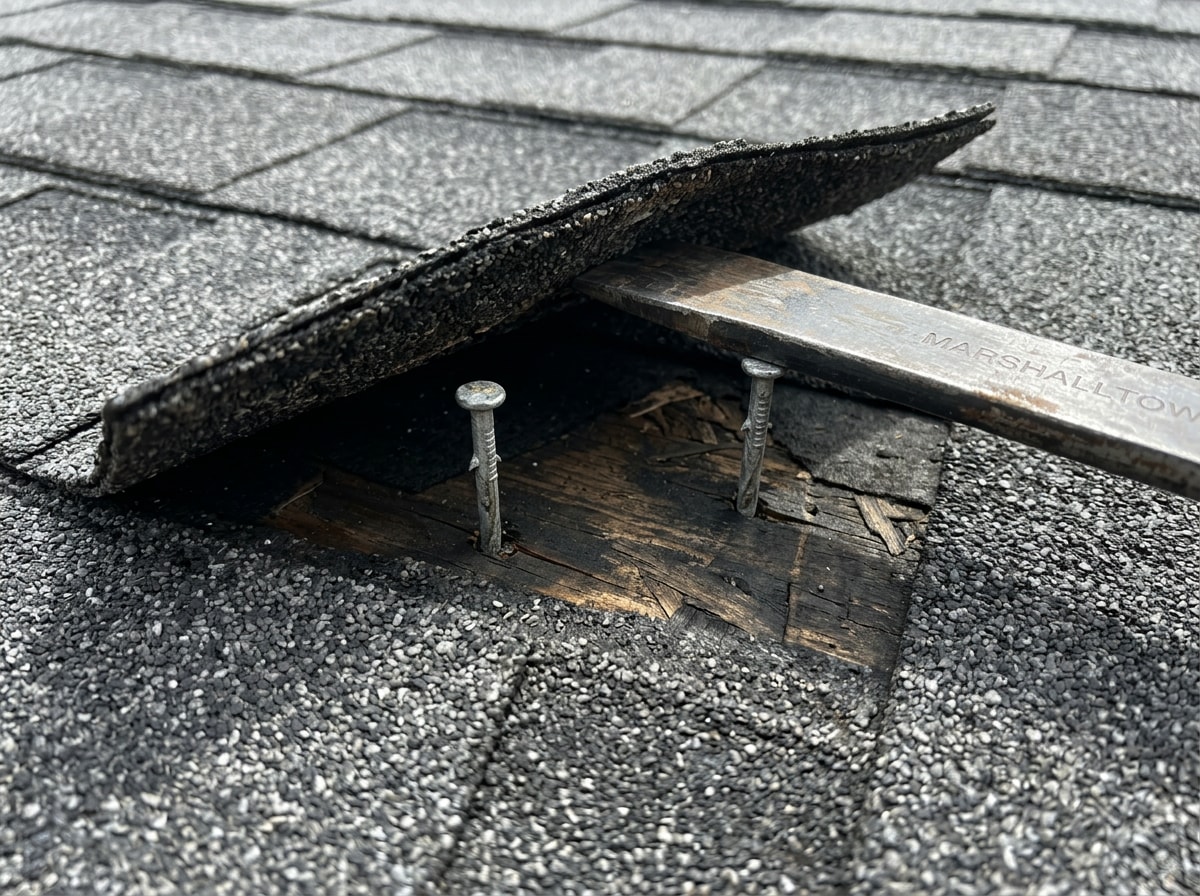
Lift the row of shingles directly above the damaged one using a pry bar. Asphalt shingles are sealed together with a factory adhesive strip, so break that seal carefully to avoid tearing the shingle you're trying to keep intact.
Once the seal is loose, locate the nails holding the damaged shingle, typically four per shingle, and pry each one out. Slide the damaged shingle free, working slowly so you don't crack the shingles on either side.
If you're working on a steep slope or anywhere near the roof edge, treat ladder setup as seriously as the repair itself. OSHA's construction ladder standard requires that a portable ladder's side rails extend at least three feet above the landing surface, and that the ladder be secured or footed to prevent it from slipping sideways while you're climbing.
Replace Damaged Decking
If the plywood or OSB underneath feels soft or visibly rotted, it has to come out before any new shingles go down. Mark a clean rectangular section centered over the rafters, then cut it out with a circular saw set to the thickness of the decking.
Match your replacement panel to the existing thickness. Most residential roofs use sheathing in the 7/16-inch to 5/8-inch range, and the panel's span rating, stamped right on the sheet as a number like 32/16, tells you the maximum support spacing it's rated for. APA, The Engineered Wood Association, publishes the official span-rating tables if you want to confirm your replacement panel is rated for your rafter spacing. If you're also replacing the layers above the new decking, our guide on what goes under shingles on a roof walks through the underlayment stack in order.
A rotted deck that spans multiple rafters, touches structural framing, or covers a large area is a sign to bring in a licensed roof repair contractor rather than push through as a DIY project. Getting this step wrong is exactly the kind of mistake that turns a $200 repair into a $2,000 one.
Install the New Shingle
Cut your replacement shingle to match the size and shape of the one you removed, using a utility knife and a straightedge for clean lines. Slide it into position under the row above, overlapping it the same way the surrounding shingles are layered.
Nail it using the manufacturer's marked nailing zone, usually found about an inch above the adhesive strip. Nails set too high or too low won't hold properly, and a misplaced nail can puncture the shingle below it.
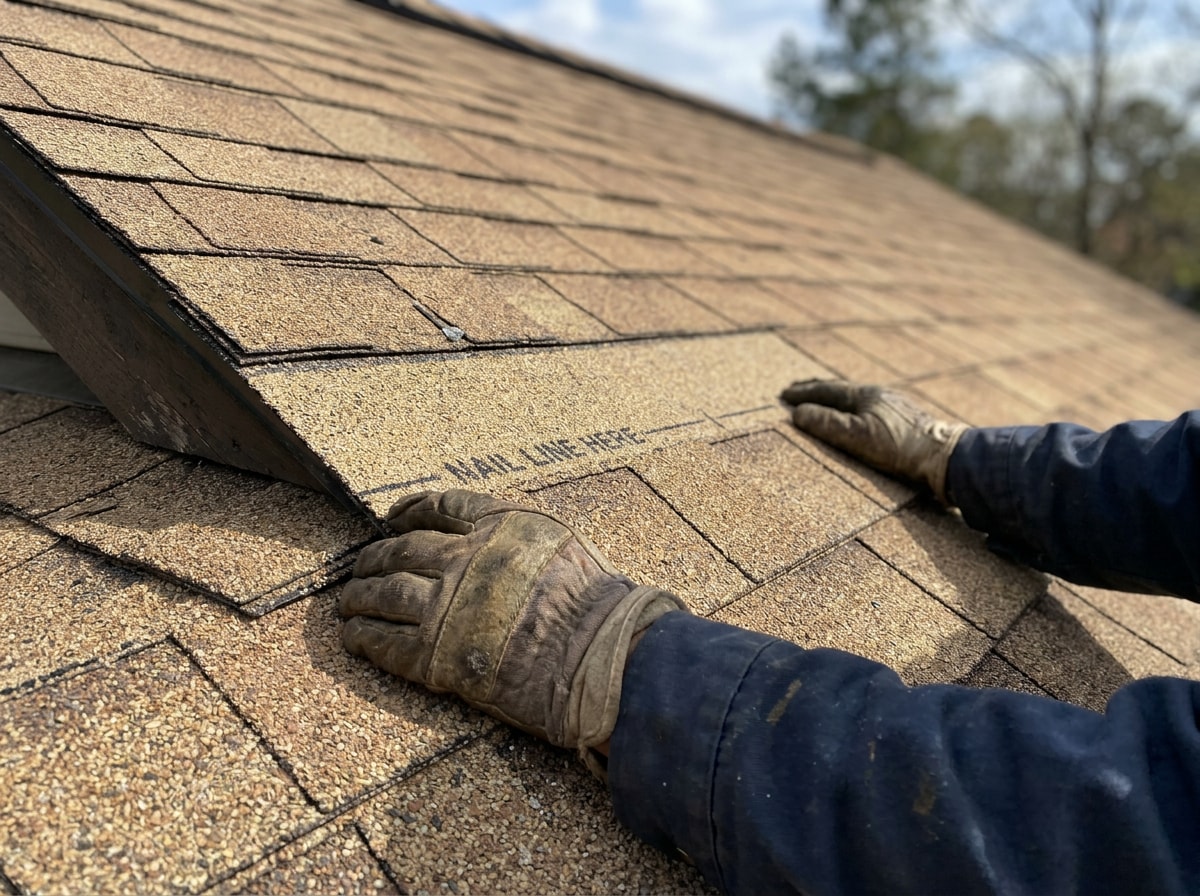
Press the shingle flat and check that it sits evenly with the surrounding course before moving on.
Seal the Edges with Roofing Cement
Apply a small dab of roofing cement under each tab edge and over every exposed nail head. Use just enough to seal; too much cement traps moisture and attracts debris, which actually shortens the life of the patch.
Once it cures, do a final check from the ground with binoculars to confirm the patch lies flush with no visible lifting. Give the cement time to fully cure before you judge whether the seal is watertight, since a premature inspection can miss gaps that only show up after a rain cycle or two. Trade groups like the National Roofing Contractors Association publish detailed repair procedures for asphalt shingle systems if you want a more technical reference beyond this guide.
When Roof Replacement Makes More Sense
A patch isn't always the right call. If your roof is nearing the end of its typical 20-to-30-year lifespan, has a history of leaks in different spots, or shows decking damage in more than one area, you're looking at diminishing returns from patch after patch.
The number of affected shingles matters too. One or two shingles is a reasonable patch job. Damage spread across multiple sections of the roof often means a full roof replacement costs less over the life of the roof than a string of individual fixes. As a full-service roofing contractor working across North Texas, we can walk through the actual numbers for your roof and tell you honestly which side of that line you're on, rather than defaulting to the more expensive option.
FAQ
How Long Does a Shingle Repair Last?
A properly sealed shingle patch typically lasts several years when it's done with quality materials and correct technique, though it rarely matches the lifespan of the original roof. Climate, sun exposure, and how well the seal was applied all affect how long a patch holds up.
Can I Patch a Roof Myself?
Simple single-shingle patches are reasonable for a comfortable DIYer with basic tools and safe ladder access. Steep slopes, large damaged areas, or any sign of rotted decking are better left to a licensed roofer, since mistakes at that level tend to cause bigger leaks than the one you started with.
Is It Better to Patch or Replace Shingles?
It depends on the roof's age and how widespread the damage is. A patch makes sense for isolated damage on a roof with years of life left. Replacement becomes the smarter move once leaks keep recurring in different spots or decking damage shows up in multiple areas.
Can You Patch a Shingle Roof in Cold Weather?
Cold shingles are stiffer and crack more easily during removal, and roofing cement cures more slowly in low temperatures. If a cold-weather patch can't wait, warming the shingle slightly before bending it and hand-sealing the tabs can reduce the risk of cracking.
Can You Patch a Roof Without Removing the Old Shingles?
In some cases, yes. New shingles can be layered over an existing section if the shingles underneath aren't curled, rotten, or soft, with roofing cement filling any gaps first. This approach is generally treated as a short-term fix rather than a permanent repair, and it isn't a substitute for removing shingles that are already failing.