What happens if it rains while getting a new roof comes down to timing. A quick shower that gets tarped fast rarely causes lasting damage. Sustained rain hitting an open deck is a different story, and it's where leaks, mold, and failed shingle adhesion actually start. Here's what a well-run crew does the moment the sky opens up, and what you should ask before you ever sign a contract.
Can Roofers Install a Roof in the Rain?
Not safely, and not well. Reputable crews pause work once active rain starts because three things are on the line at once.
- Crew safety: a sloped roof gets dangerously slick within minutes of rain starting.
- Material performance: shingles, underlayment, and adhesives are engineered to bond on dry surfaces, not wet ones.
- Warranty terms: some manufacturer warranties can be affected if materials are installed outside the recommended conditions.
Falls are not a small concern here. More than one-third of fall deaths in residential construction are caused by falls from roofs , and even experienced roofers are exposed to unpredictable fall hazards caused by sudden gusts of wind, loose roofing materials and surfaces that become slick when wet . That single stat is why no responsible contractor keeps a crew on an open, wet deck just to hit a schedule.
What Happens If It Rains While Getting a New Roof: The Real Risks
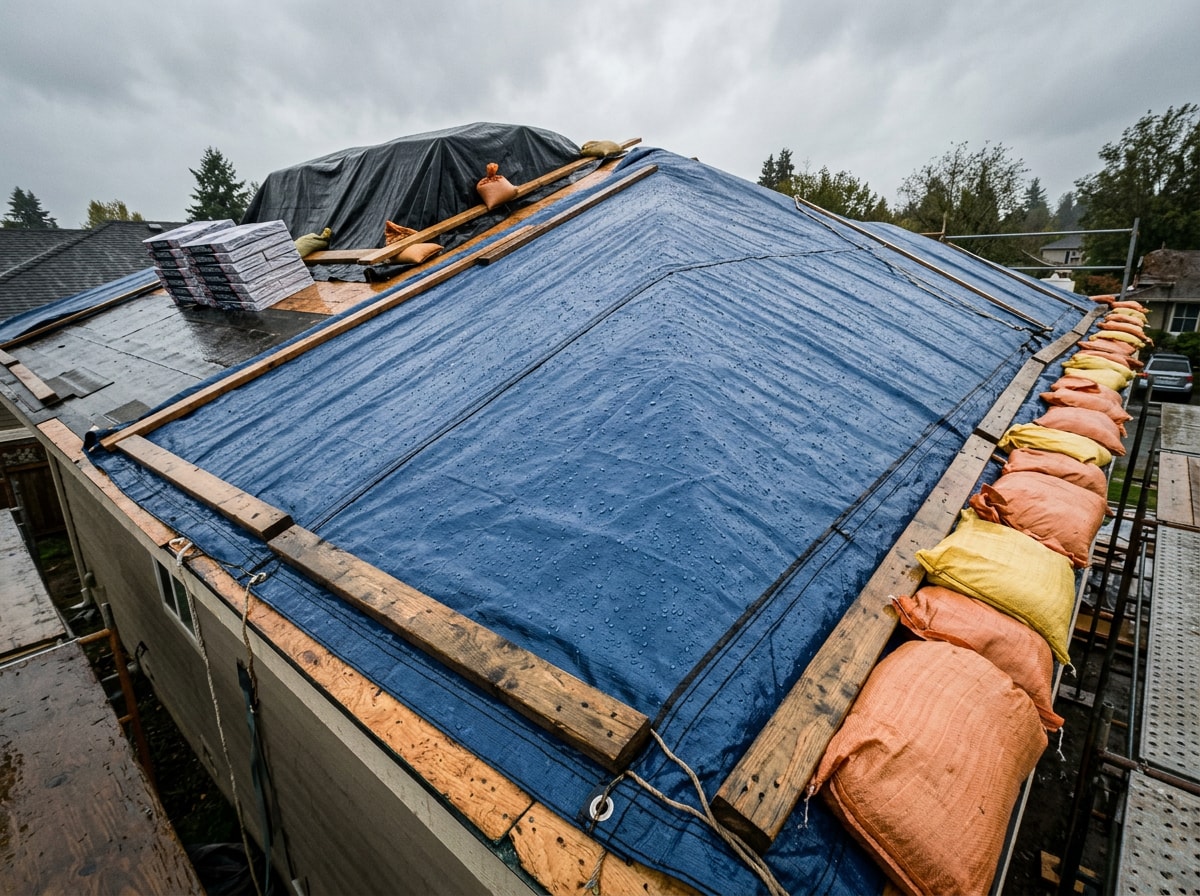
Once rain reaches exposed decking, several problems can stack on top of each other:
- Leaks into the home: unprotected sections let water track down into insulation, drywall, and ceilings.
- Deck damage: plywood or OSB that sits wet too long can swell, warp, or start to rot.
- Mold and mildew: trapped moisture under new materials is a slow-building problem that shows up weeks later, not immediately.
- Poor shingle adhesion: self-sealing strips need dry, warm conditions to bond; moisture trapped underneath weakens that seal.
- Schedule slippage: every rain delay pushes the dry-in date back, which matters more on larger tear-offs.
A short, tarped shower is manageable. A sustained storm on an unprotected deck is where the real cost shows up, usually as a callback weeks or months after the crew has left.
What Actually Happens, Step by Step
1. The Crew Stops and Assesses
Work halts the moment rain becomes active, not after it's already soaking the deck. A good foreman is watching the radar before the first drop falls.
2. Exposed Sections Get Tarped and Dried In
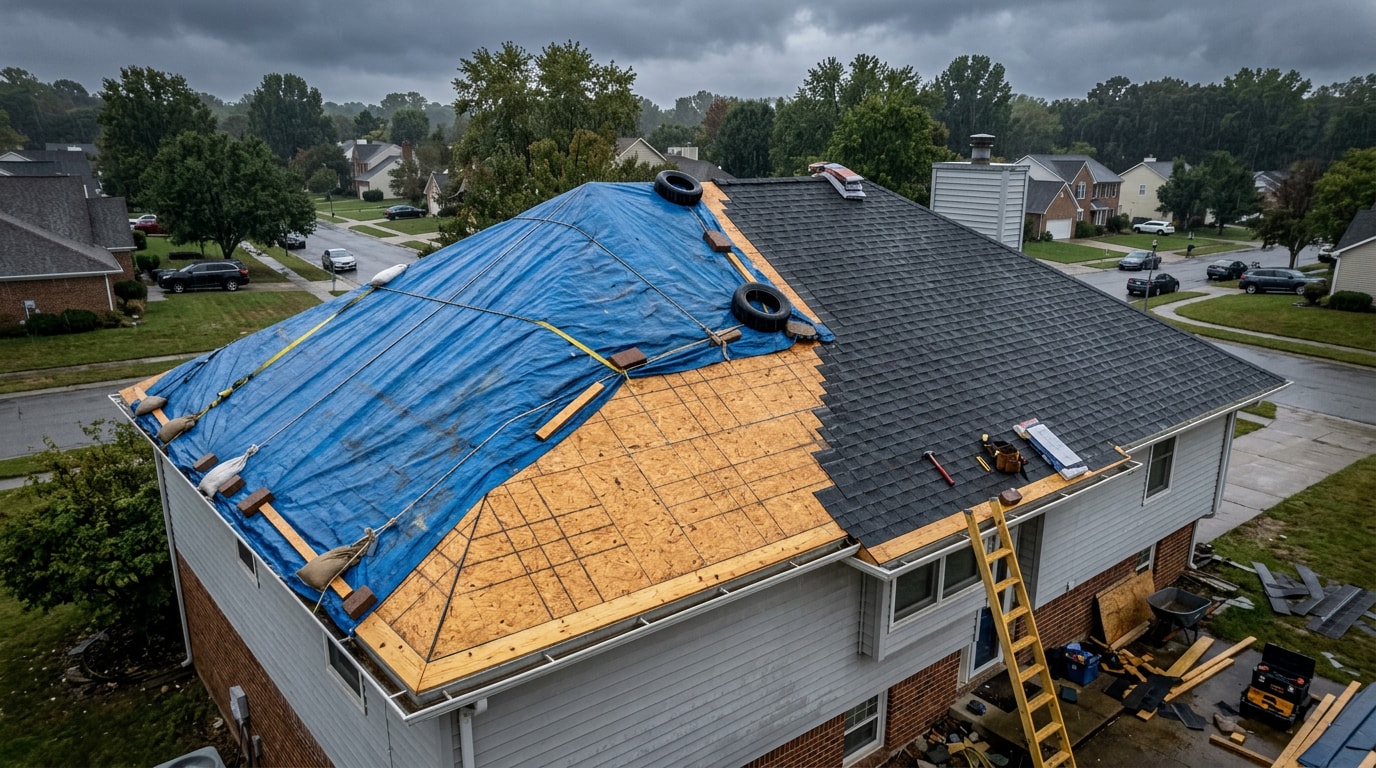
Crews cover open decking with heavy waterproof tarps and route water away from the eaves and foundation. On a tear-off that's too large to tarp quickly, experienced crews "dry in" sections with underlayment as soon as the old roofing comes off, so no more of the deck is exposed than necessary at any one time. If you want to see how this fits into a full project timeline before you book one, our roof replacement services page walks through the whole sequence.
3. Materials Get Checked Before Anything Resumes
Once the rain clears, the crew inspects decking and stored materials for trapped moisture. Nothing gets nailed back down until the surface is dry enough to bond correctly.
We cover the code and safety side of this same question in more depth in our guide on whether you can install a roof in the rain, including how building departments view rain-exposed installs.
Material-Specific Rain Risk
Not every roofing system reacts to rain the same way. This is the part most guides skip entirely.
| Material | Rain Vulnerability | Why | Crew Response |
|---|---|---|---|
| Asphalt shingles | High | Sealant strip needs dry, warm conditions to activate | Tarp decking; delay nailing until surface is dry |
| Standing seam metal | Low to moderate | Panels don't depend on adhesive bonding | Underlayment underneath still must go down dry |
| Flat / low-slope (TPO, BUR) | High during tear-off | Large open membrane sections pool water fast | Dry-in same day; temporary drainage paths |
If your project involves a flat or low-slope section, water pooling is the bigger threat, not adhesion. Our flat roof repair guide has more on handling standing water on low-slope systems.
Will Homeowners Insurance Cover Rain Damage During Roof Work?
Sometimes, and it depends heavily on who's at fault. Homeowners insurance policies typically cover roof damage resulting from a covered peril, such as wind, hail, or falling trees , and a sudden storm hitting mid-project can qualify. But coverage gets denied fast if the damage traces back to the contractor leaving a roof exposed overnight or skipping tarps altogether.
Coverage is more likely when:
- A sudden, unforecast storm hits while the crew is actively working.
- Water enters despite reasonable precautions like tarping.
- Interior damage results from conditions outside anyone's control.
Coverage is less likely when:
- The roof sat exposed overnight without protection.
- The contractor failed to secure the structure properly.
- The damage ties back to a pre-existing issue the crew should have flagged.
A well-maintained roof protects the structure from the perils of hail, wind, water, fire, and other hazards , which is exactly why insurers scrutinize whether the contractor maintained that protection during the install itself, not just before and after.
Questions to Ask a Roofing Contractor Before You Sign
A contractor's rain plan tells you a lot about how they'll handle everything else. Ask:
- What's your rain-day protocol, in writing?
- Do you dry-in sections the same day they're opened up?
- How do you monitor weather during an active project?
- Who's responsible if materials get damaged by an unexpected storm?
If a contractor can't answer these clearly, that's worth noting before you commit. The team at Project Revitalize builds rain contingencies into every roof replacement schedule across North Texas, where spring storms can roll in with almost no warning. Homeowners in the Dallas, TX area in particular deal with this kind of fast-moving weather every storm season, so we plan for it rather than react to it.
If a storm has already caught your roof mid-project and you're not sure what shape the decking is in underneath, a roof inspection is the fastest way to find out before the next rain comes through. You can also get a free estimate if you'd rather have a second set of eyes on a project that's already underway.
FAQ
Can roofers work in light rain?
Technically yes, but most reputable crews won't. Light rain still interferes with shingle adhesion and makes the roof surface slippery enough to raise real safety concerns, so the standard practice is to pause and protect exposed areas until it clears.
Will it hurt my roof if it rains the day after installation?
Usually not, once shingles are fully nailed and the roof is properly dried in. The sealant strips may take longer to fully bond in cooler or shaded conditions, but a completed, properly fastened roof is designed to shed rain immediately.
Can a roof be replaced in one day?
For an average-sized single-family home, yes, in many cases. Larger homes, steep pitches, or multi-layer tear-offs can push the timeline to two or three days, which widens the window for a rain interruption.
Will I need to reschedule my roof replacement for rain?
Possibly. If the forecast shows heavy or sustained rain, a responsible contractor will push the start date rather than begin a tear-off they can't finish and dry in before the storm hits.
How long can an exposed roof deck sit before it becomes a problem?
There's no universal number since it depends on rain intensity and how much decking is open, but the standard practice is to tarp or dry-in exposed sections the same day, before any rain arrives, rather than leaving a deck open overnight.
Does homeowners insurance cover rain damage during a roof replacement?
Sometimes. Sudden, unforecast storms that cause damage despite reasonable contractor precautions are more likely to be covered. Damage caused by a contractor leaving the roof exposed or skipping proper tarping is typically treated as negligence, not a covered peril.