# Can You Install a Roof in the Rain? 2026 Homeowner Guide
Can you install a roof in the rain? No. Wet shingles won't bond, an open deck soaks up moisture fast, and a slick sloped surface turns a routine job into a fall risk. Here's exactly what happens when rain hits a roof mid-installation, and how a crew protects your home until it clears.
Can You Install a New Roof When It's Raining?
The short answer is no, you shouldn't install a new roof when it's raining, and this goes for even the savviest DIY homeowners as well as anyone who hires a roofing professional. Wet conditions compromise shingle adhesion, violate most building codes, and create slip hazards on sloped surfaces, making rain one of the few universal stop-work conditions in roofing.
There's a small exception. Light drizzle may still allow non-adhesive prep work, like staging materials or inspecting the deck, as long as no one is working on an exposed, wet slope. Even modern synthetic underlayments, which handle moisture better than old felt paper, don't solve the core problem. Shingles still need a dry surface to bond correctly.
If you're planning a project and want a crew that builds weather buffers into the schedule, start with a licensed roofing contractor rather than whoever shows up first after a storm.
Why Roofers Won't Install a Roof in the Rain
Rain creates three problems at once: it threatens the installation itself, it shortens material lifespan, and it puts your whole home at risk while the deck sits exposed.
It Can Ruin the Integrity of the Installation
Asphalt shingles rely on a sealing strip to lock together, and that strip needs heat to work. Asphalt shingles contain a thermally activated sealing strip that bonds the shingles after installation, and this sealant strip needs warmth, sun, and temperatures above 40°F to activate. Rain doesn't just block that warmth, it actively prevents the bond from forming. When shingles aren't properly bonded, they're vulnerable to wind uplift and water infiltration.
Slippery shingles also create hazardous conditions for workers, and installing in wet weather violates most building codes and can void your manufacturer's warranty. A contractor who proceeds anyway is gambling with the whole job, and with their own liability if the roof fails early.
It Shortens the Life of Roofing Materials
Professional roofers won't work in the rain because moisture can get trapped under roofing materials, leading to mold, wood rot, and premature failure. That trapped moisture doesn't evaporate on its own once shingles go down over it. It sits there, feeding rot in the deck below, and the repair bill for that kind of defect scales with how much decking has to come back out.
It Puts Your Entire Home at Risk
During a roofing installation, the roofing deck is exposed to the elements, and a wet roofing deck can grow mold and mildew which could cause the wood to change shape or rot, leading to failure of the new roof.
Rain droplets, condensation, dew, and even high humidity can cause roofing materials to swell or wrinkle, leading to buckled, rippled, or misshapen roofs.
There's a safety angle too. High winds, wet weather, and icy conditions are especially hazardous for roofing workers, and OSHA notes it's important for employers to consider suspending operations in bad weather, especially on surfaces that get particularly slippery when wet. You can read OSHA's full guidance on protecting roofing workers if you want the source material.
Can Roofers Install a New Roof in Light Rain?
Most professional roofers won't risk it, but "won't" isn't always "can't." Some contractors may opt to work in light rain or fluctuating showers if they're up against a deadline and feel it's safe to continue.
Roofers have experience working in all conditions, so as a homeowner, it's probably best to let them determine when it's safe to work. It's still never the preferred approach, and a crew that regularly pushes through should raise questions, not confidence.
What Happens If It Rains While Putting on a Roof?
If a roof is under construction and showers enter the forecast, work will stop for about a day. This can be disheartening, but it's the best decision for all parties involved, since everyone stays safe and the roof is installed properly. A pause also gives any trapped moisture time to dry out before shingles go back on. If you're worried a prior rain delay already compromised your roof, a roof inspection is the fastest way to find out before it becomes a leak.
How Crews Protect a Roof When Rain Hits Mid-Project
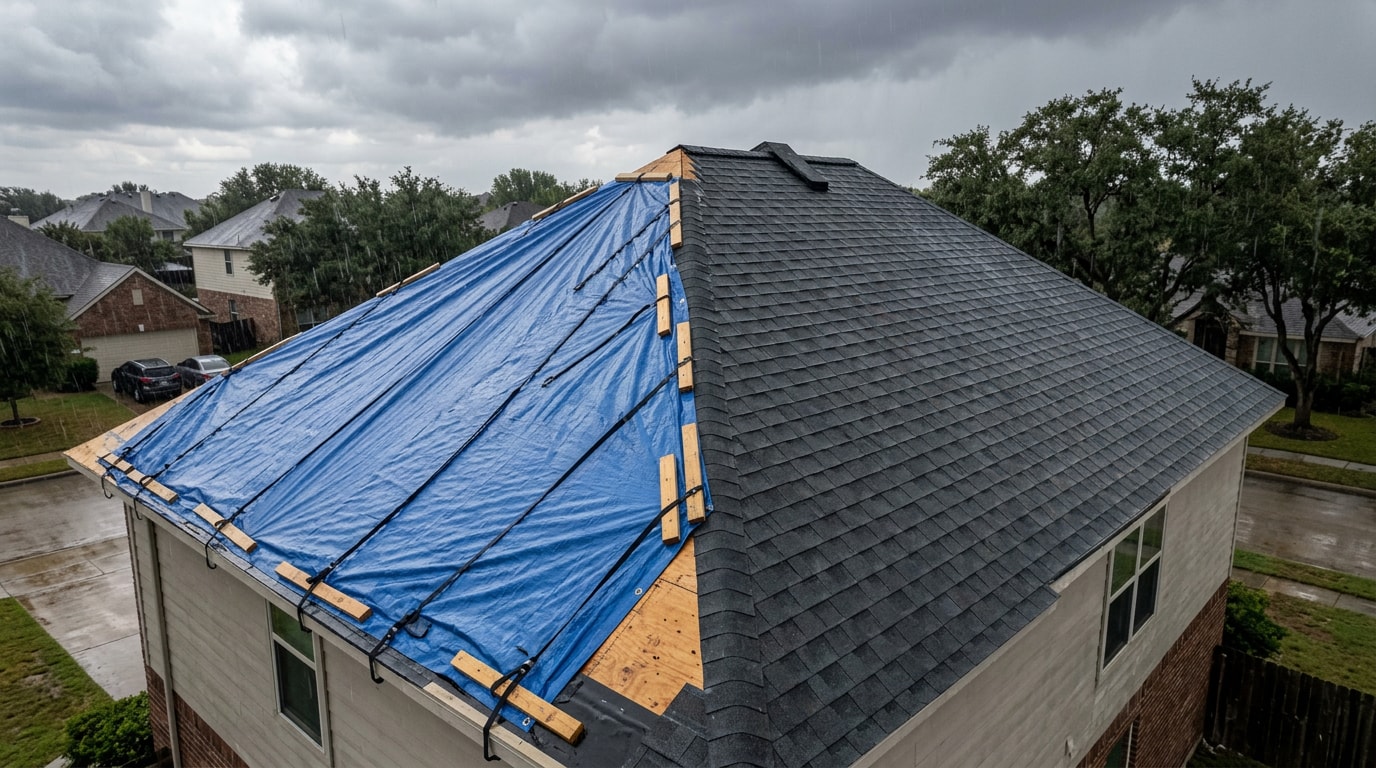
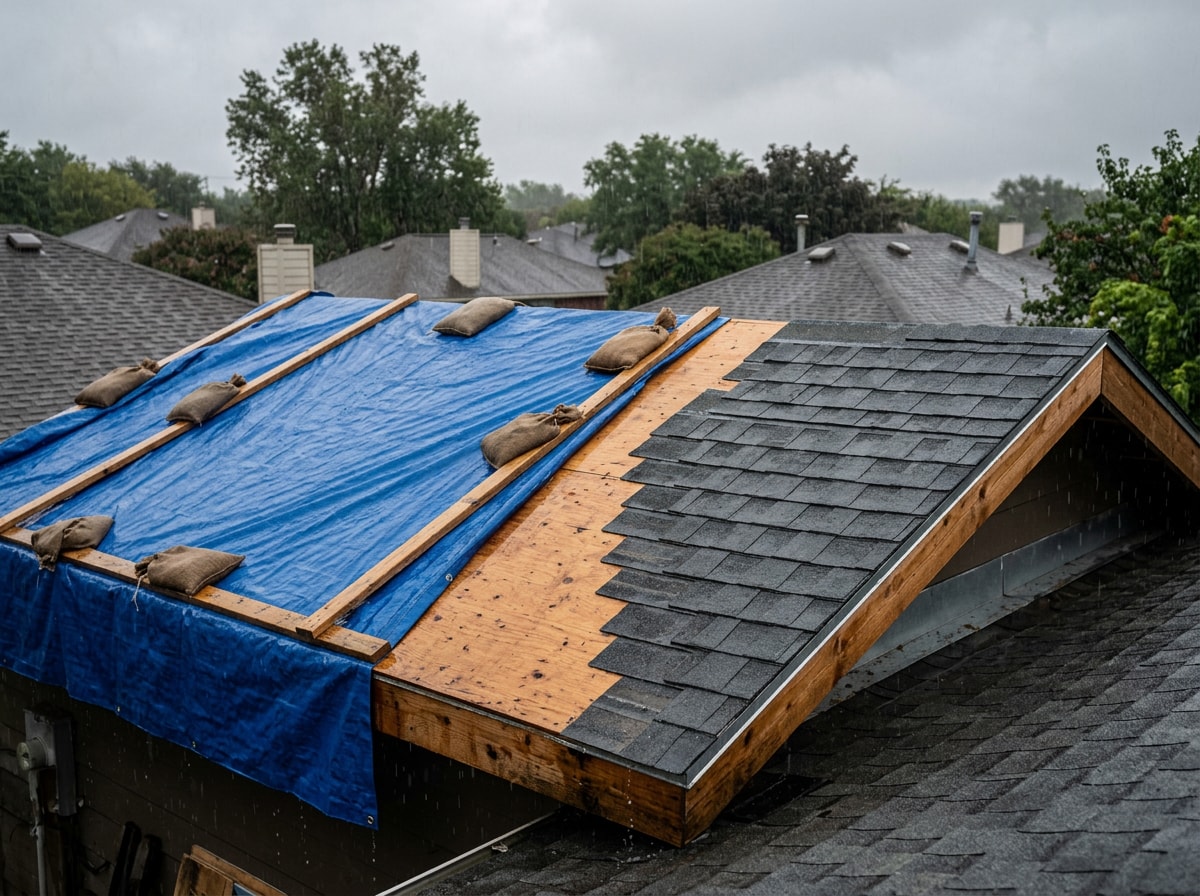
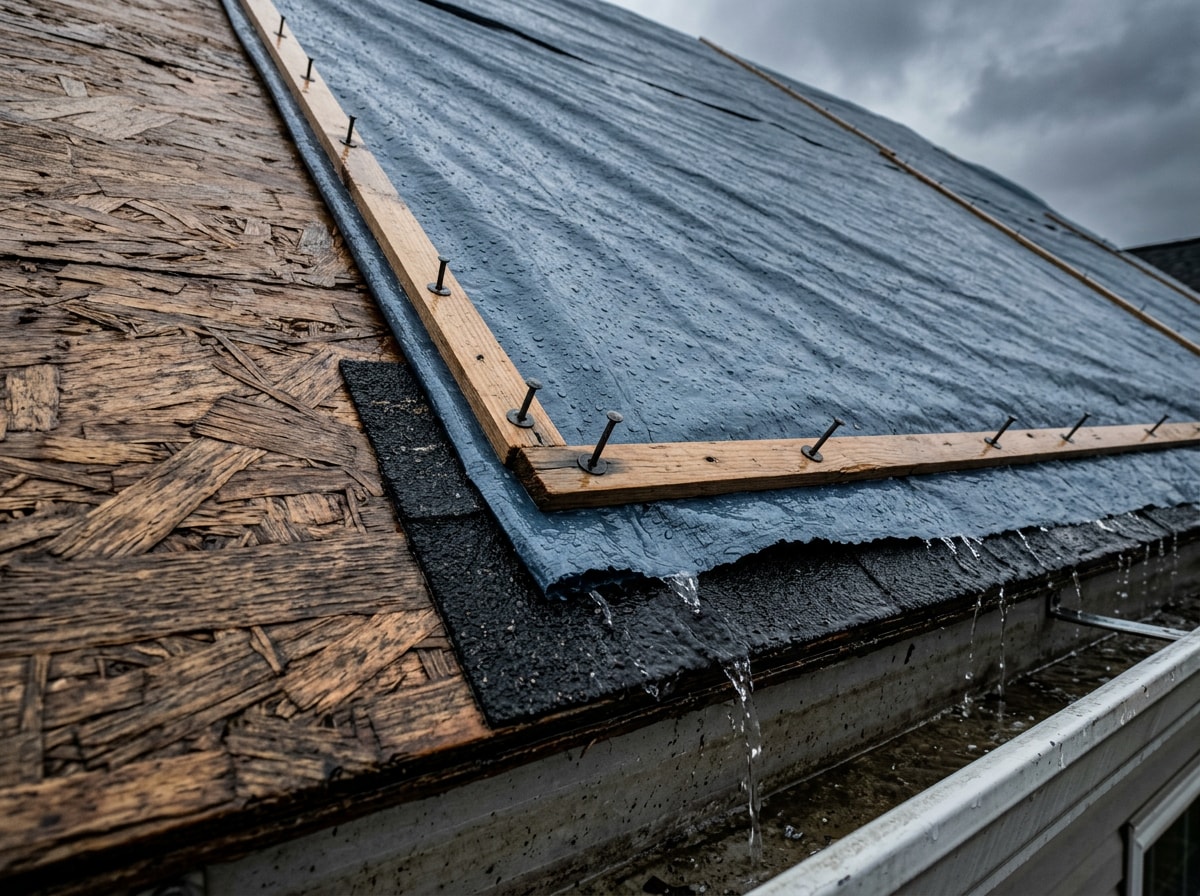
The moment rain starts mid-project, a good crew's response kicks in immediately. If it starts raining in the middle of a roof installation, the crew will tarp the areas of the roof that have exposed decking, and that tarping stays on until it's safe enough to get back on the roof and begin the installation process again.
Beyond the tarp, most crews run through the same short list:
- Secure decking so wind can't lift the covering
- Set up temporary drainage paths to redirect water away from seams
- Check gutters and valleys so water doesn't pool against the tarp edge
- Log the stoppage time so the schedule and any warranty paperwork stay accurate
These steps prevent pooling, which is one of the fastest ways a small rain delay turns into a bigger water-damage problem. If gutters are already struggling to move water off a half-finished roof, gutter repair is worth a look before the next storm rolls through.
How to Protect Shingle Installation During Bad Weather
Treating bad-weather roofing as a checklist, rather than a single tarp-and-hope move, protects both the underlayment and the schedule.
- Check the forecast before starting any new section of roof.
- Stage materials in smaller sections so only a limited area is ever exposed at once.
- Tarp and weight the edges of any open decking the moment weather turns.
- Inspect for trapped moisture with a moisture meter before resuming, since shingles should never go down over a damp deck.
How Long Does a Roof Need to Dry After Rain?
If rain falls one day and the forecast clears the next, most crews resume work that same day once the surface is visibly dry. Heavier or prolonged rain needs more recovery time, and a full day of dry weather before shingles go back down is a reasonable baseline. Checking the forecast closely before resuming prevents a second, avoidable delay.
Will Insurance Cover Rain Damage During Roof Work?
If rain damage happens mid-project, document it immediately. Prepare an inventory of damaged items and give a copy to the adjuster along with copies of any receipts, don't throw out damaged items until the adjuster has visited, and consider photographing or videotaping the damage. That guidance comes straight from the Insurance Information Institute's disaster-claims checklist, and it applies just as well to an active roofing job as it does to storm damage on an untouched roof.
Coverage usually comes down to cause. Damage traced to a contractor's negligence, like failing to tarp an exposed deck before leaving the site, is typically the contractor's liability, not a homeowner's claim. Damage from a sudden, unpredictable storm is more likely to fall under your policy's standard weather coverage, though terms vary by insurer and policy. If you're mid-project and unsure where you stand, contact us for a second opinion before you file anything.
North Texas Rain Patterns: When to Schedule a Roof Replacement
Timing matters more in North Texas than in drier climates. The National Weather Service's Fort Worth office puts the 1991-2020 normal monthly precipitation at roughly 3.25 inches in March, 3.25 inches in April, and 4.33 inches in May , which makes spring the stretch most likely to interrupt a roofing schedule. Scheduling outside that window, or building extra buffer days into a spring contract, cuts down on the number of times a crew has to tarp and wait. You can check NOAA's Dallas/Fort Worth climate normals directly if you're planning around a specific month.
Homeowners in Frisco, Dallas, McKinney, Plano, and Fort Worth all deal with the same spring storm pattern, so a local crew that already schedules around it is worth more than a lower bid from an out-of-area outfit.
Shingles vs. Metal vs. Flat Roofing: Rain Tolerance Compared
Not every roofing material reacts to rain the same way. This is the kind of comparison most generic articles on this topic skip entirely.
| Material | Can Prep Work Continue in Light Rain? | Why |
|---|---|---|
| Asphalt shingles | No | Sealing strip needs heat and dryness to activate; wet installation voids most warranties |
| Standing-seam metal panels | Sometimes, for fastening only | Panels don't rely on heat-activated adhesive, but wet footing still creates a fall hazard |
| Spray polyurethane foam (SPF) | No | Foam requires a completely dry, clean substrate to adhere and cure correctly |
If you're comparing materials for an upcoming project, our guide on how metal roofs are installed walks through the fastening sequence in more detail, and our SPF roofing guide covers why that system is even more weather-sensitive than shingles.
Quick Facts: Roofing and Rain
- Wet shingles and underlayment often fail to seal properly, creating leak points that don't show up for months.
- Many manufacturer warranties explicitly exclude damage tied to wet-condition installation.
- Rain-damage repairs can range from a minor patch to a full deck tear-out, depending on how much moisture got trapped.
- A short weather pause is almost always cheaper than redoing a section that failed early.
FAQ
Can Roofers Work in Light Rain?
Light drizzle may allow prep or inspection tasks, but adhesive-based shingle installation almost always pauses. Crews treat even steady light rain as a reason to hold off on actual shingle work, since the sealing strip won't bond on a wet surface.
Will a Short Rain Shower Damage My Roof Installation?
A brief shower usually causes minimal damage if the exposed area is quickly covered and allowed to dry before work resumes. The real risk comes from leaving decking uncovered or rushing back to work before it's fully dry.
Can Roofing Materials Like Shingles Be Installed When They're Wet?
No. Wet shingles should never be installed. Moisture prevents proper adhesion, increases the odds of future leaks, and can void the manufacturer's warranty if the installation is later found to have happened under wet conditions.
What Happens If the Roof Deck Gets Wet During Installation?
The deck needs to dry thoroughly before work resumes. Continuing over a damp deck risks warping and mold, and many crews use a moisture meter to confirm the wood is dry enough before shingles go back down.
Can You Install a Metal Roof in the Rain?
Metal panels don't depend on a heat-activated adhesive strip the way shingles do, so some crews will continue fastening panels through a light drizzle if footing stays safe. It's still not ideal, and wet metal is far more slippery than wet shingles, so most crews pause anyway. Our guide on how metal roofs are installed breaks down the full fastening process.
What Temperature Is Too Cold to Install Shingles?
The official GAF recommendation is to install shingles at temperatures that are at least 40°F, though installation can occur below that when contractors adhere to extra precautions. You can review GAF's full cool-weather installation guidance if you're scheduling a winter job.
---
Rain mid-project doesn't have to mean a ruined roof, but it does mean the crew on your ladder needs to know when to stop. Get a free estimate from a team that builds weather delays into the plan instead of pretending they won't happen, or visit Project Revitalize to see the full range of roofing, roof repair, and roof replacement services we bring to North Texas homes.