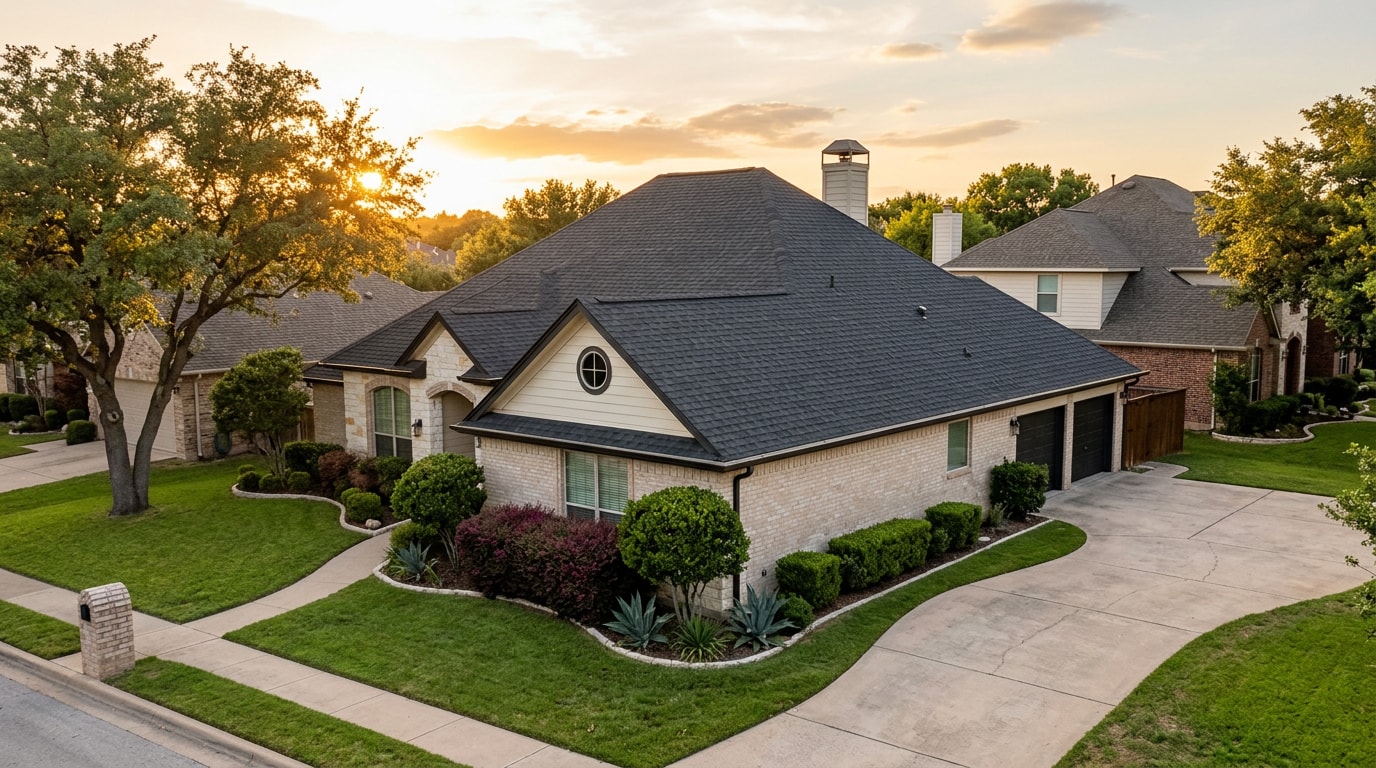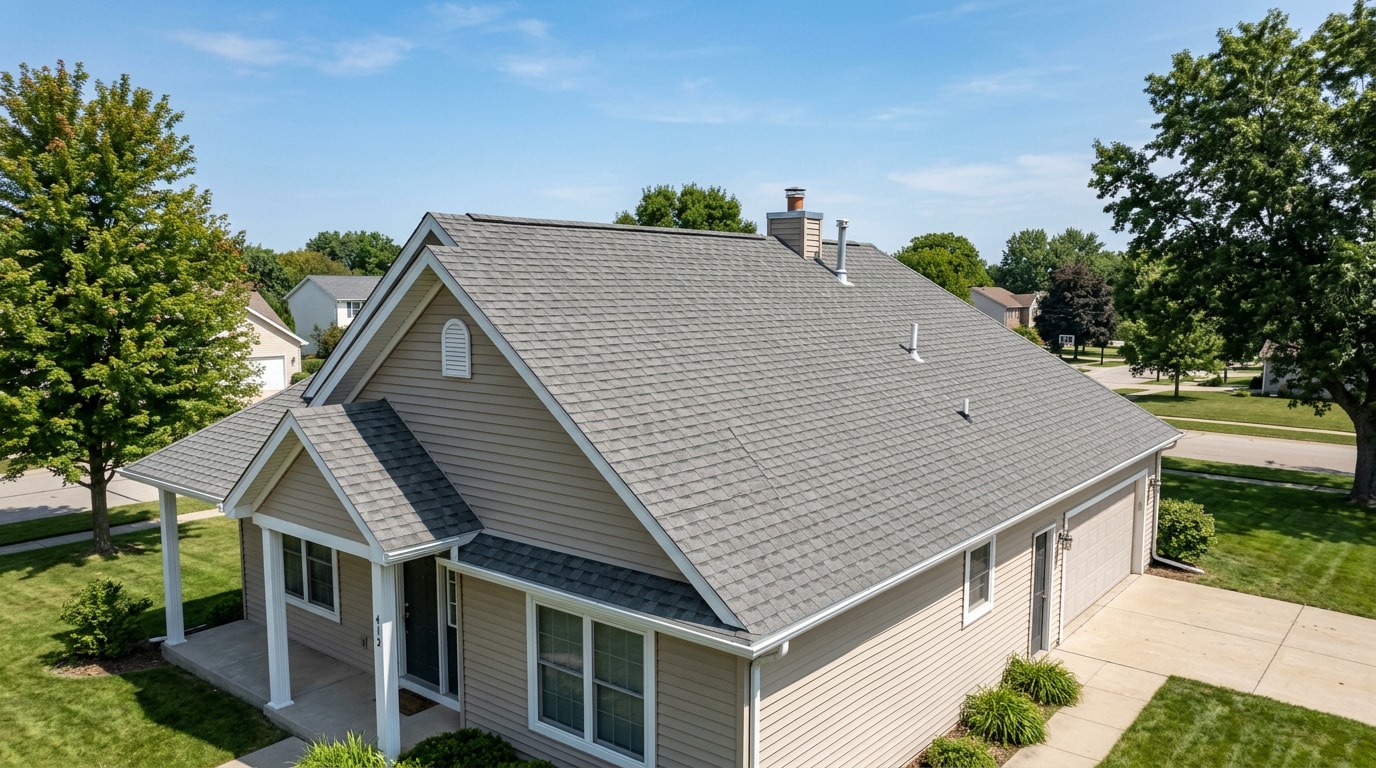
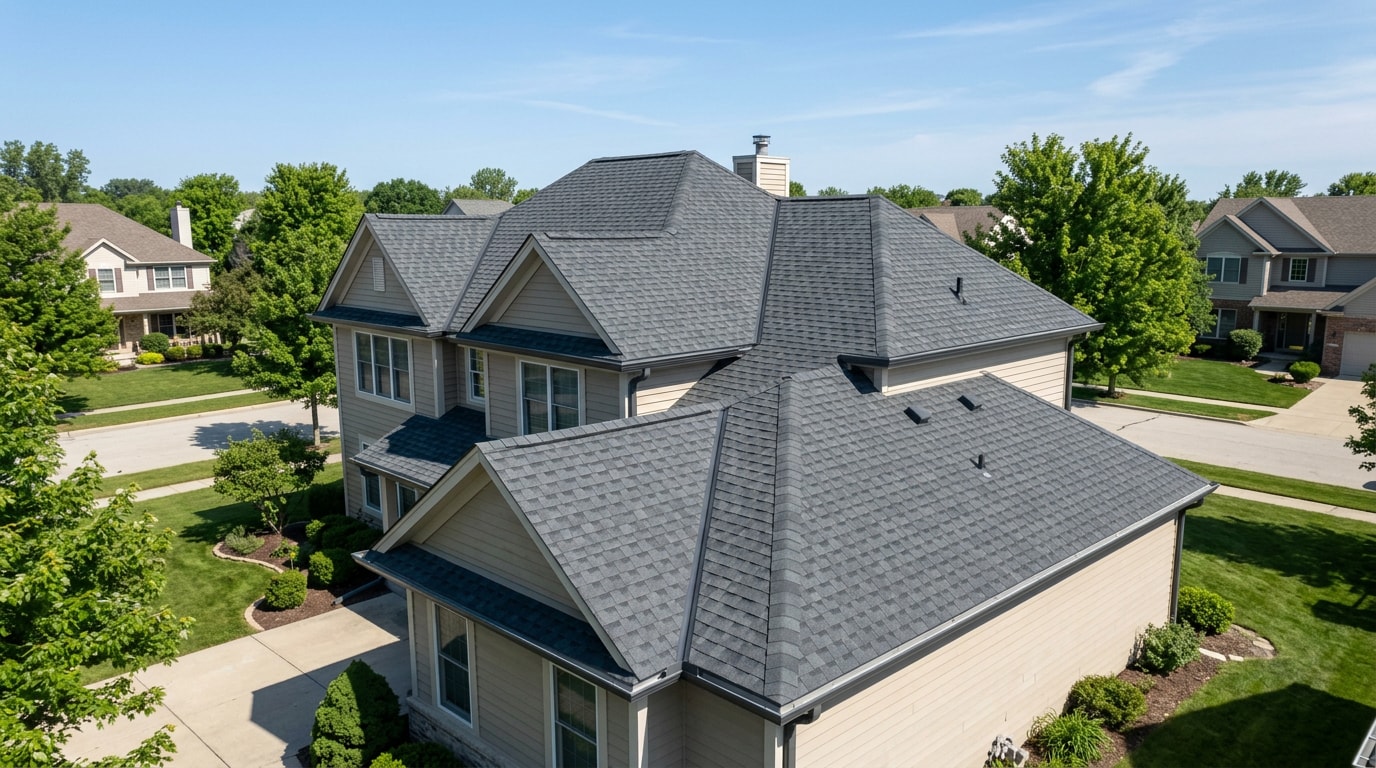
How much a roof costs in 2026 depends on three things: your roof's size, the material you pick, and where you live. Most homeowners land somewhere between $9,000 and $18,000 for a standard asphalt shingle replacement, but premium materials or a large, steep roof can push that number past $30,000. This guide breaks down real cost ranges by size and material so you can budget with confidence instead of guessing.
How Much Does a New Roof Cost on Average?
Industry benchmarks for 2026 vary more than homeowners expect, and that's worth understanding before you start comparing quotes. Angi's 2026 national research places the average roof replacement around $9,600, with a broad range of roughly $5,900 to $46,000 depending on size, material, and region. Other sources that weight their data toward larger homes or premium materials report national averages closer to $15,000 to $18,000.
That gap isn't a contradiction. It reflects different sample sizes, different regions, and different material assumptions baked into each estimate.
| Data Source | Typical Average | Why It Differs |
|---|---|---|
| Consumer marketplace averages (e.g., Angi) | ~$9,600 | Skews toward standard asphalt shingle jobs and smaller roofs |
| Mixed repair/replacement blends | ~$9,000 – $10,000 | Combines repair and replacement data into one figure |
| Larger-home, premium-material samples | ~$15,000 – $18,000 | Includes bigger roofs, architectural shingles, or metal upgrades |
The takeaway: your actual roof price depends far less on which "average" you read online and more on your roof's size, pitch, and material choice, which we cover in detail below. For a number specific to your home, a measured, on-site roof inspection beats any national average every time.
Roof Replacement Cost by Size
Roof replacement typically runs $4 to $12 per square foot installed, so total price climbs directly with your roof's surface area. A small ranch home and a large two-story house can land tens of thousands of dollars apart purely because of square footage.
Most homes have a roof footprint between 1,300 and 1,800 square feet, but that number understates actual material needs. Pitch adds surface area. A steep roof covers more material than its footprint suggests, which is why two homes with identical floor plans can need very different amounts of shingles or metal panels.
Here's how size typically plays out in total cost:
| Home Size | Approx. Roof Size | Estimated Cost Range |
|---|---|---|
| Small (1,000–1,200 sq ft) | ~1,500 sq ft | $6,000 – $14,000 |
| Medium (1,500–2,000 sq ft) | ~2,000 sq ft | $8,000 – $18,000 |
| Large (2,500+ sq ft) | ~3,000 sq ft | $12,000 – $28,000 |
So what does it cost to replace a 2,000 sq ft roof? Expect somewhere in the $8,000 to $18,000 range for standard materials, before factoring in pitch or premium shingle upgrades. For a precise number, it helps to get a measured quote rather than relying on square footage alone. You can request a free roofing estimate based on your home's actual dimensions.
Roof Replacement Cost by Material
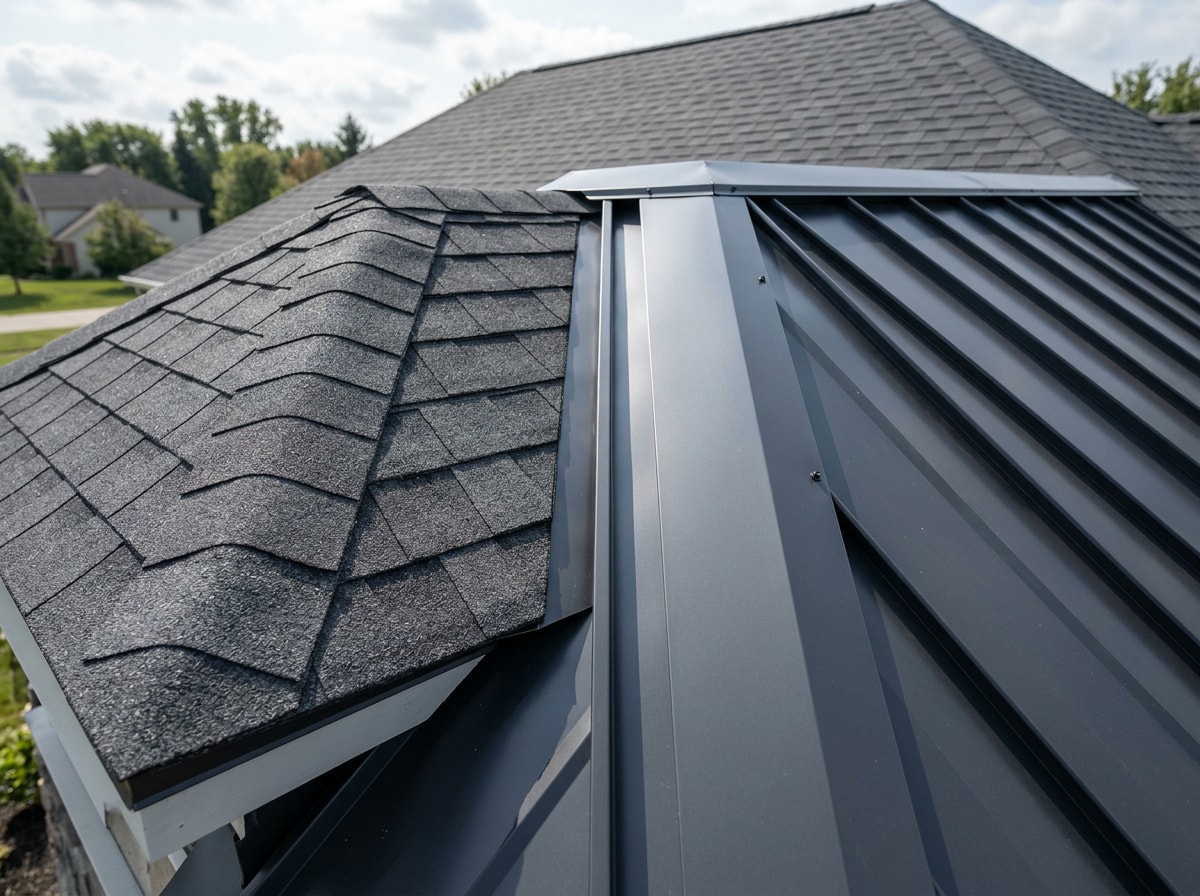
Material choice is usually the single biggest lever on your final price. Asphalt shingles remain the budget-friendly default, while metal, tile, and slate climb considerably higher in exchange for longer lifespans and different aesthetics.
| Material | Cost per Sq Ft (Installed) | Typical Total (2,000 sq ft) | Avg. Lifespan |
|---|---|---|---|
| Asphalt shingles | $3.50 – $6.00 | $8,000 – $14,000 | 20–25 years |
| Metal roofing | $6.00 – $16.00 | $14,000 – $32,000 | 40–50 years |
| Tile roofing | $6.30 – $12.30 | $14,000 – $26,000 | 50+ years |
| Slate roofing | $9.00 – $20.00+ | $20,000 – $45,000+ | 75+ years |
Looking at upfront cost alone, asphalt shingles win every time. But stretch the math across a material's expected lifespan, and metal, tile, and slate often come out ahead on a cost-per-year basis, even though they demand a bigger check up front. That's worth weighing if you plan to stay in your home long-term. If you're trying to decide between the two most common upgrade paths, our guide on whether a metal roof costs more than shingles breaks down the long-term math in more detail.
What Drives Your Roof Price Up
Beyond size and material, a handful of secondary factors shape the final number on your quote. They're the reason two homes with the "same" roof size can still get very different bids.
Roof Pitch and Slope
A roof's pitch, along with features like chimneys, skylights, and valleys, directly affects how long a crew spends on your roof. Steeper roofs are more labor-intensive to work on, and that added difficulty pushes estimates up.
The reason comes down to safety requirements, not just inconvenience. Under OSHA's fall protection standard, any roof with a slope greater than 4 in 12 is classified as a steep roof and requires guardrails, safety nets, or personal fall arrest systems rather than lighter-duty options. Crews factor that extra gear and slower pace into the bid, so a steep, cut-up roofline will almost always price higher than a simple, walkable gable roof.
Labor Costs
Replacing an entire roof isn't a weekend DIY project for most homeowners. It requires licensed professionals who understand decking, flashing, and proper material installation.
Labor typically makes up a significant share of your total bill, often comparable to the material cost itself. Rates vary by crew size, project complexity, and how quickly a job needs to be completed, so two quotes for the same material can still differ based purely on labor pricing.
Location and Permits
Where you live shapes your quote in several ways. Local cost of living, climate demands, and permit requirements all factor into the final number.
Most residential roof replacements require a permit, and permit rules are set by your local building department under model codes published by the International Code Council, the organization that develops the building codes most U.S. jurisdictions adopt. It's worth confirming what your permit covers before assuming a quote includes it.
Dallas-Fort Worth Roof Cost Snapshot
National averages only tell part of the story if you live in North Texas. Hail is the single biggest driver of roof claims across the Dallas-Fort Worth metro, and that changes what a "standard" roof quote looks like locally.
Many homeowners insurers in hail-prone counties now require or strongly incentivize Class 4 impact-resistant shingles on replacement roofs, which typically cost more upfront than standard architectural shingles but can lower your ongoing premium. If you're unsure whether your home qualifies, our guide on what a Class 4 roof actually is walks through the rating system and typical cost difference.
We quote and install roofs across Frisco, Plano, McKinney, Dallas, Fort Worth, Denton, and Allen, and pricing within that footprint tends to run near or slightly above national averages once Class 4 shingles, steep-slope labor, and permit fees from fast-growing suburban building departments are factored in.
Roof Replacement vs. Roof Repair Cost
Repairs are almost always cheaper than full replacement, at least initially. Minor patch jobs, such as replacing a handful of damaged shingles or resealing a flashing point, often run a few hundred dollars. Larger repairs involving decking damage or multiple leak points can climb into the $1,000 to $2,000 range.
That said, repair isn't always the smarter financial move. If your roof is older, has widespread damage, or needs repeated patch jobs, repair costs can creep closer to what a new roof would cost, making full replacement the better long-term call. A pattern of recurring repairs is usually a signal worth paying attention to.
Insurance can also shape this decision. According to the Insurance Information Institute, standard homeowners policies generally cover sudden damage like a tree falling on your roof during a storm, but they pay out based on your roof's depreciated value if it was already old or worn before the damage occurred. That distinction matters when you're deciding between a patch and a full tear-off. If you're leaning toward repair, our roof repair services page outlines what's typically included in a standard repair visit.
How to Reduce Roof Replacement Costs
Material selection is usually the single biggest cost lever you control, so weighing durability against upfront price is the first place to look for savings.
- Choose a mid-tier shingle. A mid-grade architectural shingle often balances cost and lifespan better than the cheapest three-tab option.
- Get multiple quotes. Pricing can vary significantly between contractors for the same scope of work, even in the same neighborhood.
- Time the project. Scheduling outside peak roofing season (typically late spring through early fall) can sometimes result in better pricing as crews have more availability.
- Bundle inspections with repairs. Catching small issues early, through a routine roof inspection, can delay the need for full replacement by years.
How to Pay for a New Roof
Depending on your homeowners insurance policy and the reason for replacement, part or all of your roof cost may be covered, particularly for sudden damage like storms or falling trees rather than gradual wear. It's worth reviewing your policy's specific language before assuming coverage either way.
Beyond insurance, common financing routes include home equity loans, contractor-offered payment plans, and personal loans. One note worth correcting here: a standard new roof generally does not qualify for a federal energy tax credit on its own. ENERGY STAR discontinued its roof product certification program in 2022, and under current IRS rules, roofing materials aren't typically listed as a qualifying building-envelope expense unless they're directly tied to a solar installation. You can check the current list of qualifying home improvements on ENERGY STAR's federal tax credits page before assuming a discount applies to your project.
For homeowners weighing payment options or wanting a measured quote before committing to a material, get a free estimate and we'll walk through what's realistic for your home and budget.
FAQ
How Much Does a New Roof Cost?
Most homeowners pay between $9,000 and $18,000 for a full roof replacement, depending on size, material, and location. Smaller homes with asphalt shingles land toward the lower end, while larger roofs or premium materials push costs well above that range.
How Can You Get an Accurate Estimate From Contractors?
Request itemized, written estimates from at least three contractors rather than relying on verbal quotes or square-footage guesses. Confirm each contractor's licensing and insurance, and ask what's included. Tear-off, disposal, decking repairs, and permits aren't always bundled by default.
Does Homeowners Insurance Cover a New Roof?
Usually only for sudden, accidental damage like wind, hail, or a fallen tree, not for wear and tear or age-related deterioration. Your payout also depends on whether your policy pays actual cash value (depreciated) or full replacement cost, so it's worth checking your policy language before filing a claim.
How Do You Know You Need to Replace Your Roof?
Common warning signs include a roof older than 20 years, curling or missing shingles, visible sagging, daylight through the attic, and heavy granule loss in gutters. Recurring leaks after repairs are also a strong signal that replacement makes more sense than another patch.
How Long Does It Take to Install a New Roof?
Most standard residential roof replacements take one to three days for a typical single-family home, weather permitting. Larger homes, steep pitches, or complex rooflines with multiple valleys can extend that timeline.
What Is the Cheapest Roofing Material?
Three-tab asphalt shingles are generally the least expensive option, followed closely by standard architectural asphalt shingles. Metal, tile, and slate all cost more upfront but last considerably longer.
How Often Should You Replace Your Roofing?
Lifespan depends heavily on material. Asphalt shingles typically last 20 to 25 years, while metal, tile, and slate can last 40 to 50 years or more with proper maintenance. Climate, ventilation, and installation quality all influence how close a roof gets to its expected lifespan.
About the Author
This guide was reviewed by the licensed roofing team at Project Revitalize, a Dallas-Fort Worth contractor serving Frisco, Plano, McKinney, Dallas, Fort Worth, Denton, and Allen. Our crews price and install roofs across North Texas every week, which is why this guide includes region-specific notes on Class 4 shingles and hail-driven insurance requirements that national cost guides typically miss. Questions about your specific home? Contact us or visit our homepage to see our full range of roofing and remodeling services.