A metal roof is more expensive than shingles in almost every direct comparison, with installed pricing running roughly $5 to $16 per square foot versus $3 to $5 for asphalt shingles. The size of that gap depends heavily on which metal panel and which shingle tier you're comparing. Below, we break down real cost-per-square-foot numbers, explain exactly why metal costs more to install, and show where the price difference shrinks, or nearly disappears, once insurance and lifespan enter the math.
Is a Metal Roof More Expensive Than Shingles? The Quick Answer
Yes. A metal roof costs more than standard asphalt shingles in nearly every scenario, though the exact multiplier depends on the specific metal and shingle tier. No, a metal roof is not cheaper than standard asphalt shingles, but the gap in price difference depends on the type of metal roof and specific asphalt shingle.
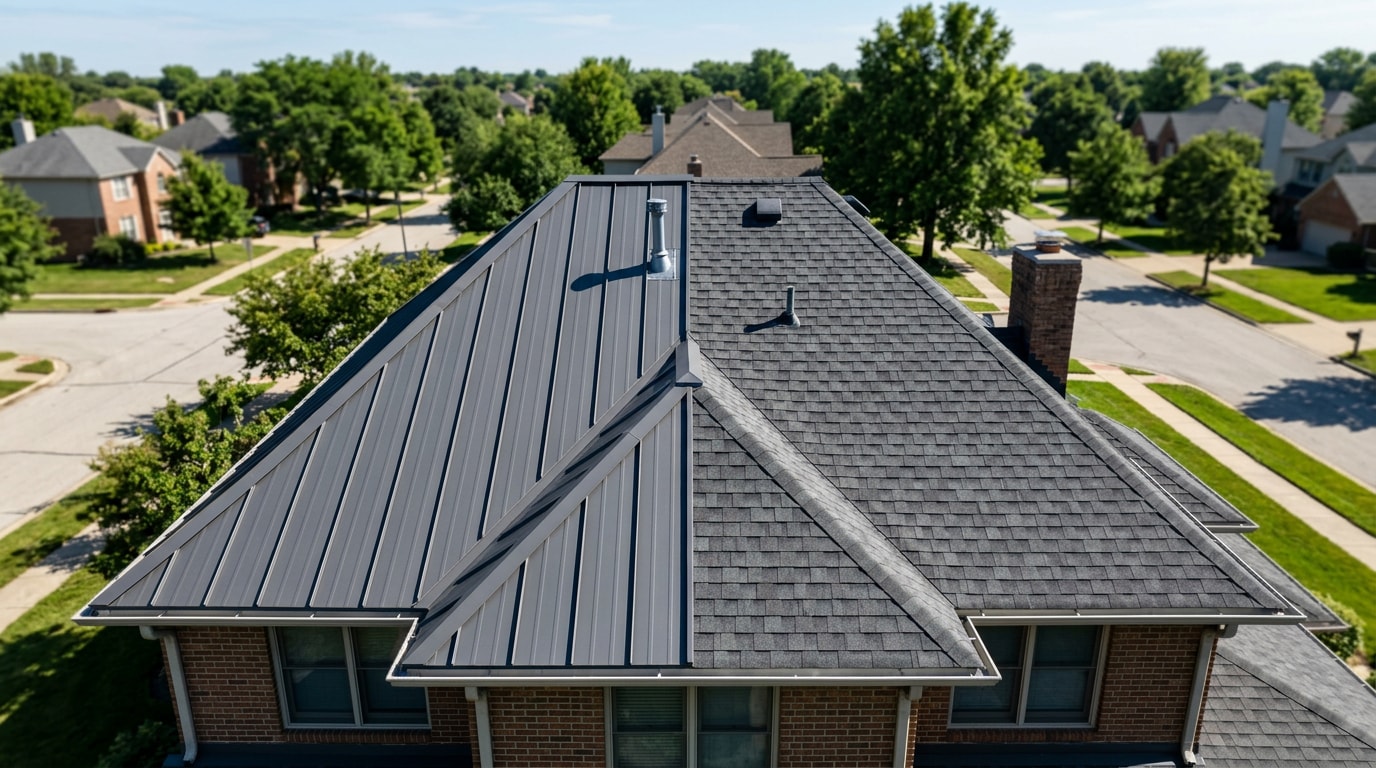
An exposed fastener metal roof system will be comparable in price to 3-tab shingles and close to architectural shingles, but cheaper than luxury shingles. On the other end of the spectrum, a standing seam metal roof will always be more expensive than asphalt shingles, and you can expect the cost of a standing seam metal roof to be more than double or triple the cost of a standard asphalt shingle roof.
One exception is worth flagging before you get into the numbers: entry-level steel panels can land close to premium shingle pricing. The sections below show exactly where.
Metal Roof vs. Shingle Cost Per Square Foot
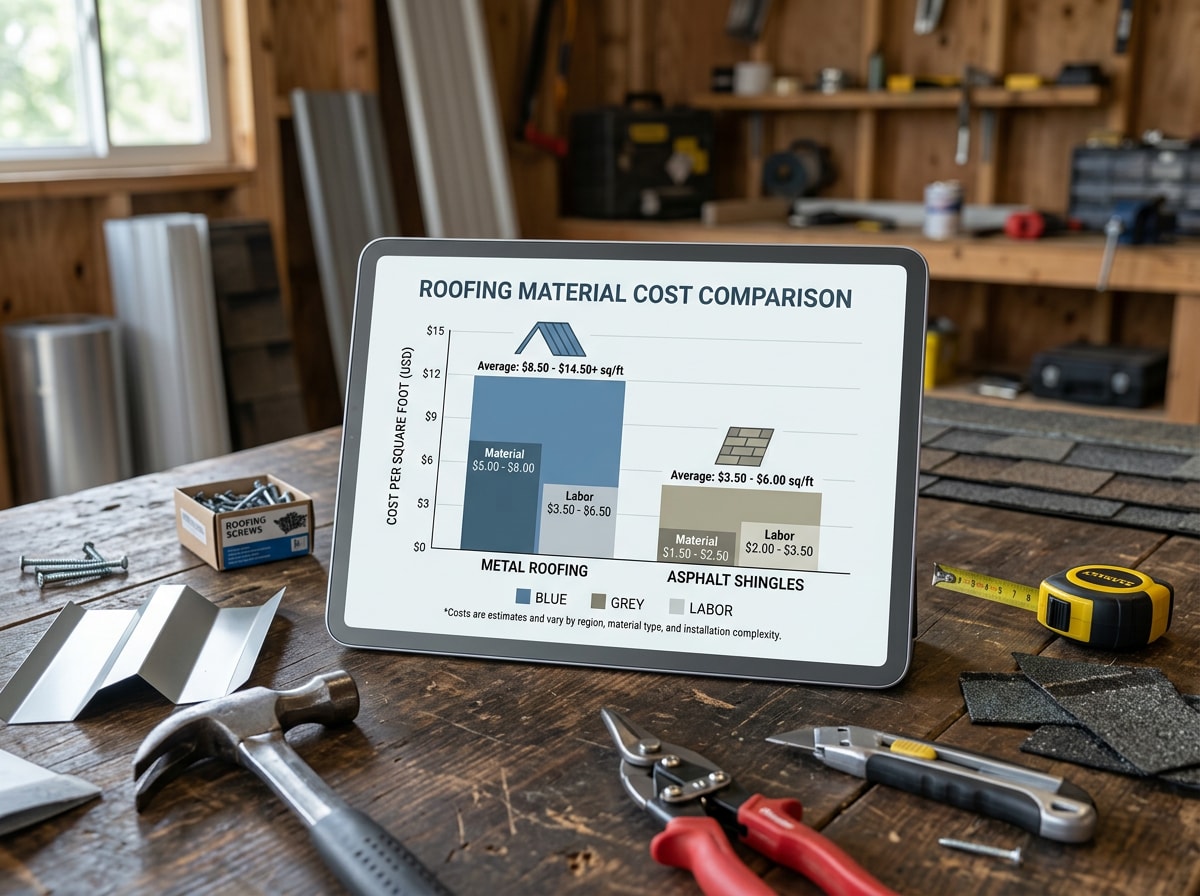
A metal roof costs $5 to $16 per square foot installed, while an asphalt shingle roof costs $3 to $5 per square foot installed. At the national project level, an asphalt roof costs around $10,500 on average, with prices ranging from $7,500 to $18,000, while a metal roof averages around $22,000 for a similarly-sized roof, with typical prices falling between $6,000 and $135,000.
That's a wide range on both sides. Part of the reason is labor: the cost of a metal roof typically ranges between $4 and $30 per square foot, and about 60% of the cost is for the labor involved in installation. Regional labor rates, roof pitch, and crew availability all move the final number even for identical materials.
Cost Per Square Foot by Material Type
Not every "metal roof" or "shingle roof" sits in the same price bracket. Here's how the individual materials compare:
| Roofing Material | Cost Per Sq. Ft. (Installed) |
|---|---|
| 3-tab asphalt shingles | $3.50 – $5.50 |
| Architectural shingles | $4.50 – $9.00 |
| Composite/synthetic shingles | $7.00 – $14.00 |
| Exposed fastener steel (metal) | $4.50 – $9.00 |
| Standing seam steel (metal) | $9.00 – $16.00 |
| Aluminum standing seam (metal) | $10.00 – $18.00 |
| Zinc roofing (metal) | $15.00 – $25.00 |
| Copper roofing (metal) | $20.00 – $50.00 |
Notice the overlap at the low end. A steel exposed fastener metal roof costs around $4.50 to $6.50 per square foot, but maintenance fees come later when the fasteners need to be replaced. That puts it right next to composite shingles, even though one is metal and one isn't. On the premium end, copper is much more expensive than shingles, ranging from $20.00 to $50.00 per square foot.
If you're weighing a full tear-off against a repair, our roof replacement team can walk you through which option fits your timeline and budget.
Why Does a Metal Roof Cost More Than Shingles?
The reason a metal roof is more expensive than asphalt shingles comes down to materials and labor costs, since metal panels themselves cost more than asphalt shingles. But the bigger driver is usually labor.
Metal roofing is more specialized, labor intensive, and requires skilled experience to install correctly, with a lot of cutting, measuring, and finer details than asphalt shingles. The complexity also means it takes longer to complete, so labor costs are very high when it comes to getting a new metal roof. Asphalt shingles, by contrast, are nailed down in overlapping rows using standardized techniques that nearly any licensed roofing crew already knows.
A few specifics on where that labor cost shows up:
- Custom cutting. Panels often need to be cut on-site to match a roof's exact dimensions and flashing details.
- Specialized tools. Standing seam systems require seaming equipment that most shingle crews don't own.
- Longer timelines. A shingle crew can often finish an average roof in one to two days, while a metal crew may need three to five days for the same footprint, especially with detailed flashing around chimneys and vents.
- Fewer trained installers. A smaller pool of contractors is certified to install metal correctly, which keeps demand, and pricing, higher in many markets.
When you're comparing quotes, look at the labor line item as closely as the material line item. That's usually where the real price gap between metal and shingles shows up. A roof inspection before you get quotes helps confirm exactly what your existing deck and flashing will need, which keeps labor estimates accurate from the start.
Other Factors That Affect Your Total Roofing Price
Material choice isn't the only line item on your quote. A few other factors move the total regardless of whether you choose metal or shingles.
Roof size. The larger your roof, the higher your cost will be. A 3,000-square-foot roof will generally cost close to double a 1,500-square-foot roof using the same material.
Roof pitch. A steeper pitch will be more expensive because extra safety equipment is required for installation, and steeply pitched metal roofs can be very slippery and require snow guards or snow rails.
Location. Metal roofs cost significantly more in areas such as California and New York than they do in other locations, including Ohio, Georgia and Texas.
Tear-off and permits. Your budget should include old roof removal and permits, adding $1,000 to $5,000 to your overall project cost. Most residential roof replacements fall under the International Residential Code's roofing chapter, and the dominant model codes governing roofing work in the United States are the IRC and IBC, both published by the International Code Council, with the IRC governing one- and two-family dwellings and townhouses up to three stories. Check with your local building department before budgeting, since permit thresholds vary by city and county.
For a full walkthrough of what's typically included in a quote, see our roof replacement cost guide or start with a roof repair estimate if your existing roof just needs patching instead of a full replacement.
Metal Roof Types vs. Shingle Types
The tier you pick within each material family matters more for pricing than the broad category alone.
Metal Roof Types
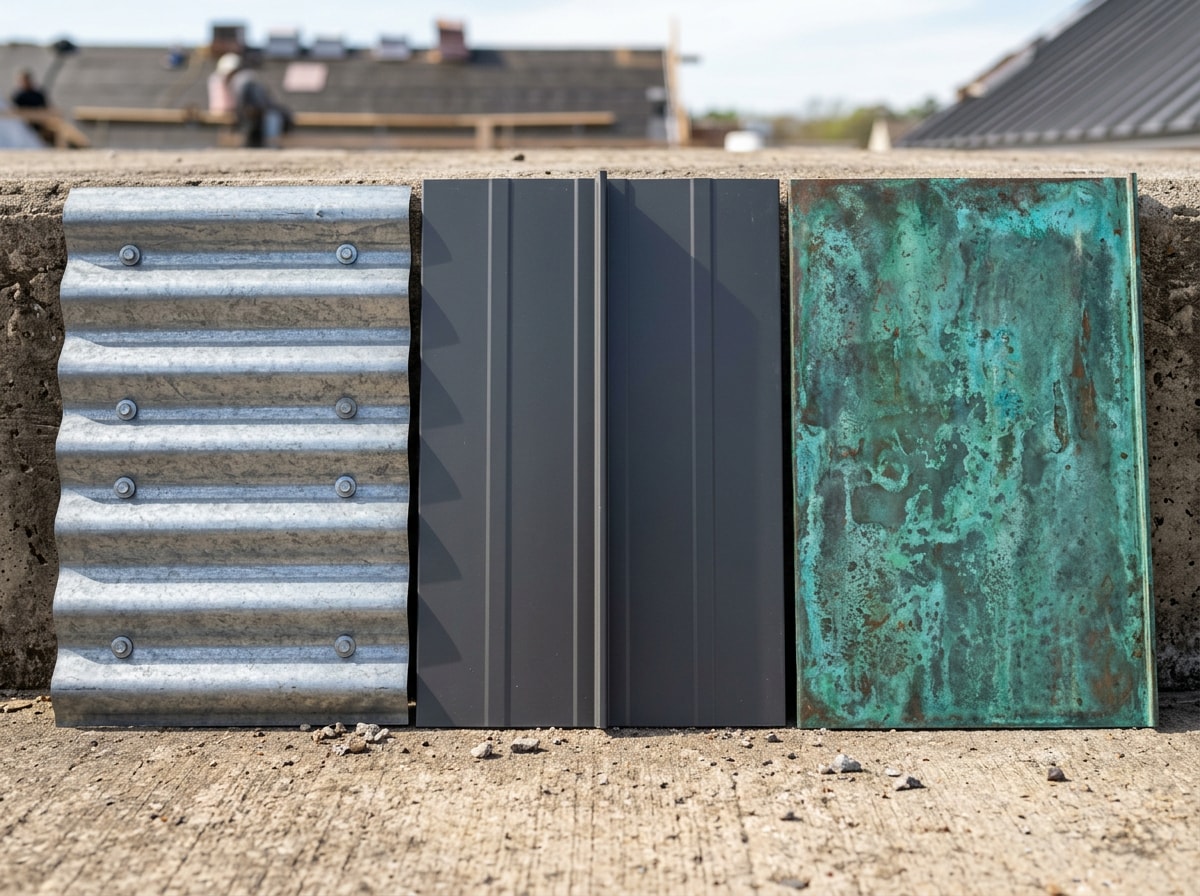
- Exposed fastener panels are the entry point for metal roofing, priced close to basic 3-tab shingles and only slightly above architectural shingles in many markets.
- Standing seam systems cost noticeably more. The concealed fastening and interlocking seams require more precise fabrication,
and will always be more expensive than asphalt shingles, often more than double or triple the cost of a standard asphalt shingle roof.
- Aluminum resists corrosion well in coastal climates and
is typically one of the more expensive metal roofing materials, often available in sheet or shingle form.
- Copper is the priciest option on the market, running $20 to $50 per square foot installed, but it's also the longest-lived.
Shingle Types
- Basic 3-tab shingles:
these inexpensive shingles remain the most popular residential roofing option, and they're easy to purchase and install, but only last 15–20 years.
- Architectural shingles:
these use a similar asphalt material to basic shingles, but they're thicker and sturdier, more expensive than standard asphalt shingles, but have a life expectancy of about 30 years and can stand up to more severe weather conditions.
- Composite shingles:
these also contain asphalt, along with fiberglass and recycled materials for added strength, and are often designed to look like wood or other materials and can last up to 50 years.
Long-Term Cost: Lifespan, Energy, and Insurance
This is where the sticker-price comparison stops telling the whole story, and it's the piece most cost calculators skip.
Lifespan. A metal roof can last 40–70 years, depending on the material, while asphalt shingles typically last 15–30 years. Over a 40-year ownership window, that difference can mean replacing a shingle roof once or twice while the original metal roof is still in service.
Insurance. This is the piece homeowners tend to overlook. Depending on your location and provider, a quality metal roof may reduce your homeowner's insurance premiums by 5% to 35%, though not every insurer offers this discount, so it's worth asking your agent if your roof qualifies.
Insurance companies often provide discounts or incentives for homeowners with metal roofs because they're seen as a lower-risk investment, since metal roofing is highly resistant to wind, hail, fire, and severe weather. In hail-prone parts of North Texas, that discount can offset a meaningful chunk of the upfront price difference over time. Confirm eligibility with your carrier before you sign a contract, since not every policy or region qualifies.
Energy performance. Reflective metal panels are tested independently for solar reflectance and emissivity through the Cool Roof Rating Council, a nonprofit standards body. The CRRC's database includes more than 3,000 roofing products, and to be considered a cool roof, products must have high reflectance and emittance values. That third-party data makes it easier to compare specific metal panel colors and coatings on actual energy performance rather than marketing claims.
Durability. Metal roofs are more fire, water, and hail resistant than shingle roofs. While hail causes minor denting on a metal roof, it does not typically lead to water intrusion, whereas shingles are prone to algae and fungus growth in damp climates and cracking in cold climates.
Pros and Cons: Metal Roof vs. Shingles
Metal roof advantages:
- Lasts two to three times longer than shingles
- Reflects heat, which can lower cooling costs
- Handles hail and wind better, with only cosmetic denting instead of leaks
- May qualify for a homeowner's insurance discount
- Tends to hold resale value better
Shingle advantages:
- Lower upfront cost
- Faster, simpler installation
- Cheaper, more widely available repairs
- Easier for most local roofers to service
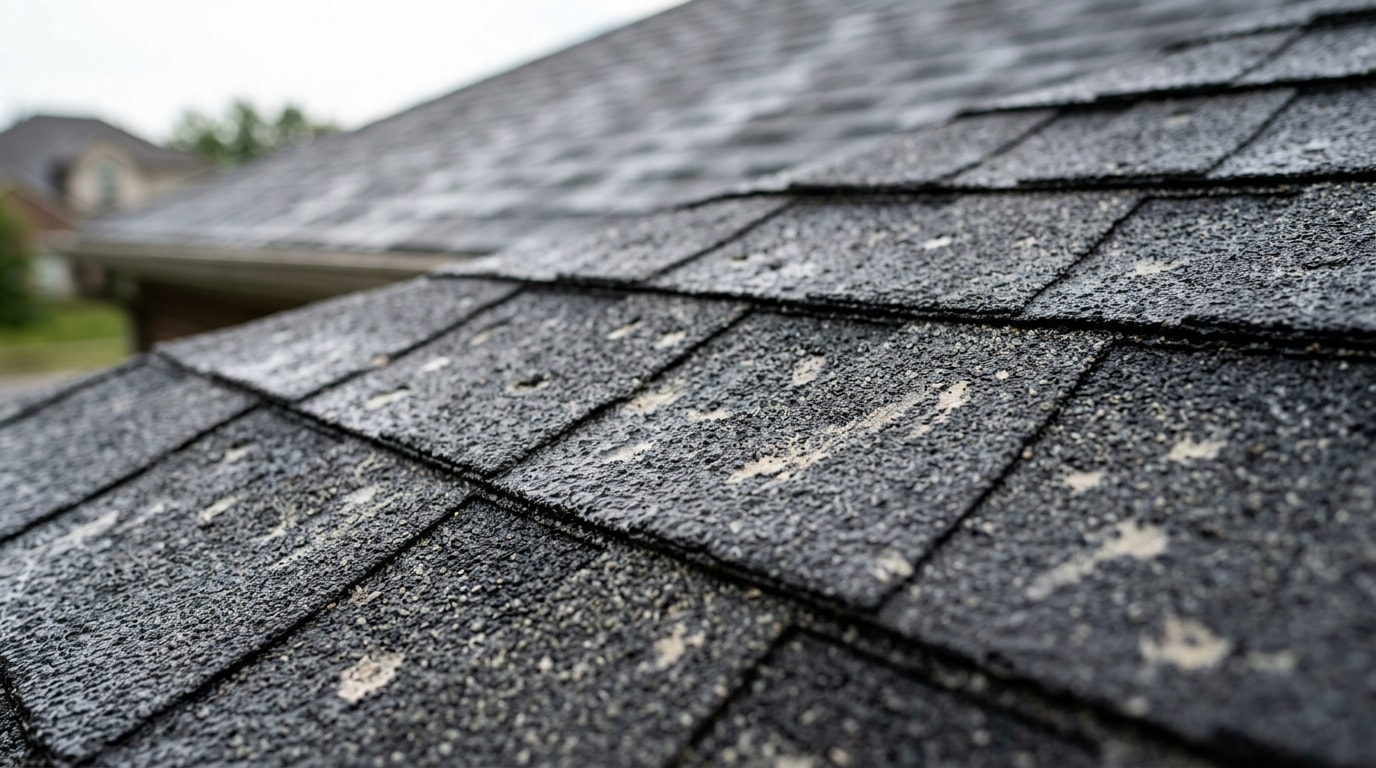
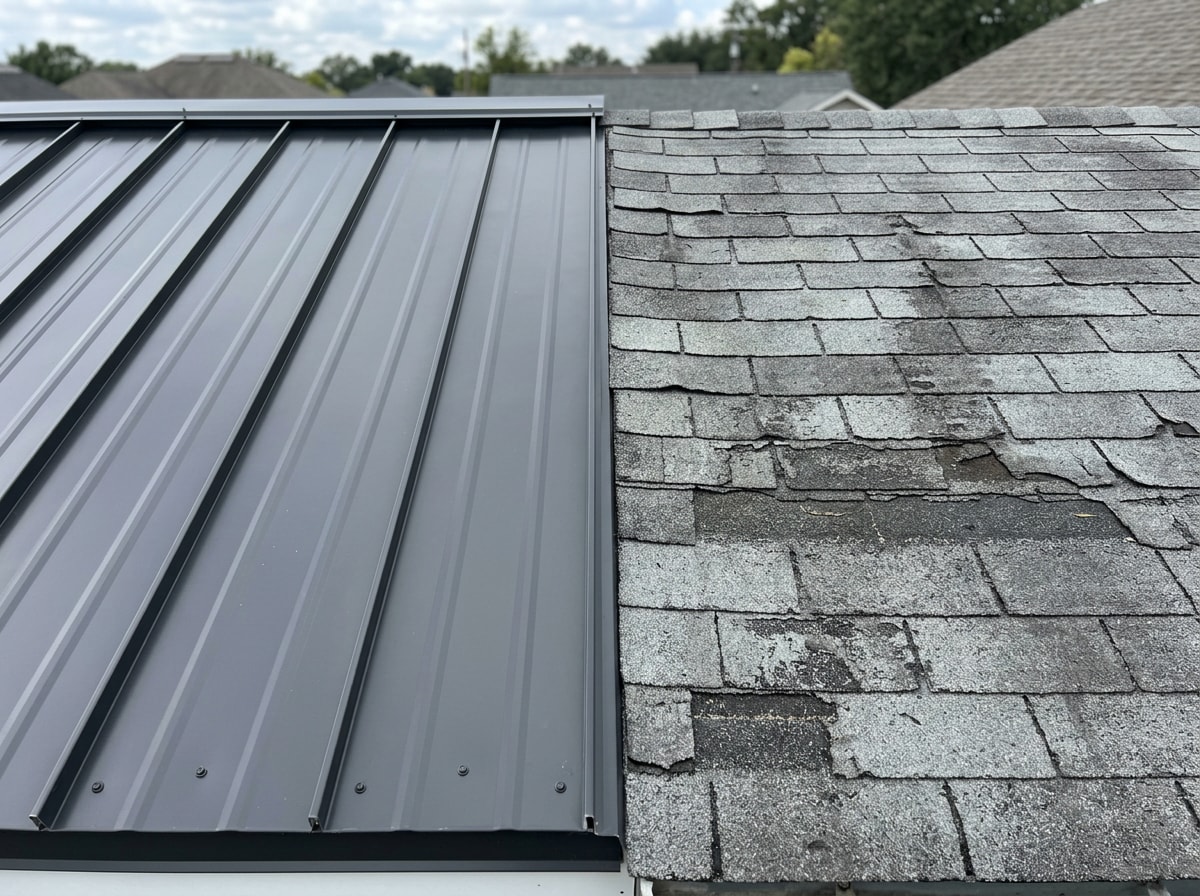
Shingle roofs are generally less expensive and easier to install than metal roofs; however, they require more maintenance and don't last as long. If your current roof is showing granule loss, curling, or storm damage, a roof inspection will tell you whether repair or full replacement makes more financial sense before you commit to either material.
How to Lower Your Metal or Shingle Roofing Cost
A few practical moves make the biggest dent in either project's total:
- Choose the right tier, not the top tier. Architectural shingles or exposed fastener steel deliver most of the performance benefit without luxury-tier pricing.
- Get multiple quotes. Labor rates for both materials vary significantly by contractor and region, so pricing spreads are normal.
- Bundle the project. Rolling tear-off, permitting, and installation into one contractor's quote, rather than paying separately, typically reduces total cost.
- Ask about insurance credits early. If you're in a hail-prone area, ask your contractor and insurer about impact-resistant roofing discounts before you finalize a material.
- Protect the whole roofline. Pairing a roof replacement with gutter installation or gutter repair at the same time avoids a second mobilization fee later.
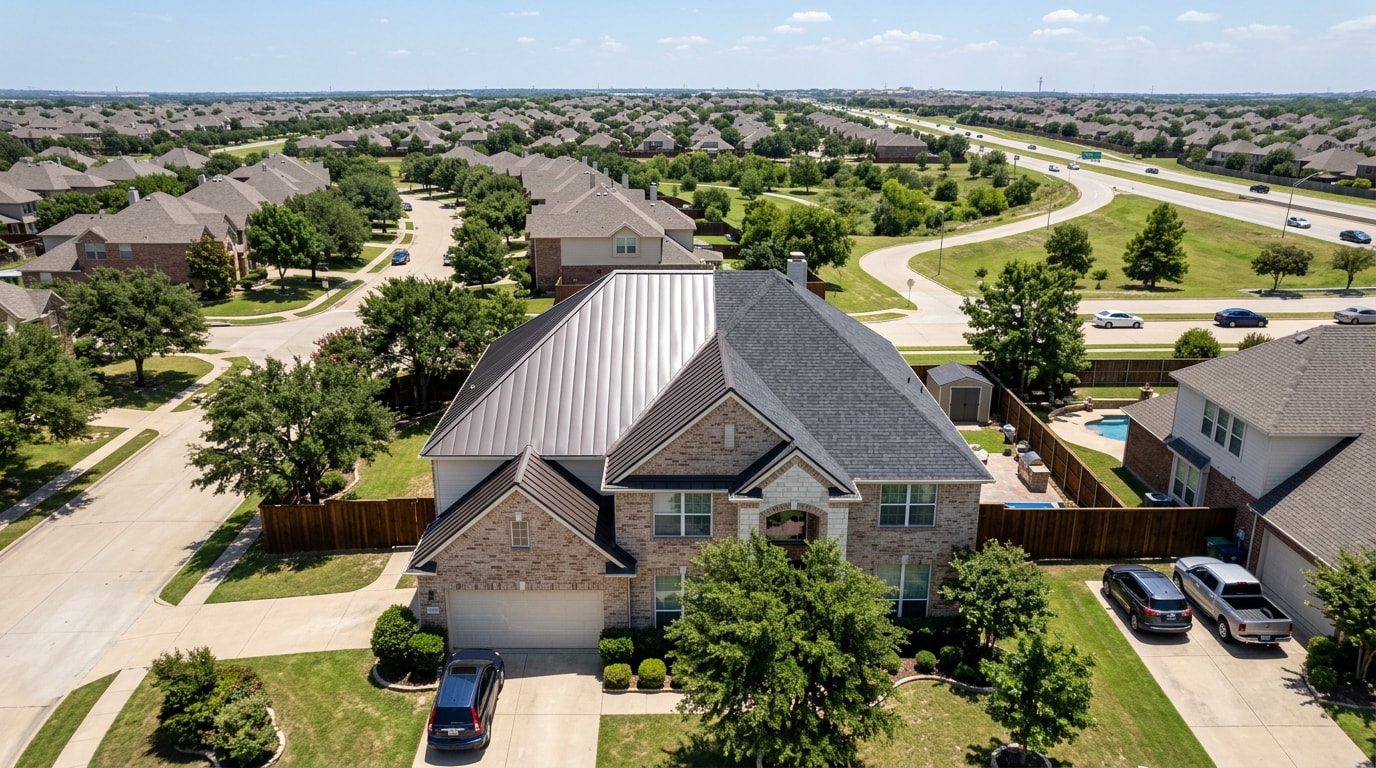
We've quoted both materials side by side for homeowners across Frisco, TX, McKinney, TX, and Plano, TX, and the pattern holds locally too: exposed fastener steel and architectural shingles land closer together than most homeowners expect. Visit our homepage to see our full range of roofing and remodeling services, or get a free estimate to see where your specific roof falls within these ranges.
FAQ
Is a metal roof cheaper than shingles?
No. A metal roof is not cheaper than standard asphalt shingles in most direct comparisons. An entry-level exposed fastener steel roof can land close to architectural shingle pricing, but it's still rarely cheaper than a basic 3-tab shingle roof once labor and materials are factored in.
How much more expensive is a metal roof than shingles?
A standing seam metal roof typically costs two to three times more than a standard asphalt shingle roof. Basic steel panel roofs sit closer to shingle pricing, while copper can cost seven to ten times more than 3-tab shingles. Getting quotes for your specific roof size and material tier is the only way to know your actual price difference.
Does a metal roof increase home value?
A new metal roof can support home value and offer a strong return on investment, since buyers often view it as a durability upgrade. The exact resale impact varies by region, home price point, and local buyer expectations, so ask a local agent or contractor for market-specific numbers.
How long does a metal roof last compared to shingles?
Metal roofs typically last 40 to 70 years depending on the material and installation quality. Asphalt shingles usually need replacement after 15 to 30 years depending on the shingle tier and climate. That gap is the main reason metal's higher upfront cost evens out over time.
Is a metal roof worth the extra cost?
For homeowners planning to stay in their home for a decade or more, yes, in most cases. The combination of a longer lifespan, lower maintenance, potential insurance discounts, and reduced cooling costs typically offsets the higher upfront price over time. If you're planning to sell within a few years, a mid-tier architectural shingle often makes more financial sense.
Does a metal roof cost more to insure?
Not usually. Many insurers offer discounts of 5% to 35% for metal roofs because of their resistance to wind, hail, and fire. Discount availability depends on your carrier, state, and the specific metal system installed, so confirm with your agent before you finalize a material choice.
This guide was reviewed by the licensed contracting team at Project Revitalize, who inspect and quote both metal and shingle roof replacements across the Dallas-Fort Worth area. Questions about your specific roof? Contact us for a free, no-obligation estimate.