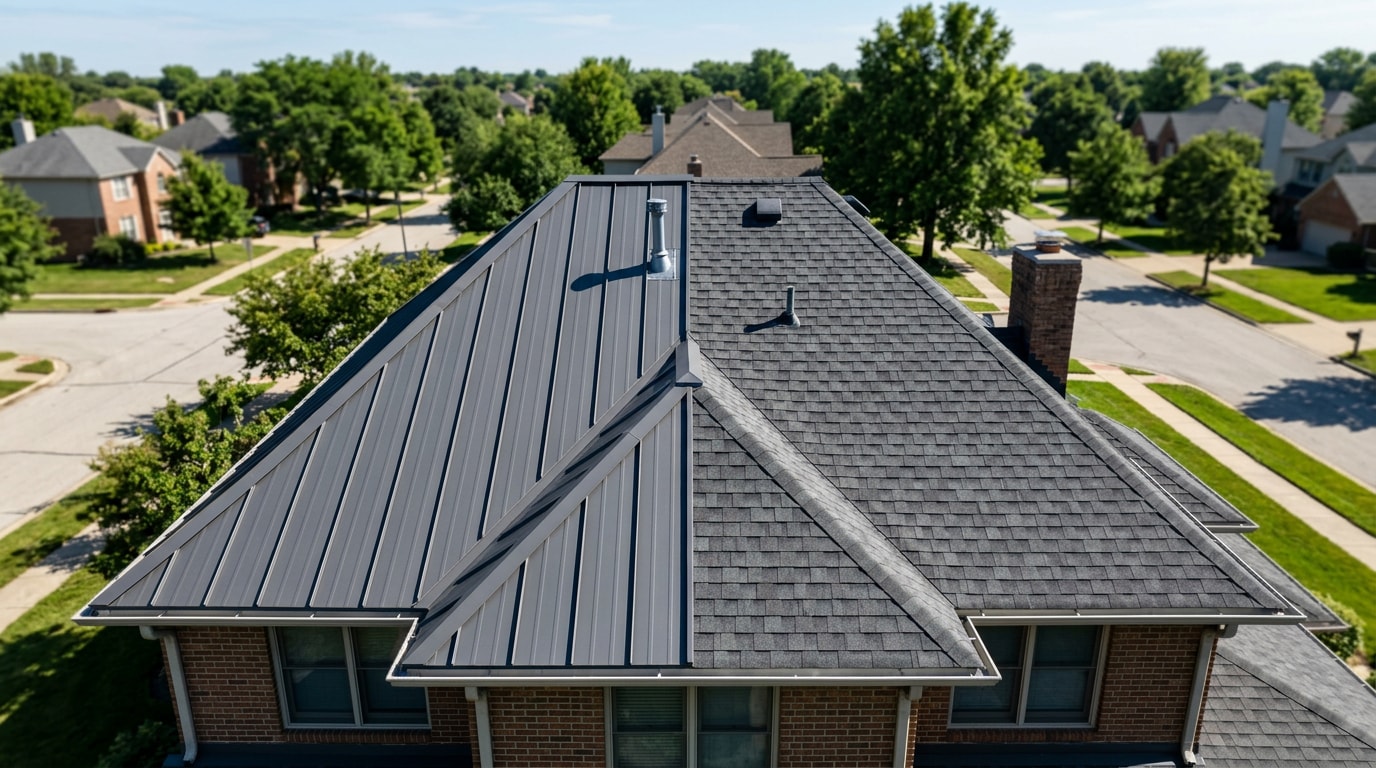
If you're asking how much for a metal roof, plan on $8,000 to $45,000 installed, with most homeowners landing between $14,000 and $28,000 for an average-size house. The number swings that widely because material, roof size, pitch, and labor all move the price in different directions, and we'll walk through each one so you can see exactly where your project fits.
Metal Roof Cost Per Square Foot
Installed metal roofing typically runs $6.00 to $16.00 per square foot, with most standard steel panel systems landing between $7 and $13 per square foot. Premium metals like copper push well past $18 per square foot for materials alone.
Different cost guides quote wildly different numbers for the same job. Some list material-only pricing, others include labor, and a few price by the "square" (100 square feet of roof) instead of home square footage. That's why one site says $5,500 and another says $40,000 for what sounds like the same roof.
A 2,000-square-foot single-story home typically has 2,200 to 2,600 square feet of actual roof surface once pitch and overhangs are factored in. Always ask a contractor for a quote based on measured roof area, not your home's floor plan.
| Home Size (Approx.) | Typical Roof Area | Total Installed Cost |
|---|---|---|
| 1,200 sq ft | 1,400 – 1,700 sq ft | $8,000 – $20,000 |
| 1,700 sq ft | 2,000 – 2,400 sq ft | $12,000 – $28,000 |
| 2,200 sq ft | 2,500 – 3,000 sq ft | $15,000 – $36,000 |
| 3,000 sq ft | 3,300 – 4,000 sq ft | $20,000 – $48,000 |
For a fuller look at what installation and material options are available near you, browse our roofing contractor services.
Metal Roof Cost by Type and Material
"Metal roof" covers several distinct metals and panel styles, and the type you pick is the single biggest factor in your final price.
| Metal Roof Type | Installed Cost Per Sq Ft | Best For |
|---|---|---|
| Corrugated steel | $5.50 – $9.00 | Budget projects, barns, sheds |
| Standing seam steel | $9.00 – $16.00 | Residential homes, longevity |
| Aluminum | $8.00 – $13.00 | Coastal, salt-air climates |
| Copper | $18.00 – $35.00+ | High-end, historic homes |
Standing Seam Metal Roof Cost
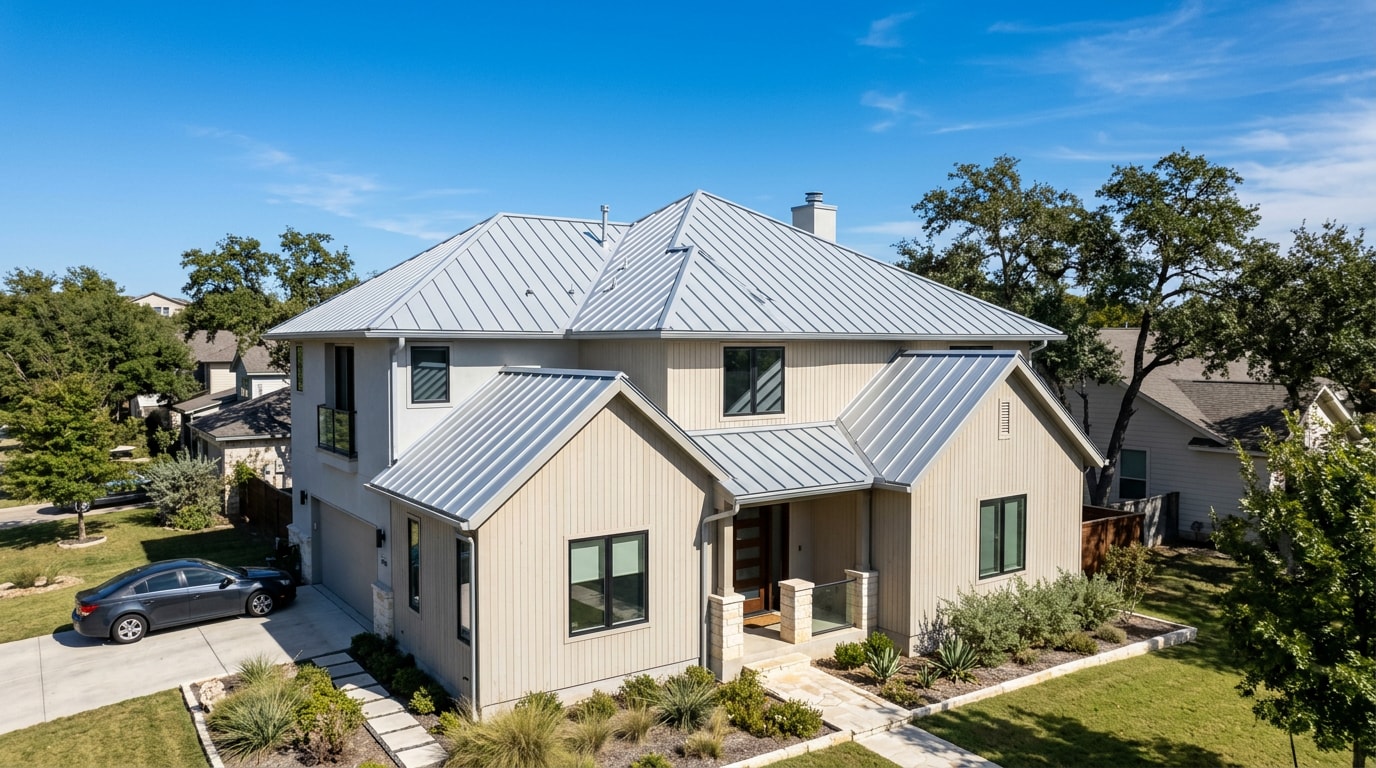
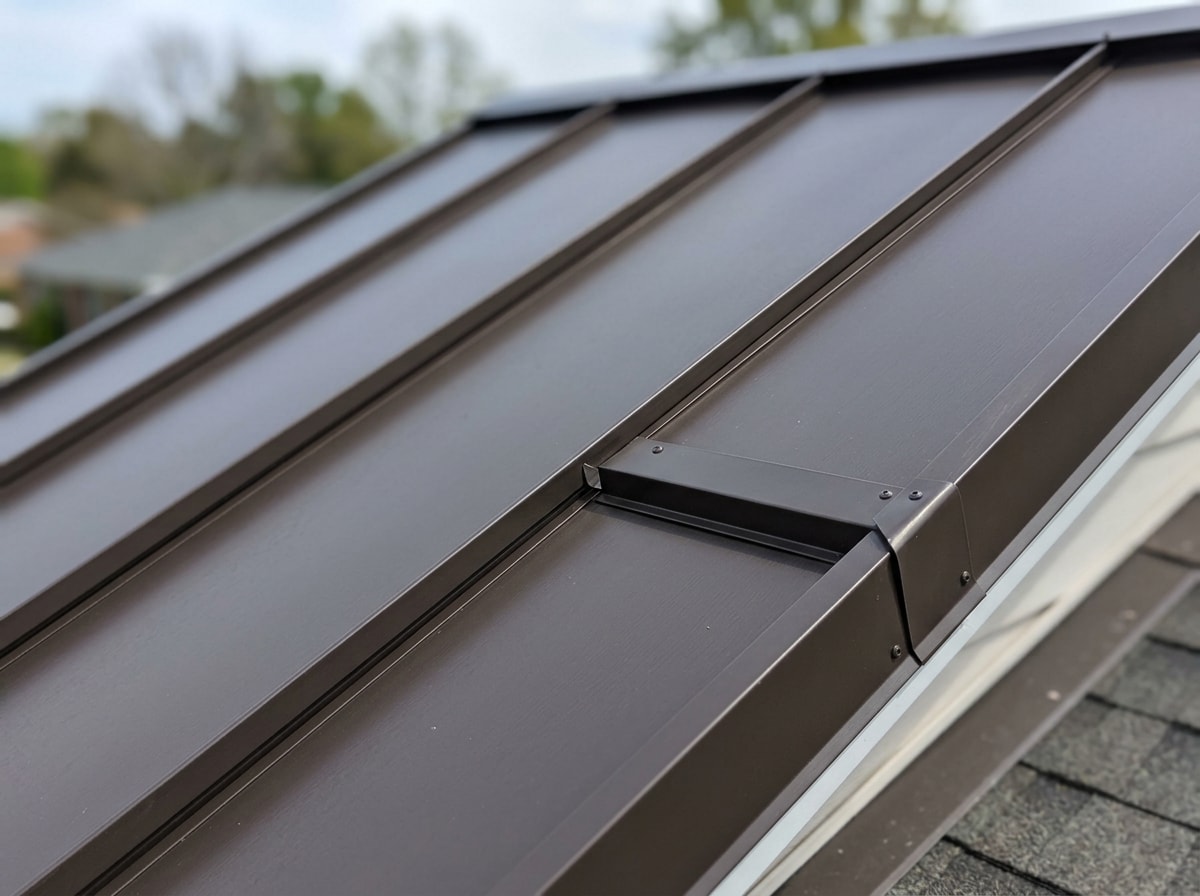
Standing seam panels are the most popular residential choice because the fasteners are hidden beneath interlocking seams instead of exposed to weather. That reduces leak points and is a big reason most manufacturers back these systems with 30- to 50-year warranties.
Corrugated Metal Roof Cost
Corrugated panels are the budget entry point. They use exposed fastener panels, meaning screws penetrate the metal directly and need periodic resealing or replacement over time. This style is common on barns and workshops, and it shows up residentially mainly when upfront cost outweighs long-term maintenance concerns.
Steel Roof Cost
Steel is the most common residential metal roofing material, and pricing splits by coating type. Galvanized and galvalume steel, the standard options, generally cost less than stainless steel, which can climb higher because of its added corrosion resistance. For most inland climates, galvalume offers the best balance of price and durability.
Aluminum Roof Cost
Aluminum is popular in coastal regions because it naturally resists the salt-air corrosion that shortens the lifespan of steel panels near the ocean. It's also lighter than steel, which can matter on older structures with weight restrictions.
Copper Roof Cost
Copper sits at the top of every cost guide's list, prized for its patina finish and lifespans that can exceed a century. Given the price, it's usually reserved for historic homes, accent roofing, or high-end custom builds rather than full residential replacements.
What Affects Your Metal Roof Price
Two identical-size homes can get metal roof quotes that differ by thousands of dollars. These are the factors that explain most of that gap.
- Tear-off: Removing old roofing before installation typically adds $1 to $5 per square foot. Installing metal directly over existing asphalt shingles can skip this cost, though local code often limits it to one existing layer, and it isn't advisable if the deck has damage.
- Pitch and complexity: Steep or multi-plane roofs with valleys, dormers, and skylights require more labor and cut panels than a simple gable roof. Complex geometry can add 10% to 30% to total project cost.
- Gauge and fasteners: Lower gauge numbers mean thicker, stronger, pricier metal. The common residential debate is 24-gauge versus 26-gauge: 24-gauge resists denting and wind uplift better, while 26-gauge is lighter on the budget. Concealed-fastener systems generally cost more to install than exposed-fastener panels because of specialized tools and tighter tolerances. The Department of Energy's Building America program notes that in high-wind and coastal zones, fastener type and spacing are dictated by the manufacturer's tested wind-uplift rating, not just personal preference.
- Labor: Labor typically accounts for $3.50 to $8.00 per square foot, or roughly 40% to 60% of total project cost, depending on crew experience and roof complexity.
Metal Roofing Costs in North Texas: What DFW Homeowners Should Know
Local pricing context matters more than most national guides admit. In the Dallas-Fort Worth area, two things push metal roof economics in a slightly different direction than the national averages above: hail frequency and insurance rules.
Texas is one of a handful of states where the Texas Department of Insurance requires carriers to make a premium discount available on homes with UL 2218 Class 4 impact-resistant roofing, which includes many metal panel systems. The TDI roof installation certification form is what your contractor files to document eligibility, but the size of the discount is set by each carrier, so confirm the actual percentage with your insurance agent before assuming savings.
On jobs we've priced and installed across Frisco, Plano, and the wider Metroplex, that insurance credit combined with a metal roof's resistance to golf-ball-size hail is often the deciding factor for homeowners who were on the fence about the higher upfront cost. Labor rates in North Texas also run close to national averages rather than the coastal premiums you'd see in California, which keeps total installed pricing in the DFW area closer to the middle of the national ranges above rather than the high end.
We serve homeowners planning metal roof projects throughout Frisco, TX, Dallas, TX, McKinney, TX, Plano, TX, Fort Worth, TX, Denton, TX, and Allen, TX, and pricing can vary block to block depending on permitting requirements and roof access.
Metal Roof vs. Asphalt Shingle Cost
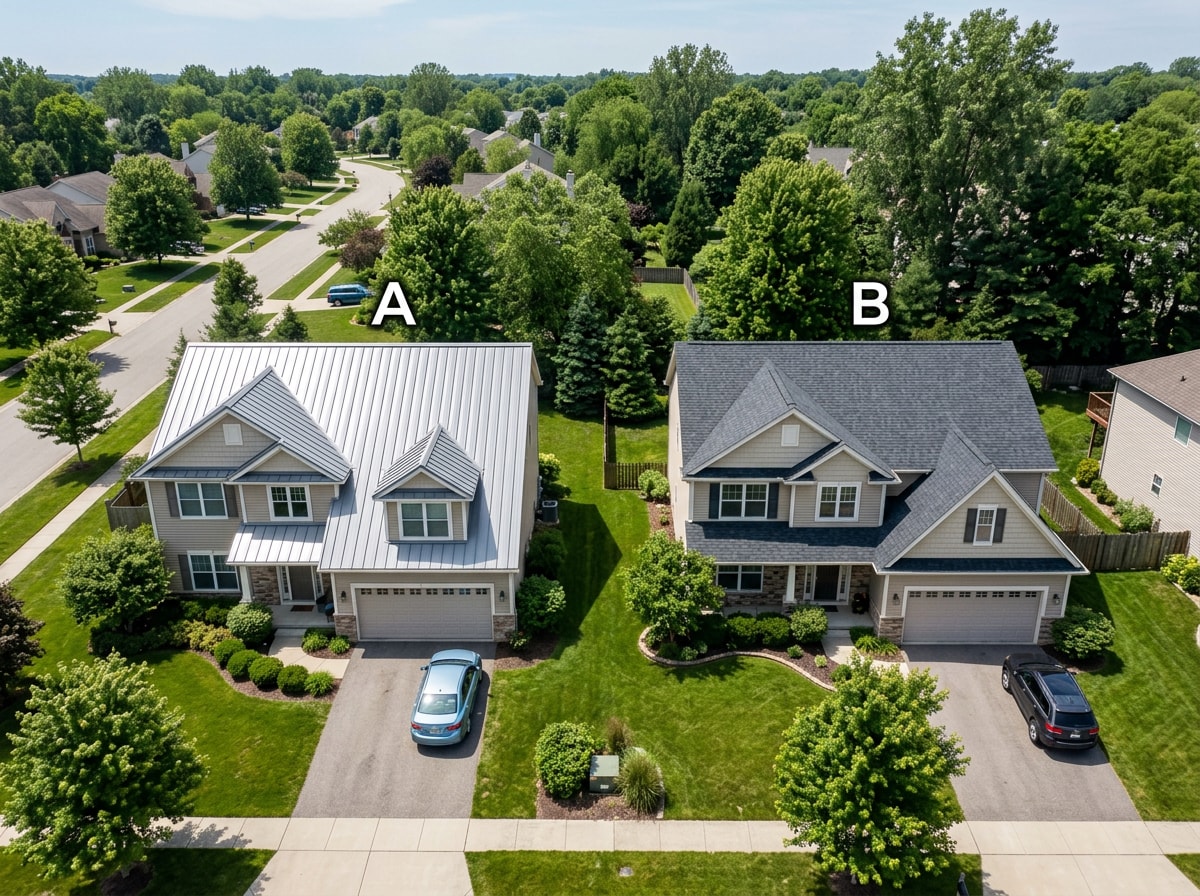
Metal costs roughly two to three times more upfront than asphalt shingles, so the real question is whether long-term value closes that gap.
| Factor | Metal Roof | Asphalt Shingles |
|---|---|---|
| Upfront cost per sq ft | $6 – $16 | $3.50 – $6.50 |
| Typical lifespan | 40 – 70 years | 20 – 30 years |
| Maintenance | Low | Moderate |
| Energy efficiency | Reflects heat, can lower cooling costs | Absorbs heat |
Run the numbers over time and the picture shifts. A $22,000 metal roof lasting 50 years costs about $440 per year of service. A $12,000 asphalt roof lasting 22 years, and likely needing at least one replacement in that span, costs roughly $500 to $550 per year once you factor in reinstallation. We break down this math in more detail, including how gauge and panel style change the comparison, in our guide on whether a metal roof costs more than shingles.
A reflective metal roof can also reduce cooling costs. The EPA notes that in air-conditioned homes, solar reflectance from a cool roof can reduce peak cooling demand by 11 to 27 percent, which narrows the total-cost gap further in hot climates like North Texas.
How to Save Money on a Metal Roof
Lowering your metal roof cost doesn't have to mean sacrificing durability.
- Choose 26-gauge steel or exposed-fastener panels instead of standing seam if your climate doesn't demand the extra strength.
- Ask contractors about seasonal pricing, since roofing companies often offer lower rates in slower months.
- Explore metal roof financing, which spreads the cost over monthly payments instead of one lump sum.
- Skip tear-off where code allows it by installing over a single existing shingle layer in good condition.
- Bundle the project. If your gutters are older than your roof or get damaged during tear-off, replacing both at once is usually cheaper than two separate service calls. See our gutter installation options if that applies to your home.
One thing worth correcting here: several older roofing sites still advertise a federal tax credit for ENERGY STAR-rated metal roofing. That credit (Section 25C) expired December 31, 2025 and did not carry over into 2026. If a contractor tells you your new metal roof qualifies for a federal tax break this year, verify it with a tax professional before counting on the savings. State and utility rebates for reflective roofing sometimes still exist, so it's worth asking your utility provider directly.
Should You DIY or Hire a Professional?
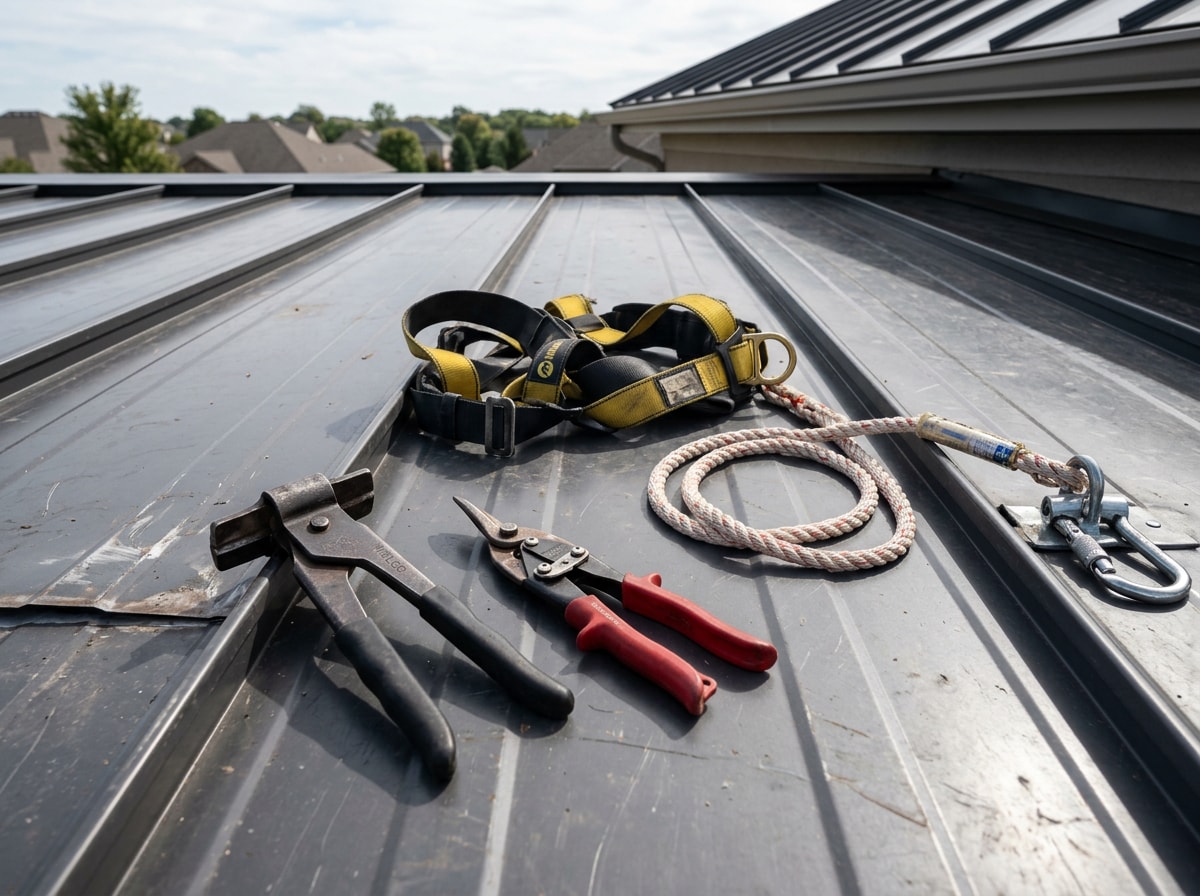
Metal roofing is generally not a DIY-friendly project, even for homeowners comfortable with other renovations. Panels are heavy and sharp-edged, and precise cutting and fastening is what keeps a roof leak-free for decades rather than years.
Falls from steep or wet metal surfaces are a leading cause of roofing injuries, and proper harnessing and staging equipment isn't something most homeowners own or know how to rig safely. Most manufacturer warranties also require installation by a certified or licensed contractor, so a DIY install can void coverage before the roof sees its first hailstorm.
Before committing to a material or gauge, it's worth having a licensed contractor walk the roof in person. A professional roof inspection catches deck damage, ventilation gaps, or structural issues that change your final price, things a phone estimate can't account for. If your current roof is closer to a full roof replacement than a repair, get that confirmed before you start comparing metal panel quotes.
Ready to see what your specific roof would cost? Get a free estimate from a licensed local crew, or visit Project Revitalize to see the full range of roofing and remodeling services we offer across the Dallas-Fort Worth area.
FAQ
Is a metal roof worth the extra cost?
For most homeowners planning to stay long-term, yes. The higher upfront price is typically offset by a 40- to 70-year lifespan, lower maintenance needs, and potential energy savings, especially compared to replacing asphalt shingles two or three times over the same period.
How much does a 2,000-square-foot metal roof cost?
A 2,000-square-foot home typically has around 2,200 to 2,600 square feet of actual roof area, putting installed metal roofing costs between roughly $15,000 and $34,000. The final number depends heavily on material choice, roof pitch, and whether tear-off is required.
What is the cheapest type of metal roof?
Corrugated steel with exposed fasteners is the cheapest option, typically costing $5.50 to $9.00 per square foot installed. The trade-off is more maintenance over time, since exposed screws can loosen or corrode faster than concealed-fastener systems like standing seam.
Can you put a metal roof over shingles?
In many cases, yes, which can save on tear-off costs of $1 to $5 per square foot. Local code often limits this to one existing shingle layer, and a full tear-off is required if the roof deck is damaged, sagging, or already has multiple layers. If you're weighing this option for an asphalt roof rather than metal, our guide on shingling over existing shingles covers the code and risk side in more detail.
How long does a metal roof actually last?
Most steel and aluminum panel systems last 40 to 60 years with basic maintenance, and standing seam systems with quality coatings can reach 50 to 70 years. Copper can exceed a century. Actual lifespan depends on climate, coating quality, and how well flashing and fasteners were installed.
Does a metal roof increase home resale value?
It generally helps. Buyers in hail-prone regions like North Texas often view a metal roof as a maintenance-free selling point, and some appraisers give credit for the extended remaining service life compared to an aging shingle roof. It's not a dollar-for-dollar return, but it's rarely a negative in a listing.