Yes, you can shingle over shingles in most cases, but only with asphalt shingles, only if the roof currently has one layer, and only if local code and the deck's condition allow it. This process, known as a roof overlay, trades long-term performance for a lower upfront bill. Here's exactly when that trade makes sense, when it doesn't, and what an inspector actually checks before signing off.
Quick Answer: Can You Shingle Over Shingles?
A roof overlay is legal in most jurisdictions when the existing roof has a single layer of asphalt shingles, lies flat with no curling or buckling, and shows no water damage or soft decking. If two layers already exist, code typically requires a full tear-off before any new shingles go down.
That "yes, but" covers the legal side. Whether it's a smart move for your specific roof depends on cost, resale plans, and how much risk you're willing to hide under a new layer, all covered below.
How Many Layers of Shingles Are Allowed by Code?
Most U.S. jurisdictions cap asphalt shingle roofs at two layers total. Roof recover using asphalt shingles over an existing asphalt shingle roof is not allowed if there are two layers present already, under IRC R908.3.1.1 and IBC 1512.2.1.1. In plain terms: one existing layer usually qualifies for an overlay, two layers usually means tear-off, no exceptions.
Code also blocks an overlay in a few other situations regardless of layer count, including a deteriorated or water-soaked existing roof, or an existing covering like slate or clay tile that isn't compatible with layering. Local jurisdictions frequently adopt stricter versions of the model code, so a city or county near you may require a full tear-off even on a single-layer roof.
Don't guess on this one. Call your local building department or ask your roofer to confirm the permit requirement before you assume your roof qualifies.
If you'd rather skip the guesswork entirely, our roof replacement team can confirm your layer count and code eligibility during a single visit.
What Counts as a Roof Overlay (and What Doesn't)
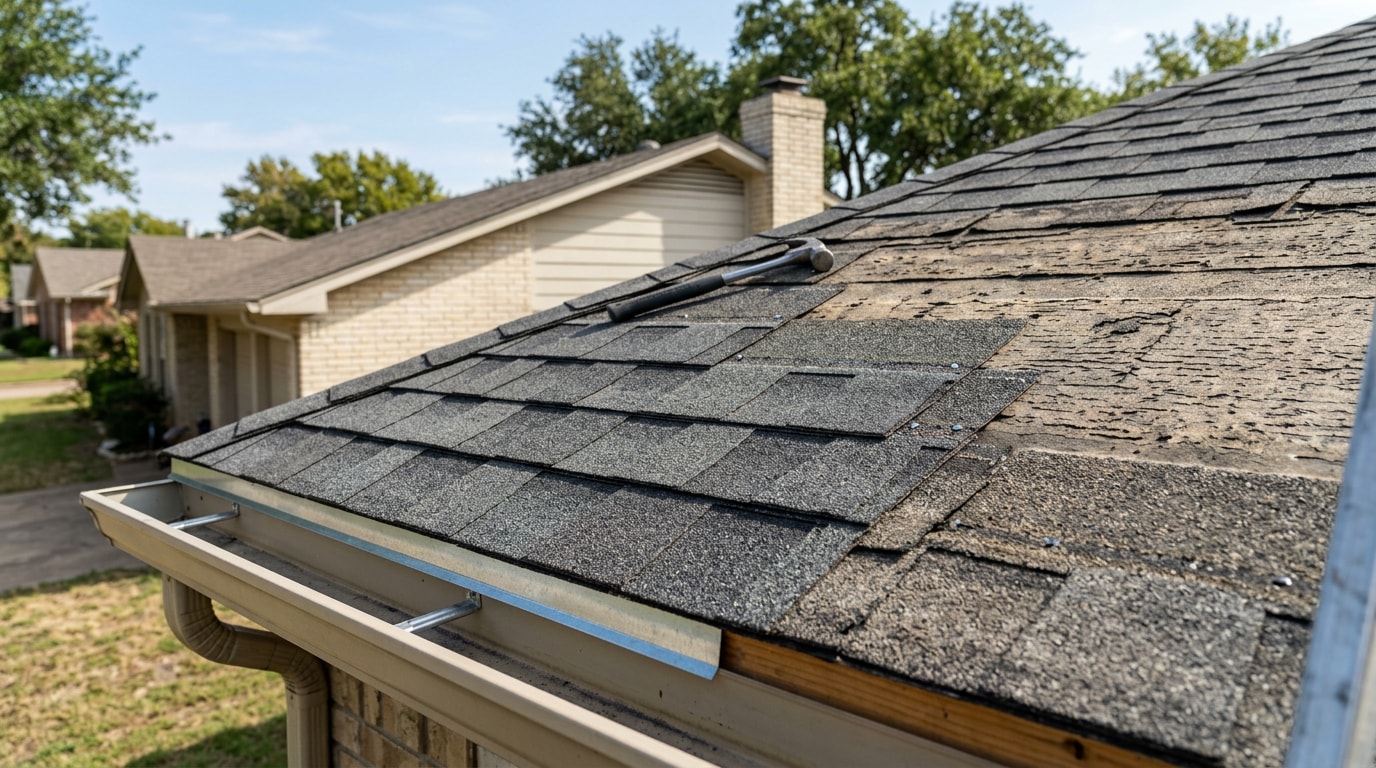
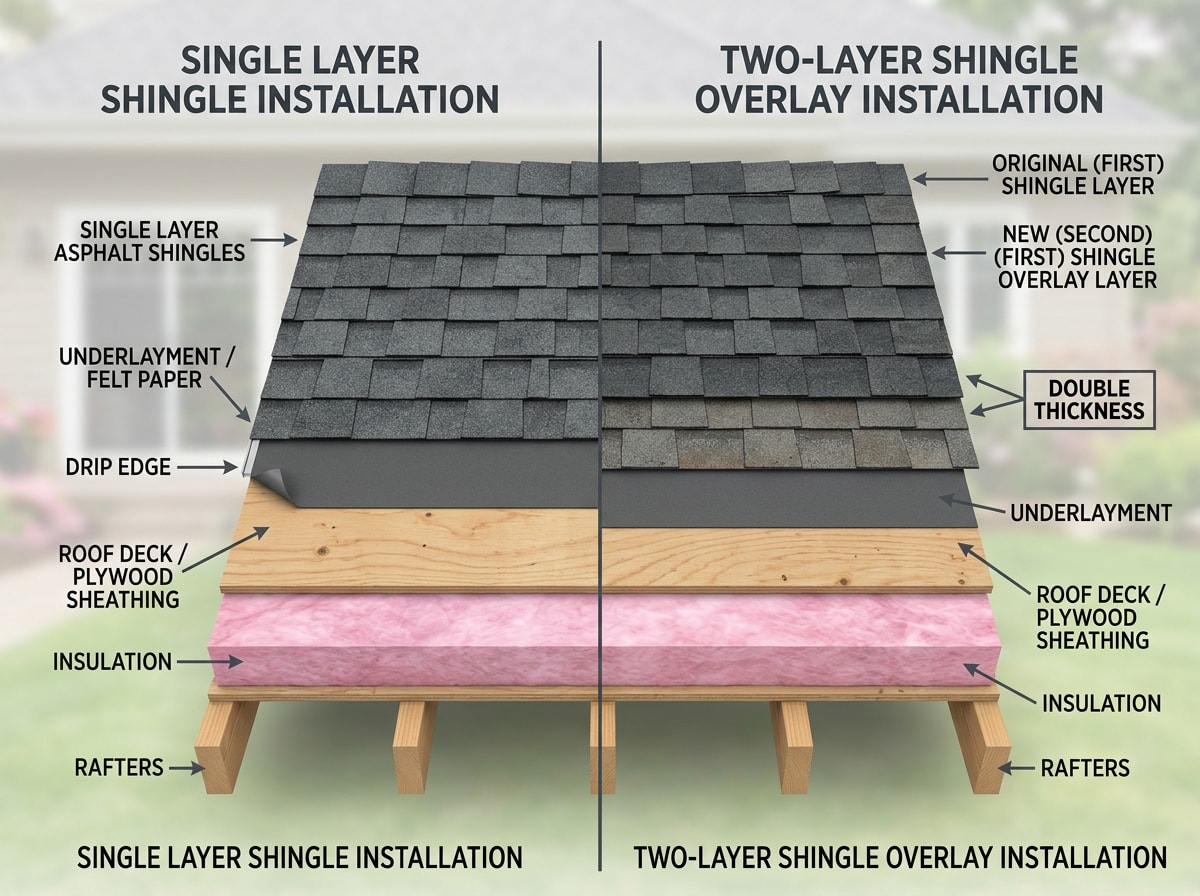
A roof overlay means installing a new layer of shingles directly on top of the existing layer, skipping the strip-down to bare decking. Roofers also call this a layover, re-roof, or roof recover, all names for the same shortcut around a full tear-off.
This shortcut only works with asphalt shingles. Wood shakes, slate, clay tile, and most metal roofing systems can't be layered this way; they either need a complete tear-off or a different, specialized overlay method. If your current roof isn't standard asphalt, shingling over shingles isn't on the table regardless of condition.
It's also worth knowing what's supposed to sit between the deck and the shingles in a proper installation, since an overlay skips the chance to replace any of it. Our guide on what goes under shingles on a roof breaks down every layer a tear-off lets you inspect and replace.
Roof Overlay Cost vs. Full Tear-Off
The financial case for an overlay comes down to what you're not paying for: tear-off labor, dumpster rental, and disposal fees. What you give up in exchange is inspection access, warranty strength, and lifespan.
| Factor | Roof Overlay | Full Tear-Off |
|---|---|---|
| Labor cost | Lower (no strip-off step) | Higher |
| Disposal/dumpster fees | None | Typically required |
| Typical timeline | 1-2 days on an average home | Several days for tear-off plus install |
| Decking inspection | Not possible | Full inspection and repair |
| Manufacturer warranty | Often reduced or void | Full warranty typically applies |
| Expected shingle lifespan | Shorter than a single layer | Full rated lifespan |
Contractors' overlay estimates vary widely by market and roof size, so get a written quote for both options before deciding. A free estimate that covers both an overlay and a tear-off gives you real numbers instead of rules of thumb.
Pros of Shingling Over Shingles
An overlay won't outperform a tear-off long-term, but it offers real, near-term advantages that matter to homeowners weighing budget against timeline.
- Lower upfront cost. Skipping tear-off eliminates labor and disposal costs, which is where most of the savings come from.
- Faster installation. Crews move straight to laying new shingles, often finishing in one to two days on an average home.
- Less mess and noise. No dumpster in the driveway, no days of tearing and hauling, and far less disruption to landscaping and daily routine.
Cons and Risks of Shingling Over Shingles
Here's where the "yes, but" caveat really lives. Each of these risks deserves consideration before you sign a contract for an overlay instead of a tear-off.
- No decking inspection. Leaving old shingles in place means the crew never sees the plywood underneath, so rot, trapped moisture, or early mold growth can get sealed under a brand-new layer.
- Added structural weight. A second layer of shingles adds meaningful dead load to framing that wasn't necessarily designed to carry it, which matters most in regions with heavy snow or hail exposure.
The roof must also be designed to structurally support heavy snow loads as required in the code.
- Shorter shingle lifespan. Two layers trap more heat between them than one layer does, and that trapped heat accelerates aging in the new shingles.
- Warranty exposure. Many manufacturers limit or void coverage when shingles go over an existing layer instead of bare decking. Call the manufacturer directly and get the answer in writing before committing.
- Lower attic and energy performance. Trapped heat between layers works against attic ventilation.
Natural air flow in a well-vented attic moves super-heated air out of the attic, protecting roof shingles and removing moisture in a single-layer system; a poorly ventilated double layer works against that in the summer, which can push cooling costs up. For more on how this works, see ENERGY STAR's attic ventilation guidance.
Is Your Roof a Good Candidate for an Overlay?
An overlay makes the most sense when your roof meets all three of these conditions:
- It has exactly one existing shingle layer.
- It lies reasonably flat, with no buckling, curling, or missing shingles.
- It shows no signs of water damage, mold, or soft decking.
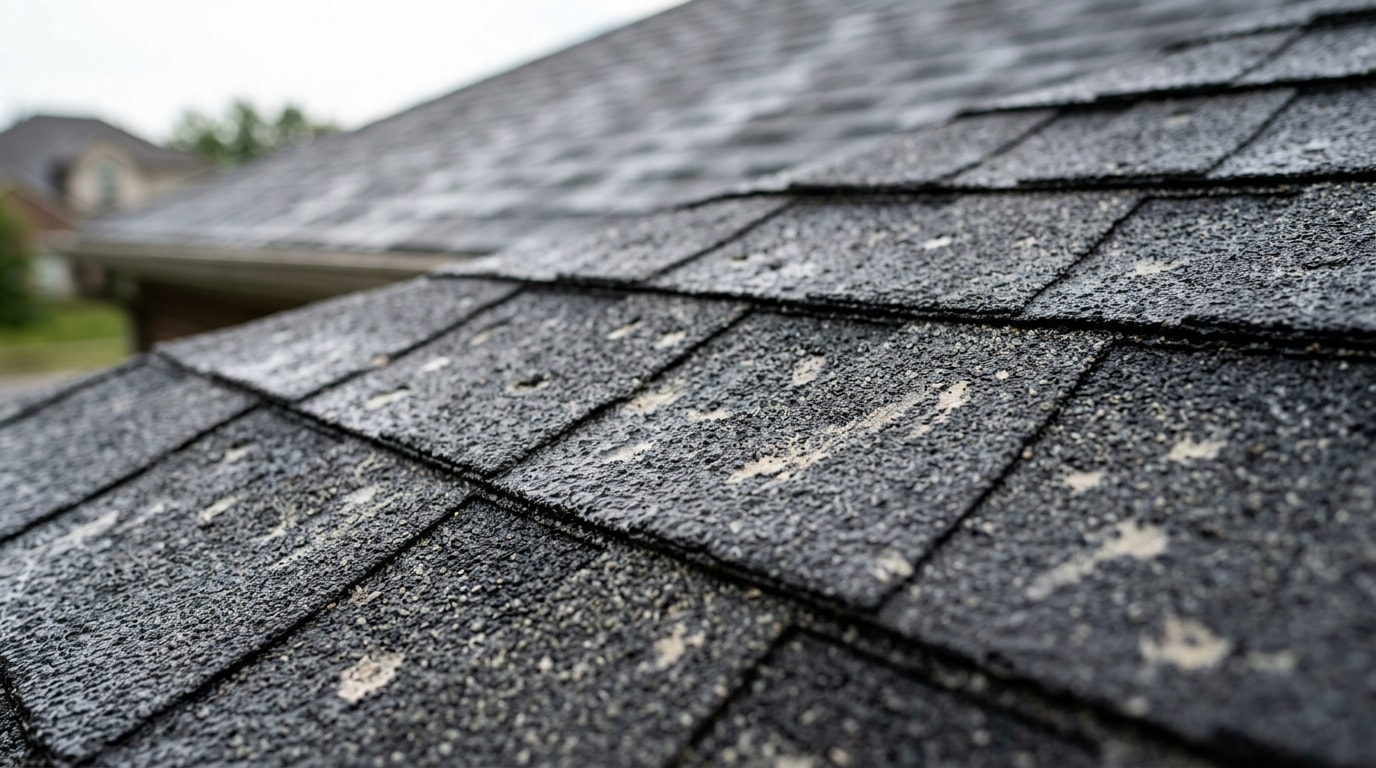
In the roofs we inspect across North Texas, most overlay requests come in right after hail season, and a good share of those roofs already show curling or granule loss on the south-facing slope, which disqualifies them under the code's condition requirements before layer count even becomes the issue.
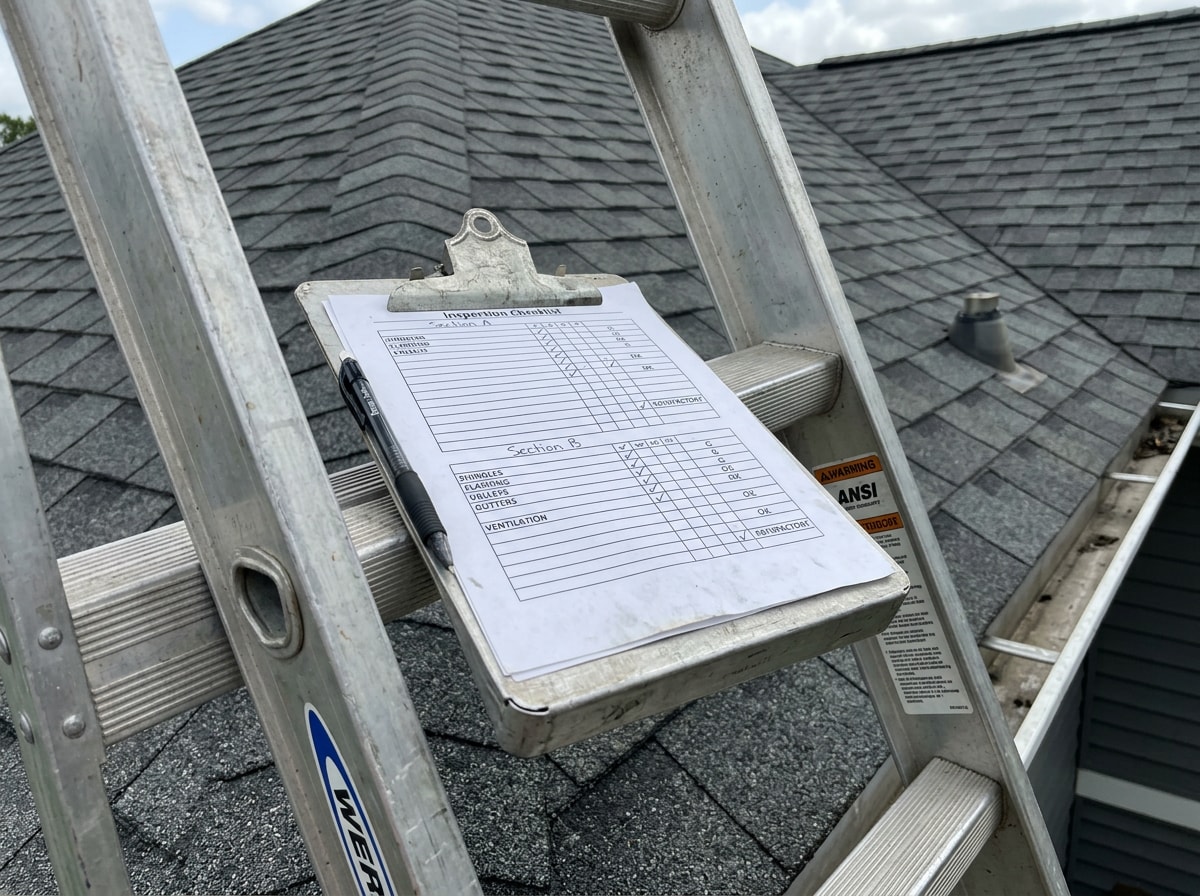
Even if your roof looks fine from the driveway, get a professional inspection before choosing this route. A roof inspection confirms the true layer count and catches problems that aren't visible from the ground.
Does a Roof Overlay Affect Resale Value?
Home inspectors and buyers sometimes flag a layover roof during a sale, even when the work was done correctly. Multiple shingle layers can raise questions about hidden damage or shortened remaining lifespan, which can slow negotiations or trigger repair requests.
If you're planning to sell within the next few years, a tear-off may protect your resale value better than an overlay would, despite the higher upfront cost. Talk with a roofing contractor about a replacement estimate if a sale is on the horizon.
We serve homeowners across the DFW metro, including Frisco, Plano, and Dallas, and layer count is one of the first things we check on every roof inspection in this area.
FAQ
Is it OK to put new shingles over old shingles?
Yes, but only under specific conditions: one existing asphalt layer, no structural damage, and local code approval. Confirm with a licensed roofer before assuming your roof qualifies.
How many layers of shingles can you put on a roof?
Most codes allow a two-layer maximum on asphalt shingle roofs. Local jurisdictions can adopt stricter limits, so verify the current rule with your building department before planning an overlay.
Does shingling over shingles void the warranty?
It can. Many manufacturers limit or void shingle warranty coverage when new shingles go over an existing layer instead of bare decking. Contact the manufacturer directly to confirm terms for your specific product.
How long does a roof overlay last?
A roof overlay generally lasts less time than a comparable single-layer roof, since trapped heat between the two layers accelerates shingle aging.
Can you shingle over architectural (dimensional) shingles?
It's possible, but architectural shingles are thicker and have an uneven profile, which makes the old pattern more likely to telegraph through the new layer as it heats and settles. Many roofers recommend a tear-off over an overlay for architectural shingles specifically for this reason.
How much does a roof overlay cost compared to a tear-off?
An overlay generally costs less upfront because it skips tear-off labor and disposal fees, but exact pricing depends on roof size, pitch, and local labor rates. Get quotes for both options from a licensed contractor before deciding.
About the Author
This guide was reviewed by the roofing team at Project Revitalize, a licensed roofing and remodeling contractor serving Frisco, McKinney, Fort Worth, Denton, Allen, and the greater Dallas-Fort Worth metro. Our crews inspect layer count, decking condition, and code eligibility on every roof estimate before recommending an overlay or a full replacement. Visit our homepage to see our full range of services, or get a free estimate to have your roof evaluated in person.