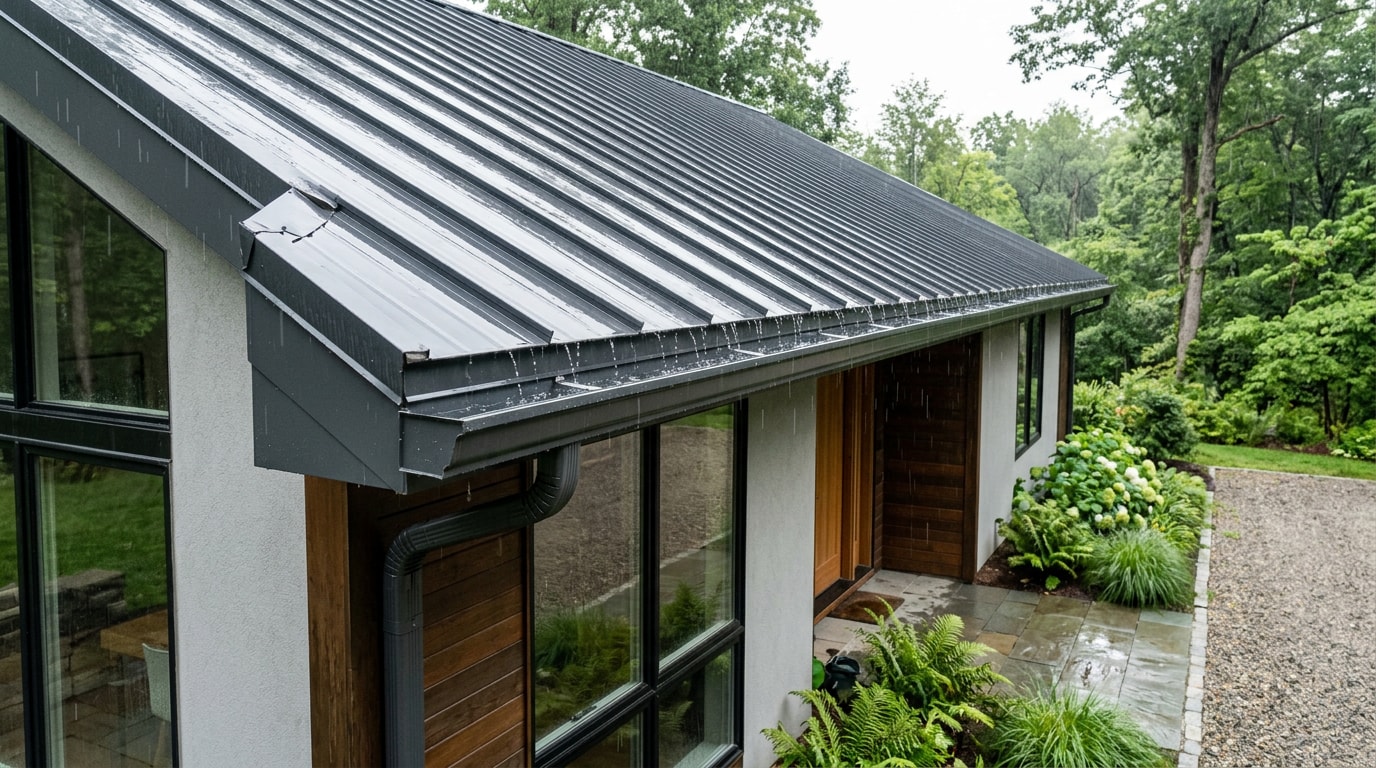
Do you need gutters with a metal roof? In most cases, yes, even though the panels themselves shed water without any trouble. The real risk isn't the roof, it's everything underneath it. Your foundation, siding, and landscaping take the hit when runoff has nowhere controlled to go.
Do You Need Gutters With a Metal Roof?
Most homes with a metal roof still need gutters. The roofing material can handle rain on its own, but the ground, walls, and plantings below it usually can't absorb that much runoff without a drainage system directing it away.
That distinction matters because smooth metal panels behave differently than asphalt shingles. Shingles have a gritty surface that slows water as it travels toward the edge. Metal panels don't have that texture, so rain moves across them faster and arrives at the eave with more force concentrated in one spot. On inspections across North Texas roofs, we routinely find splash erosion and foundation staining at exactly the corners where a metal roof's water volume overwhelmed an undersized or missing gutter run, confirming what the sizing standards below already predict.
Without a way to redirect that runoff, water pools near the foundation, erodes landscaping beds, and splashes back onto siding over time. If you're also weighing whether metal is the right roofing material in the first place, our metal roof vs. shingles comparison breaks down the tradeoffs beyond drainage.
When a Metal Roof Needs Gutters
A few conditions make gutters close to mandatory rather than optional:
- Frequent rain or heavy seasonal snowmelt. Regions with regular downpours generate enough runoff that, without gutters, water sheets off the eaves and erodes soil or stains exterior walls within a few seasons.
- Moderate climates with a foundation to protect. Even where storms are less frequent, gutters move water away from the structure instead of letting it fall straight down against the base of the house. Repeated splash-back can cause paint damage, wood rot, and foundation cracking that costs far more to fix than the gutters themselves.
- Homes near slopes, driveways, or finished landscaping. Concentrated runoff from a gutter-less metal eave can wash out mulch beds and undercut hardscaping in a single hard storm.
Local rainfall intensity is the variable that actually drives the decision. The National Oceanic and Atmospheric Administration's Climate Normals program provides annual, seasonal, monthly, daily, or hourly precipitation data by location, station, or region , which is a useful starting point before sizing a drainage system.
There's one notable exception worth flagging: some steep-pitch metal roofs in heavy snow country skip gutters on purpose, because sliding snow sheets can tear a gutter off the eave. That tradeoff gets its own explanation below, since it involves a different kind of risk than rain runoff.
Why Some Metal Roofs Don't Have Gutters
A handful of metal roofs skip gutters, not because they don't need them, but because of installation problems that turn gutters into a liability instead of a safeguard.
- Improper fastening. Metal roofing mounts differently than shingles, and a gutter system fastened incorrectly can tear loose in a storm or under snow load, damaging the roof edge on its way down.
- Clogged troughs. When debris blocks the gutter, water backs up, overflows behind the fascia, and creates the exact rot and foundation damage gutters are supposed to prevent.
- Mismatched hardware. Hangers rated for asphalt-shingle eaves aren't always rated for the thinner edge profile of a metal panel, which is part of why a professional install matters more here than on a standard roof.
Both of the first two issues point to the same conclusion: gutters aren't the problem, correct installation and upkeep are. If your current gutters are already pulling away or overflowing, a gutter repair visit can usually resolve it without a full system replacement.
What Size Gutters Does a Metal Roof Need?
Metal roofs generally need larger gutters than shingle roofs. A 6-inch trough paired with a 3x4-inch downspout is the common upgrade from the standard 5-inch gutter and 2x3-inch downspout setup.
| Feature | Standard Setup (5-inch / 2x3) | Upsized Setup (6-inch / 3x4) |
|---|---|---|
| Typical use | Asphalt shingle roofs | Metal roofs, steep pitches, large roof areas |
| Downspout capacity | Lower flow rate | Roughly double the cross-sectional flow capacity |
| Risk if undersized | Overflow during moderate storms | Rarely overwhelmed, even in heavy bursts |
| Best for | Smaller roof footprints | Roofs with long, unbroken metal panel runs |
Asphalt shingles have granules that slow water as it moves down the slope. Metal panels don't, so runoff reaches the edge faster and in a more concentrated volume, which is exactly what overwhelms a standard-size trough during a hard rain. Sizing guidance built on the sheet metal industry's Architectural Sheet Metal Manual calculates the required gutter and downspout size based on roof design area, the number of downspouts, and the gutter's width-to-height ratio , which is why a blanket "5-inch is fine" rule breaks down on a large metal roof plane.
Types of Gutters for Metal Roofs
Once you've decided gutters make sense, the next decision is shape and material. Seamless gutters are the most commonly recommended option for metal roofs since they have fewer joints where leaks can start, though K-style and half-round profiles both work well depending on the home's style.
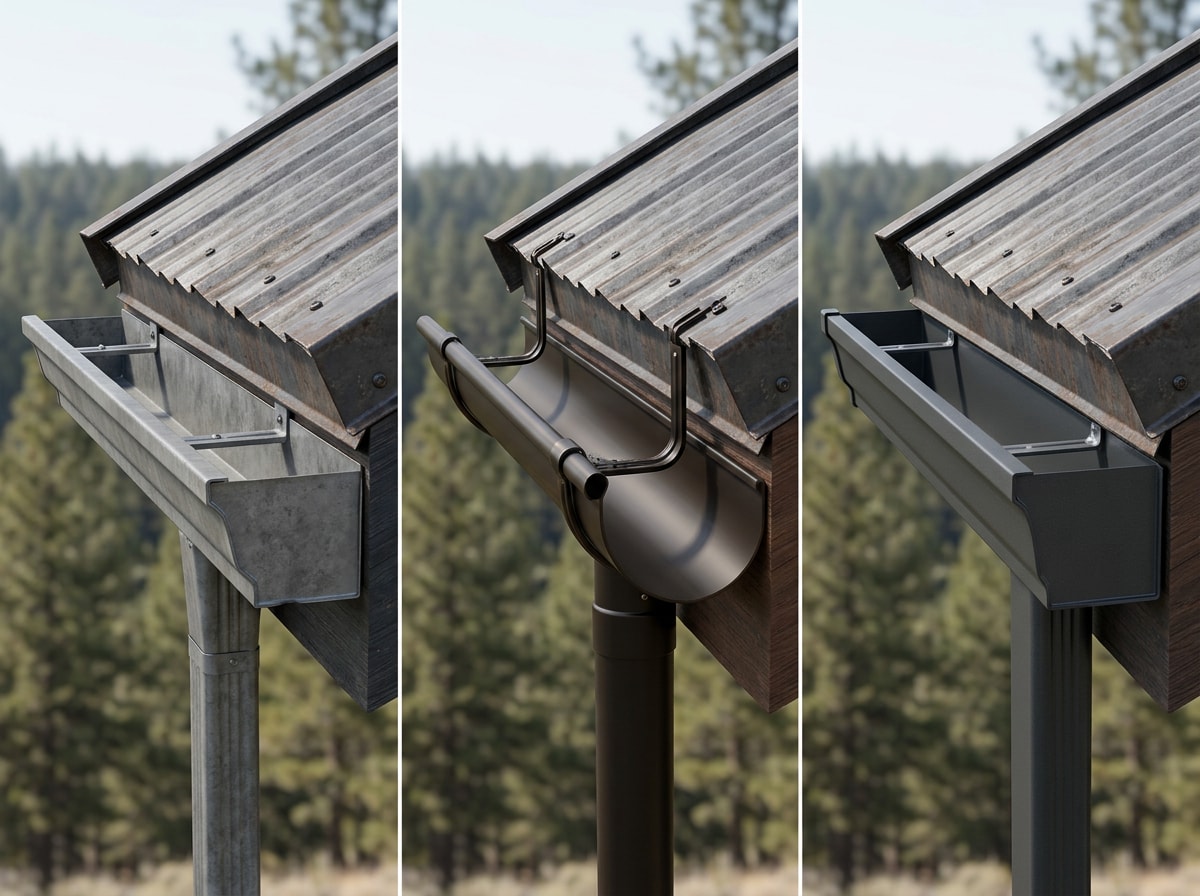
Gutters should be mounted as high as feasible along a metal roof's edge to catch runoff before it gains speed. Material pairing matters too: running a steel roof's runoff into copper gutters, or the reverse, can accelerate corrosion over time. When two dissimilar metals come in contact, one of them has an increased potential to corrode, a process known as galvanic corrosion, and there are steps roof system designers can take to prevent it . In practice, that usually means sticking with aluminum or coated-steel gutters on a steel metal roof rather than mixing in copper.
Ready to Install Gutters for Your Metal Roof?
Before scheduling an installation, run through a short checklist:
- Confirm your climate and roof pitch actually call for gutters.
- Choose a gutter type and material that's compatible with your roofing metal.
- Plan for a professional install that avoids the fastening mistakes covered above.
- Walk the finished job for downspout placement, fascia condition, and flow testing before calling it done.
That last step matters more on metal roofs than on shingles, since incorrect attachment is what leads to gutters tearing loose in storms. Our gutter installation team sizes and sets every system to the roof it's actually draining, not a one-size-fits-all default.
Will Adding Gutters Damage Your Metal Roof?
Properly installed gutters shouldn't damage a metal roof at all. They attach to the fascia board behind the eave, not to the metal panels themselves, so nothing punctures the roofing surface during a correct installation.
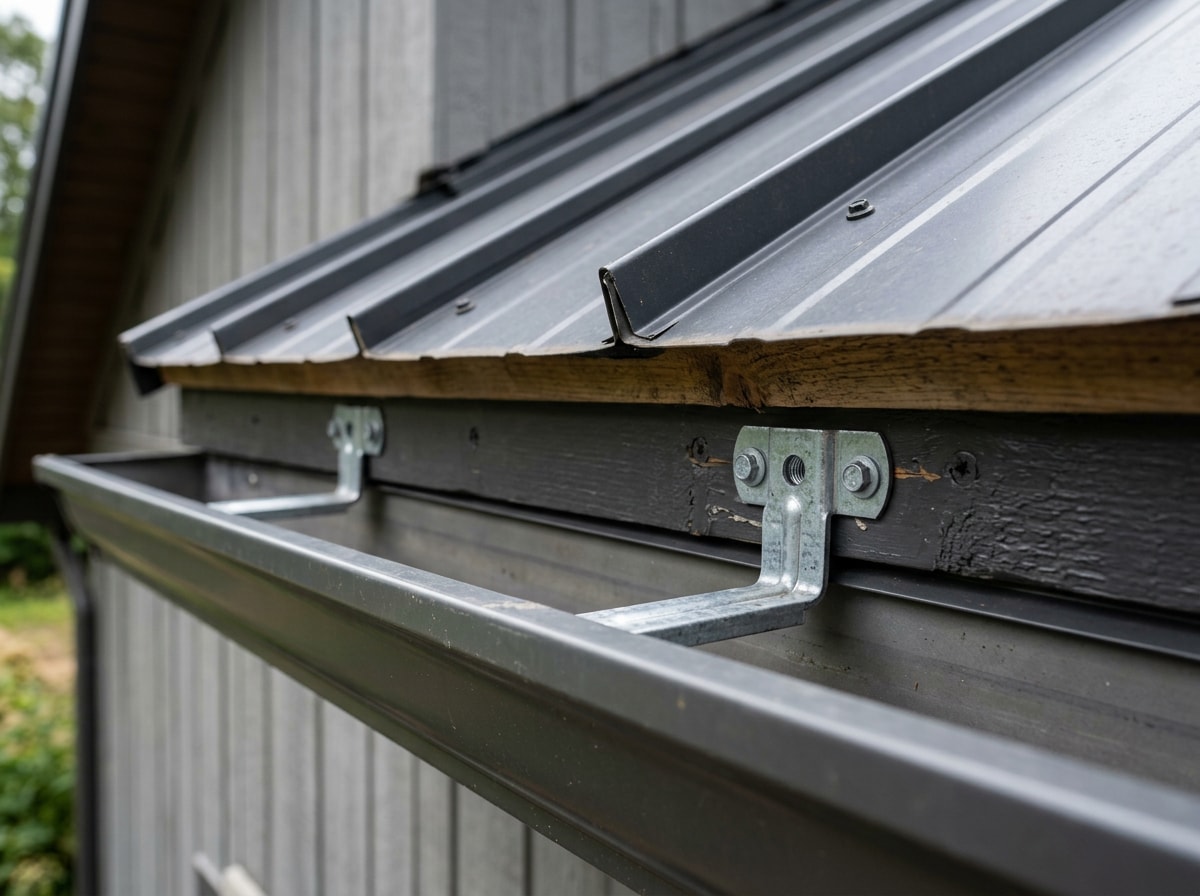
That detail also protects your manufacturer warranty, since many roofing warranties are written around keeping fasteners off the finished panel surface. Fascia-mounted brackets avoid that problem entirely. The National Roofing Contractors Association's guidance on architectural metal flashing covers how to minimize corrosion and attachment risk when dissimilar materials meet on a roof system , which is the same logic that applies to keeping gutter hardware off the panel itself.
The warranty concern is really an installation-quality issue rather than a reason to avoid gutters. A contractor familiar with metal roofing systems should know to keep hardware off the panels and onto the fascia. If you're not sure whether your current roof edge can support a gutter retrofit, a roof inspection is the fastest way to find out before committing to a system.
Your Metal Roof Drainage Plan for 2026
The short answer holds up across most climates: if your home sees regular rain or snowmelt, gutters sized for metal roof runoff and mounted correctly are worth the investment. Skipping them only makes sense in narrow situations, like steep-pitch roofs in extreme snow country where sliding snow poses its own risk.
A solid drainage plan starts with climate and roof pitch, moves to proper sizing, and ends with an installation method that protects both the roof and its warranty. For a full walkthrough of the install process itself, see our guide on how to install gutters on a metal roof.
Getting those three pieces right now sets up fewer surprises during the next storm season. Get a free estimate and we'll assess your specific roof, pitch, and climate exposure before recommending a system. Homeowners in the Frisco, TX area can also see examples of recent work on our Frisco service page. For more on the broader roofing system a metal roof sits on, our homepage outlines our full range of roofing and exterior services.
Frequently Asked Questions
Do metal roofs need gutters in a dry or desert climate?
Yes. Even low-rainfall regions often get short, intense bursts that dump more water than the region's yearly average suggests. Those sudden downpours can erode landscaping and flood foundations fast, so gutters still earn their keep in desert climates.
Do metal roofs in snowy areas need gutters?
It depends on the pitch. Steep metal roofs in heavy-snow regions sometimes skip gutters because sliding snow sheets can rip them off the eave. Cleaning all leaves, sticks, and debris from gutters and downspouts allows melting roof snow to flow through them instead of backing up , so where gutters are used in snow country, keeping them clear matters as much as the install itself.
How far below the roof edge should gutters be mounted?
Gutters are typically set 2 to 3 inches below the roof edge, with the panel overhanging the gutter by about the same amount. That spacing directs water into the trough without letting overflow spill back onto the roof during a heavy burst.
How often should metal roof gutters be cleaned?
Most homes need a gutter cleaning twice a year, once in spring and once before winter, plus a check after any unusually heavy storm. Homes under trees may need an extra cleaning in between to avoid clogs forming mid-season.
Are gutters needed on a low-slope or commercial metal roof?
Yes. Low-slope and commercial metal roofs typically need gutters along with a watertight seam detail, since water moves more slowly and pools differently across a flatter panel than it does on a steep residential pitch.