Installing gutters on a metal roof takes the same basic tools as any gutter job, but the fast runoff, steep pitch, and thermal expansion of metal panels change the details that actually matter. Get the bracket spacing, slope, and material pairing wrong, and a metal roof will find every weak point in a hurry. This guide walks through the full process, the profile and material trade-offs, and the mistakes that cause most DIY gutter systems to fail early.
On the metal roof installs our crews complete across the Dallas-Fort Worth area, undersized gutters are the single most common callback, not bad workmanship. That's the detail most DIY guides skip, and it's the first thing to get right before you touch a bracket.
Why Metal Roofs Need a Different Gutter Approach
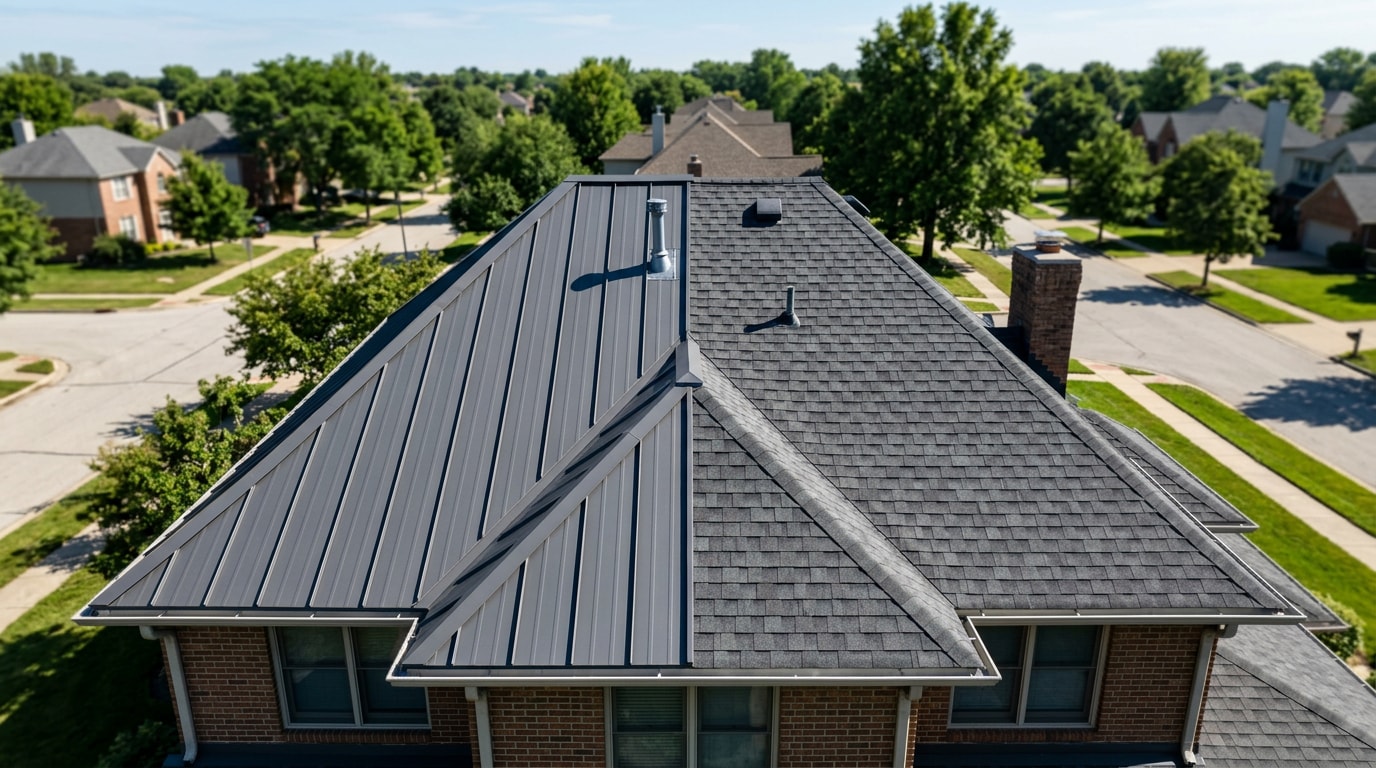
Metal panels are smooth and shed water far faster than asphalt shingles, so a gutter system built for a shingle roof will often overflow the first time it rains hard on metal. Two things change the installation: the gutters attach to the fascia board rather than the roof deck, and the system has to tolerate the roof panels expanding and contracting with temperature swings.
That means brackets need tighter spacing and stronger fasteners than a standard shingle-roof gutter job, and the material you choose has to be compatible with your roofing panels to avoid corrosion. None of this makes the job harder for a capable DIYer on a single-story home, but it does change what "correct" looks like.
Tools and Materials You'll Need
Gather everything before you start so the job runs in one continuous pass instead of several trips back to the hardware store.
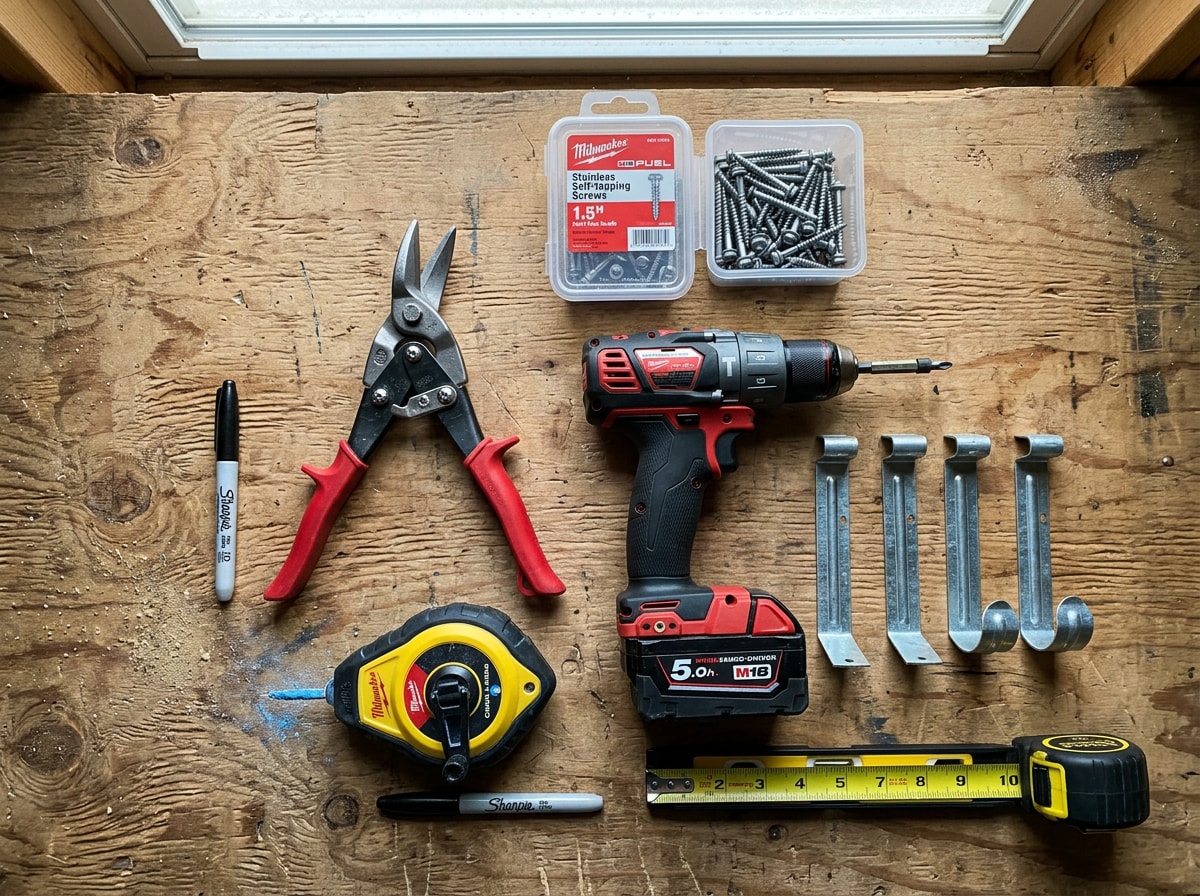
- Seamless gutter stock, cut to length or custom-ordered
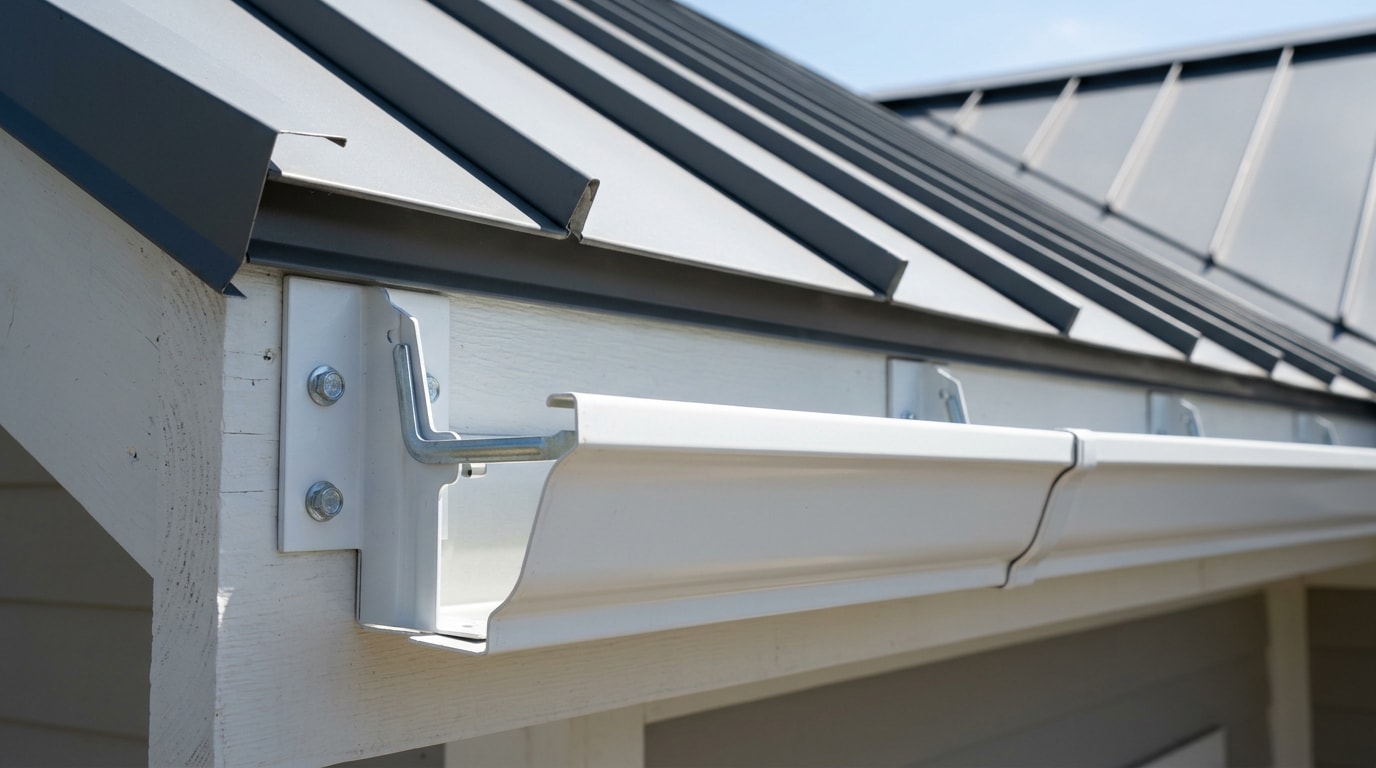
- Brackets or hidden hangers rated for the pitch and thermal movement of a metal roof
- Cordless drill with hex-head driver bits
- Tin snips or a metal-cutting blade
- 4-foot level and a chalk line
- Self-tapping stainless or coated screws
- Gutter sealant rated for metal roofing contact
- Downspout outlets, elbows, and end caps
- Stabilized ladder or roof anchor and other fall-protection gear
If you'd rather have a licensed crew handle sourcing and installation, our gutter installation team can spec the right system for your roof and climate.
How to Install Gutters on a Metal Roof: Step-by-Step
Step 1: Assess Your Roof and Plan the Layout
Walk the roofline and note total roof size, pitch, and any valleys or dormers that will dump extra water into one stretch of gutter. As a rule of thumb, roofs over 2,000 square feet or with steep pitches usually need 6-inch gutters, while 5-inch gutters handle smaller roofs up to about 1,200 square feet. Decide where downspouts will drain before you buy materials, since existing landscaping or hardscaping can limit your options.
Step 2: Measure and Mark Bracket Placement
Measure the roof edge, then snap a chalk line and mark consistent bracket locations. Bracket spacing typically runs 24 to 36 inches apart, tightened up in snow-heavy regions. For reference, the Copper Development Association documents a similar principle for hung copper gutters, noting that the gutter is secured to the wood fascia with cleats at the top edge and is supported by brackets spaced at 30" , which is a useful benchmark for any hung-gutter system on a fascia board.
Step 3: Install the Gutter Brackets
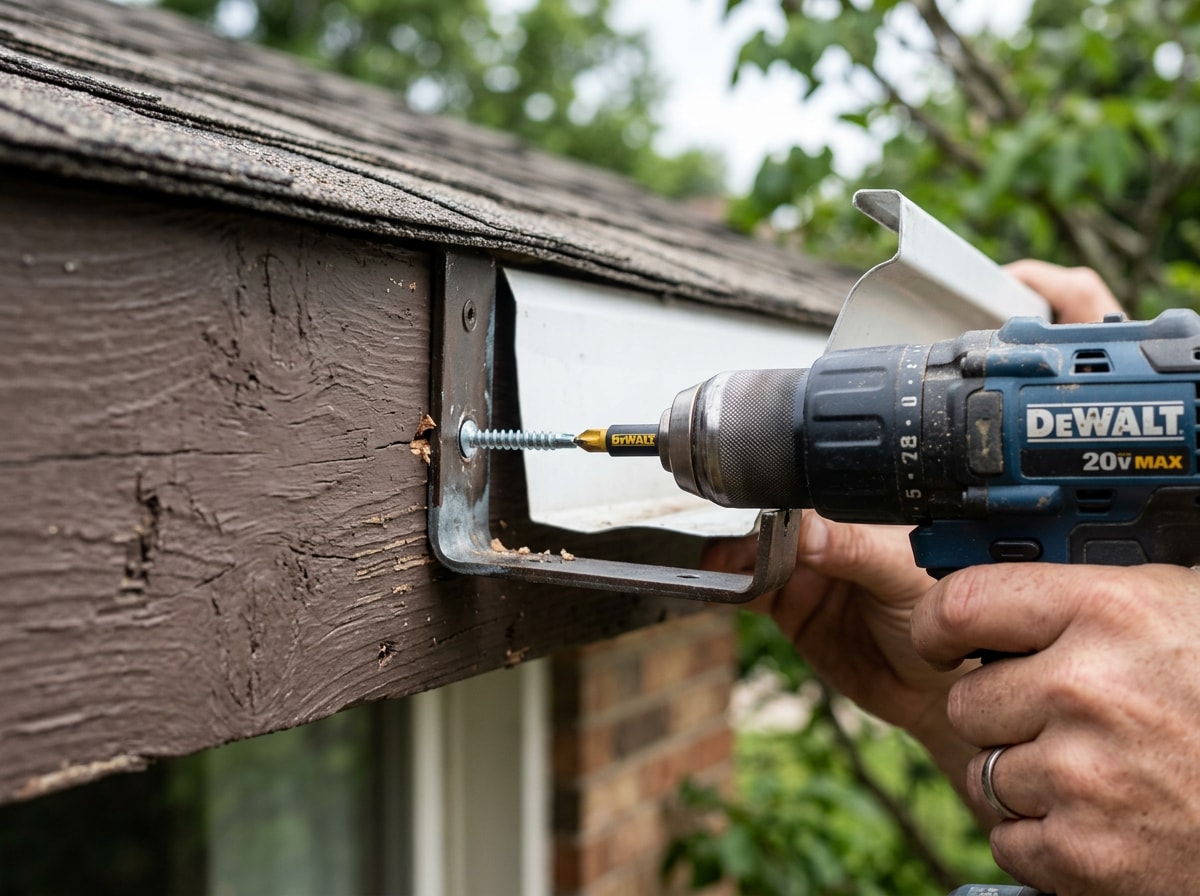
Drive fasteners into solid fascia board, not just trim, so the bracket carries real structural weight once water and debris load the gutter. Check that every bracket sits level as you go; a bracket installed even slightly out of plane will throw off the whole run's slope.
Step 4: Cut the Gutters to Length
Cut gutter stock with tin snips or a metal-cutting blade, then file any rough or jagged edges. Sharp or uneven cuts catch debris and create weak points where corrosion starts first.
Step 5: Attach End Caps and Downspout Outlets
Affix end caps to the cut ends to stop water from spilling out at the terminations. Mark and cut downspout outlet holes at the low end of each run; the U.S. Department of Energy's Building America program notes that if not drained away from the house, the high volume of water coming off the roof can rapidly saturate the soil surrounding the building and wick through the foundation to the interior, leading to mold and rot, indoor air quality issues, and building durability problems , so getting outlet placement right matters more than it looks.
Step 6: Secure the Gutters to the Brackets
Lift the gutter sections into place and snap or fasten them onto the installed brackets. Work with a second person on anything longer than about 10 feet; a solo installer can bend or misalign a long run while lifting it alone.
Step 7: Test Slope and Seal the System
Run a hose at the high end of each gutter run and confirm water reaches the downspout without pooling. Seal every seam and joint with a sealant rated for metal roof contact, then extend downspout discharge away from the foundation. The DOE guidance above recommends connecting downspouts to piping that carries water to a sloping final grade farther than 5 feet from the foundation for exactly this reason.
Choosing the Right Gutter Profile
Not every gutter profile handles a metal roof's runoff well. Metal panels are smooth and steep, so water reaches the edge faster and with more force than off asphalt shingles.
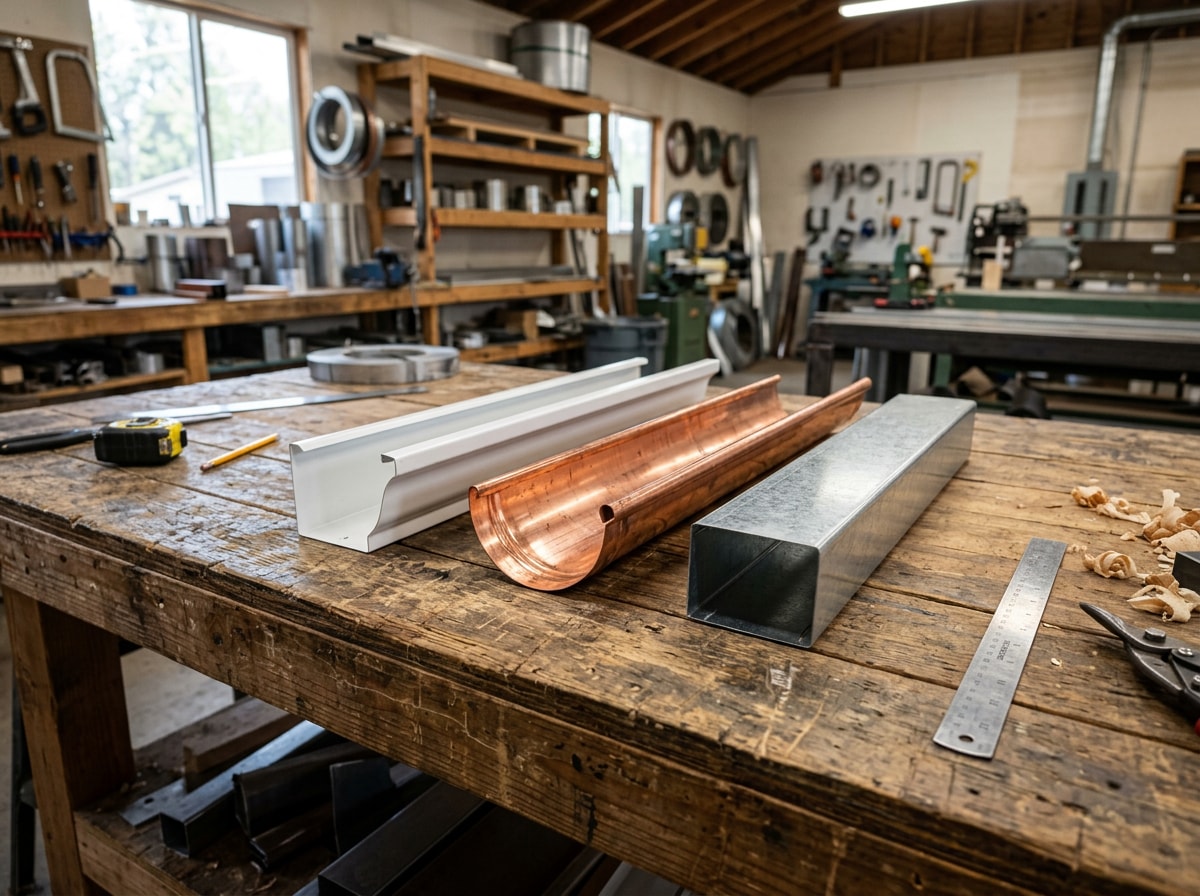
K-style gutters use a decorative front face and hold more water per linear foot than a curved trough, which makes them the default choice for most new installations. The extra capacity matters on a metal roof, since steep pitches concentrate runoff and a gutter with generous volume prevents overflow during heavy storms.
Half-round gutters have a semi-circular, open-trough shape with no corners for debris to catch on, which makes them slower to corrode and a common choice on historic homes. They typically cost more than K-style but suit homeowners prioritizing a period-accurate exterior.
Box gutters are built into the roof structure rather than hung off the fascia, giving a seamless look with no visible trough. They handle high water volume but require precise fabrication, so DIY installation is rarely realistic here.
Which Gutter Material Should You Choose?
Material choice affects how the gutter reacts to the roof's expansion and contraction, how it resists corrosion, and how long it lasts before replacement.
| Material | Cost per linear foot | Expected lifespan | Climate suitability | DIY-friendliness |
|---|---|---|---|---|
| Aluminum | $ | 20–25 years | Most climates | High |
| Copper | $$$ | 50+ years | All climates, best where patina is desired | Low |
| Steel (Galvalume) | $$ | 25–35 years | Cold/snow-heavy climates | Moderate |
Aluminum is lightweight, rust-resistant, and the easiest of the three for a DIY installer to cut, handle, and hang without specialty equipment. For most residential projects, it offers the best balance of price and performance.
Copper develops a protective patina over time instead of degrading, and a properly installed copper gutter routinely outlasts other materials by decades. The tradeoff is upfront cost and the skill required to solder seams correctly, which is one reason copper installations are often better left to an experienced installer.
Steel (Galvalume) combines zinc and aluminum coating to resist rust better than plain galvanized steel, making it a solid fit for regions with heavy snow load or debris impact. Steel is heavier than aluminum, so bracket spacing and fastener strength matter more here.
Getting Slope, Placement, and Corrosion Right
A functional installation covers the steps above, but a few extra details separate a gutter system that lasts from one that fails within a few seasons.
Slope matters more than people expect. Too flat, and water pools and freezes; too steep, and it overshoots the downspout during heavy flow. On a metal roof specifically, verify the gutter sits low enough that the panel's drip edge feeds directly into the trough rather than behind it, which is a common placement error on steep-pitch installations.
Avoid galvanic corrosion. This happens when two dissimilar metals touch in the presence of moisture. The Association for Materials Protection and Performance explains that galvanic corrosion, also called dissimilar metal corrosion, refers to corrosion damage induced when two dissimilar materials are coupled in a corrosive electrolyte, occurring when two or more dissimilar metals are brought into electrical contact under water . In practice, that means keeping copper away from direct contact with steel or aluminum fasteners and flashing. Aluminum gutters generally pair safely with steel or aluminum roofing, while copper gutters should only be paired with copper flashing and fasteners.
Take roof height seriously. This work happens at roof level on a ladder or from the roof edge itself. OSHA's construction ladder standard exists because falls are a leading cause of jobsite injury; the agency notes that falls from ladders account for 20 percent of all fatal and lost work-day injuries in general industry , and its ladder safety requirements apply just as much to a homeowner on a weekend project as to a contractor on the clock.
Common DIY Mistakes That Cause Early Gutter Failure
Most gutter failures trace back to a handful of preventable mistakes rather than a defect in the materials themselves.
- Skipping fascia prep. Old sealant, debris, and loose fasteners left in place keep brackets from sitting flush, which leads to sagging within a year or two.
- Undersized gutters. A 5-inch gutter on a large or steep metal roof will overflow in the first real storm.
- Mixing incompatible metals. Copper fasteners on an aluminum gutter, or vice versa, invite galvanic corrosion at every contact point.
- Wrong bracket spacing. Spacing brackets too far apart lets the gutter sag under water weight and pull away from the fascia.
- Ignoring slope. A flat or reverse-pitched run pools water and accelerates rust or algae growth.
DIY or Professional Installation?
A single-story home with a straightforward roofline and aluminum K-style gutters is a reasonable DIY project for someone comfortable on a ladder. Multi-story homes, steep pitches, complex flashing, or box gutter systems are a different story. The margin for error is smaller, the fall risk is higher, and a mistake in slope or bracket spacing often isn't visible until the next heavy rain.
If your metal roof gutter project is part of a larger job, it's worth pairing it with a roof inspection to catch any fascia rot or flashing issues before they're covered up. And if you're still deciding on the roofing side of the project, our guide on how to install a metal roof walks through that process in detail.
For homeowners in Frisco and the surrounding DFW area, a licensed local crew familiar with our climate and storm patterns is usually worth the added cost on anything beyond a single story. You can get a free estimate or start on our homepage to see the full range of services we offer.
FAQ
Can you put gutters on a metal roof?
Yes. Gutters attach to the fascia board rather than the roof panels themselves, so installation doesn't require penetrating the metal roofing or voiding its warranty. Brackets screw into the wood fascia beneath the roof edge, keeping the panel surface untouched.
Do metal roofs need gutters?
Gutters aren't strictly required everywhere, but they're arguably more important on a metal roof than on shingles because of how fast water sheds off the smooth surface. Without gutters, that runoff erodes landscaping and can contribute to foundation problems over time, especially in areas with moderate to heavy rainfall.
What size gutters do I need for a metal roof?
Most roofs up to about 1,200 square feet do fine with 5-inch K-style gutters. Larger roofs, steeper pitches, or areas with heavy rainfall generally need 6-inch gutters paired with larger downspouts to keep up with faster runoff.
How far below the roof edge should gutters sit?
The gutter's front lip should sit close to the projected roof plane so fast-moving water drops in rather than overshooting, but low enough that the panel's drip edge feeds directly into the trough. The exact distance varies with roof pitch, which is why bracket placement should be checked against your specific roof before final installation.
Do you need gutter guards on a metal roof?
In most cases, yes. Since metal panels shed water fast, gutter guards help prevent overflow and block leaves or debris from causing clogs, which reduces how often the system needs manual cleaning.
Can you install gutters on a metal roof yourself?
Yes, on most single-story homes with straightforward rooflines. Steeper pitches, multi-story installations, or box gutter systems are better left to a professional, as covered above. If your existing gutters are the issue rather than a full new install, our gutter repair team can often fix sagging or leaking sections without a full replacement.
How often should you clean gutters on a metal roof?
Clean gutters at least twice a year, typically in spring and fall, though homes surrounded by heavy tree cover may need a third cleaning after peak leaf drop. Regular cleaning prevents the overflow and ice damming that shorten a gutter system's working life.