Which is better, a metal roof or shingles? Metal lasts two to three times longer and holds up better against hail and wind, but shingles cost less upfront and install faster. The right choice comes down to your budget, how long you plan to stay in the home, and the weather you're building against, so here's how the numbers actually compare.
Metal Roof vs. Shingles: Quick Comparison
| Factor | Metal Roof | Asphalt Shingles |
|---|---|---|
| Installed cost | $9–$16 per sq ft | $4–$8 per sq ft |
| Typical lifespan | 40–70 years | 15–30 years |
| Hail/impact rating | Class 4 common | Class 3–4 depending on product |
| Wind performance | High ratings on standing seam systems | Tested under ASTM D3161/D7158 |
| Energy efficiency | Reflects heat; some products qualify as cool roofs | Absorbs more heat; cool-rated lines exist |
| Noise in rain | Louder without proper underlayment | Naturally quieter |
| Maintenance | Low | Moderate |
The sections below break down each row, plus which option actually fits your climate and budget.
Understanding Metal Roofs
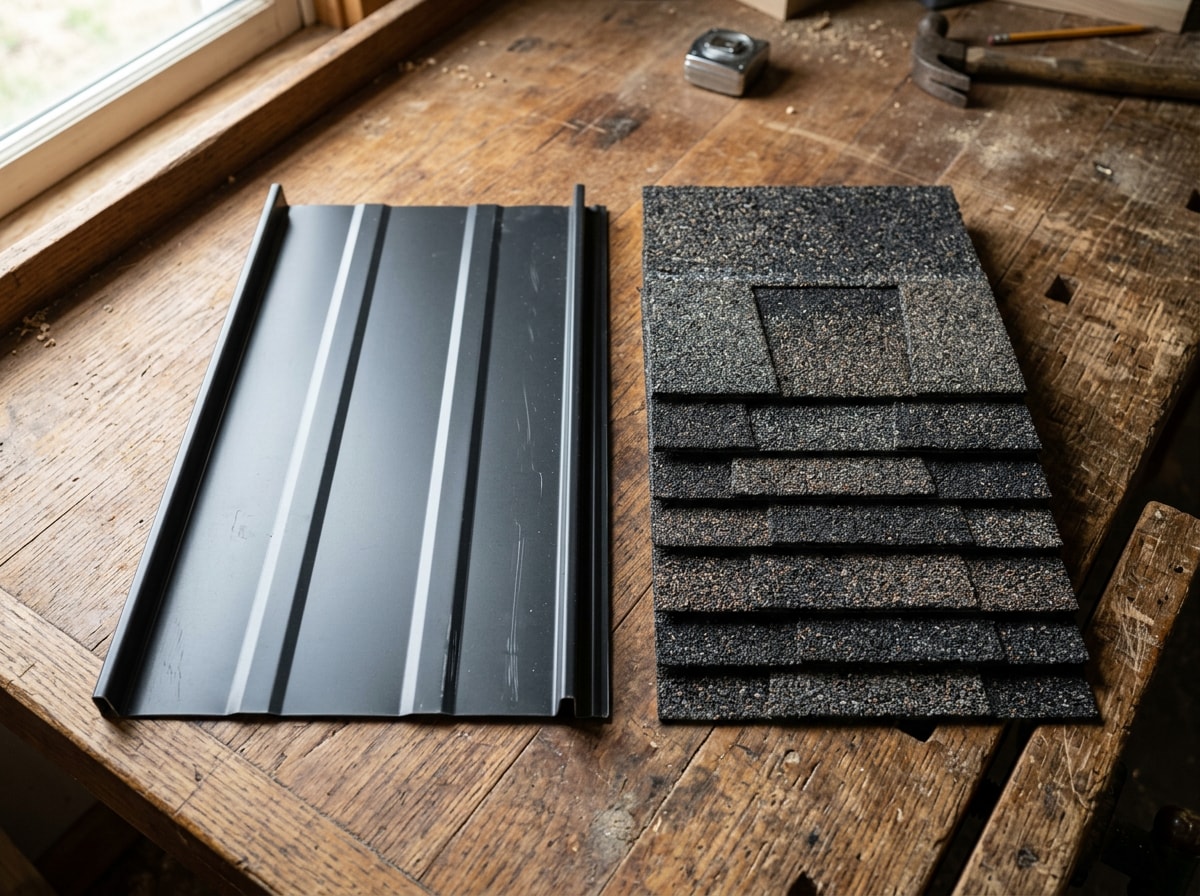
A metal roof is a roofing system made from steel, aluminum, or occasionally copper panels, installed either as interlocking panels or in a continuous standing seam design that runs from ridge to eave. Standing seam is the most popular residential style because it hides fasteners beneath raised seams, which reduces leak points.
Metal roofing's core appeal comes down to two things: it lasts far longer than most alternatives, and its reflective surface bounces heat away instead of absorbing it. Homeowners who work with our roof replacement team usually want a one-time roof investment instead of a replacement every couple of decades.
Understanding Asphalt Shingle Roofs
Asphalt shingles remain the most common roofing material in the U.S. because they're affordable and quick to install. They come in three tiers:
- 3-tab shingles, the thinnest and least expensive option
- Architectural shingles, thicker and more durable with a dimensional look
- Luxury shingles, which mimic slate or wood shake at a premium price
A shingle roof is built from a fiberglass mat coated in asphalt and mineral granules, then layered in overlapping rows for water resistance. Architectural shingles have largely replaced 3-tab shingles in new installations because they offer better wind performance for a modest cost increase. Our roofing contractors can walk you through grade differences before you commit to either option.
Metal Roof vs. Shingles: Key Comparison Factors
Four factors drive most roofing decisions: cost, durability and lifespan, energy efficiency, and noise or comfort. Appearance matters too, but it's usually secondary once the practical numbers are on the table.
Cost Comparison
Metal roofing typically runs $9 to $16 per square foot installed, while shingle roofing generally falls between $4 and $8 per square foot, depending on material grade and region. That gap is real, and it's the biggest reason homeowners hesitate on metal.
The math changes over time, though. Metal can last 40 to 70 years, while shingles typically need replacing every 15 to 30 years. Spread across decades of ownership, metal's higher upfront cost can offset itself, or even come out ahead, for homeowners who plan to stay put. For a full price breakdown by roof size and material grade, see our guide on whether metal roofing costs more than shingles.
Durability and Lifespan
| Factor | Metal Roof | Asphalt Shingles |
|---|---|---|
| Typical lifespan | 40–70 years | 15–30 years |
| Wind testing | Standing seam rated for high wind loads | Tested under ASTM D3161/D7158 |
| Hail resistance | Class 4 impact rating common | Class 3–4 depending on product |
| Maintenance frequency | Low | Moderate |
Building codes require wind-resistance testing for both materials. Asphalt shingles shall be tested in accordance with ASTM D7158. Metal panel systems, including standing seam, go through their own wind-uplift testing before they're approved for use.
Here's a detail most comparison articles skip: a "Class 4" label doesn't guarantee real-world hail performance. The Insurance Institute for Business & Home Safety found that prior versions of the FORTIFIED standard allowed asphalt shingles with a UL 2218 Class 4 impact rating if they had not been tested by IBHS, and the IBHS protocol uses manufactured hail to test shingles under more realistic conditions . In plain terms, some Class 4 shingles perform worse than advertised once actual hail hits them, which is why insurers increasingly look past the label itself. Metal panels, by contrast, don't rely on a sacrificial granule coating to pass impact tests.
Energy Efficiency
Metal roofing reflects solar radiation instead of absorbing it, which can lower attic temperatures and reduce cooling costs in summer. Asphalt shingles, by contrast, absorb and retain heat, pushing more work onto your air conditioner.
Roofs that are lighter in color or are reflective stay cooler than roofs that absorb sunlight , according to ENERGY STAR. Some reflective metal products qualify under the ENERGY STAR cool roof program, and several shingle manufacturers now offer "cool roof" shingle lines too, though they typically reflect less heat than coated metal panels.
Noise and Comfort
Bare metal panels can amplify rain noise, which fuels the common complaint that metal roofs are loud. In practice, solid underlayment and proper insulation beneath the panels absorb most of that sound. A modern metal roof is often no noisier than shingles during a storm.
Asphalt shingles are naturally quieter because the dense material and decking muffle sound on their own. If comfort during heavy rain matters to you, ask your contractor about upgraded underlayment for a metal installation.
Appearance
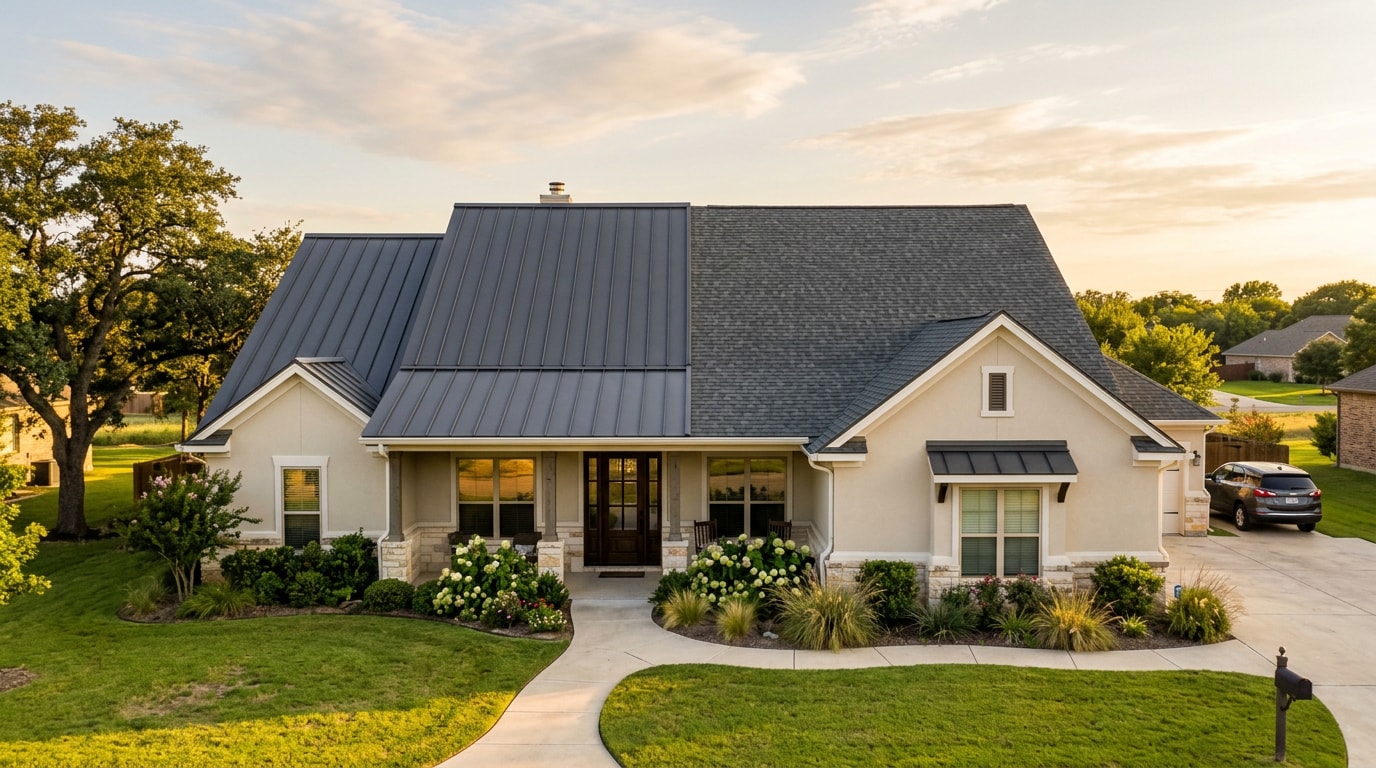
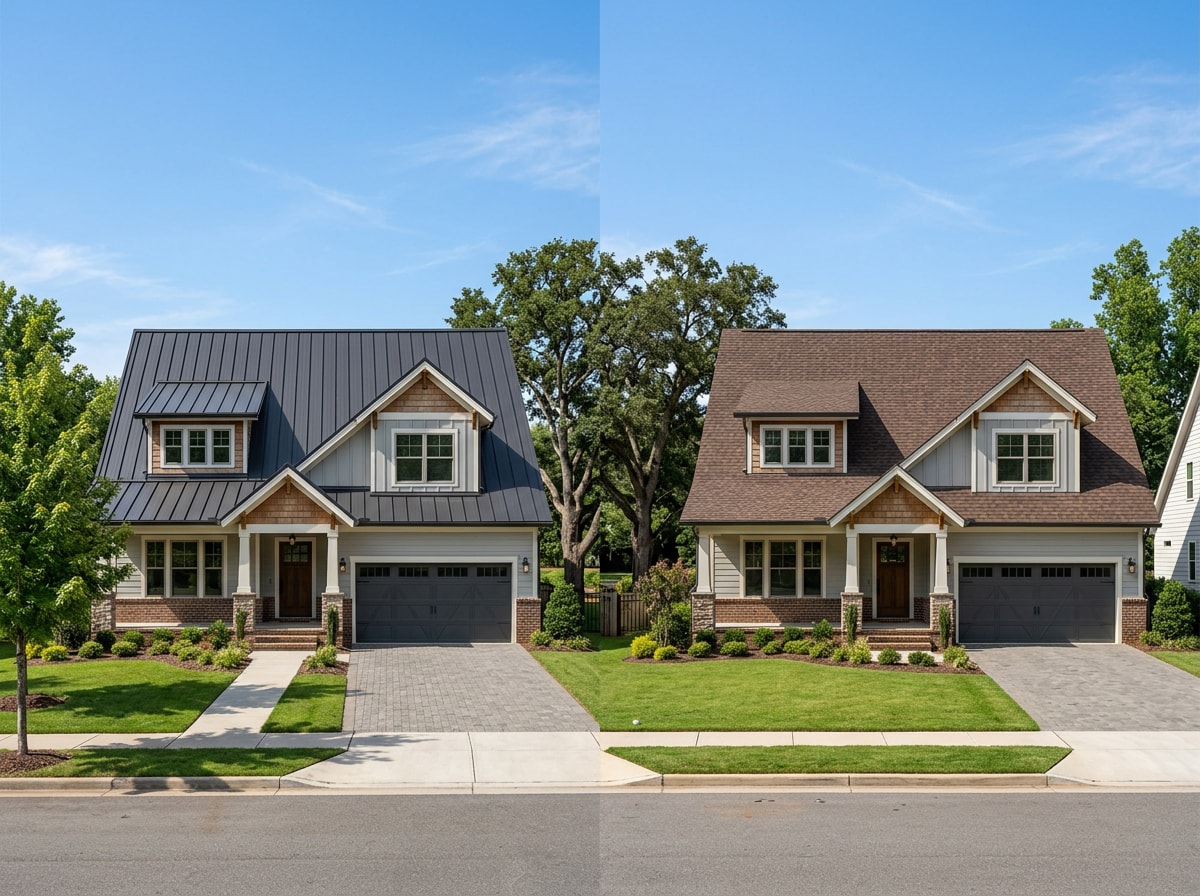
Asphalt shingles offer a traditional, textured look that blends into most neighborhoods without drawing attention. Metal roofing has shed its industrial reputation and now comes in standing seam panels, shingle-style metal tiles, and finishes that mimic slate or wood shake.
Curb appeal is subjective, but metal roof styles now compete directly with shingles in residential design.
Pros and Cons of Metal Roofs vs. Asphalt Shingles
Metal Roof
Pros:
- Exceptional durability and a 40–70 year lifespan
- Strong wind and hail resistance
- Reflective energy savings
- Low maintenance
Cons:
- Higher upfront installation cost
- Requires specialized installers
- Potential for noise without proper insulation
Asphalt Shingles
Pros:
- Lower upfront cost
- Fast installation
- Wide contractor availability
- Classic appearance options
Cons:
- Shorter 15–30 year lifespan
- More vulnerable to wind and hail damage over time
- Higher long-term replacement costs
Installation and Maintenance
Metal roof installation requires crews trained in panel seaming, flashing, and fastening. That narrows the pool of qualified installers and adds to labor costs. Shingle installation is more straightforward, and most roofing crews install shingles regularly, which keeps both the timeline and the price lower.
Maintenance needs differ too:
- Metal roofs need occasional inspections for sealant wear at seams and fasteners, but little else.
- Shingle roofs need more frequent checks for curling, granule loss, and storm damage, especially in the back half of their lifespan.
Which Roof Performs Better in Your Climate?
Climate should weigh heavily in your decision. High-wind, heavy-snow, and wildfire-prone regions generally favor metal roofing for its strength and fire resistance, while moderate climates with less severe weather can get excellent performance from quality shingles.
Across the roofs we service from Allen to Fort Worth, hail is usually the deciding factor. Homeowners who've already filed one hail claim tend to upgrade to metal, or to a shingle with documented real-world impact performance, on the replacement.
Coastal homeowners should also know that some metal types are more prone to corrosion from salt air, so aluminum or coated steel is often recommended over bare steel. If you're not sure which rating your current roof carries, a roof inspection can confirm it before storm season finds the weak spot.
The Final Verdict: Metal Roof or Shingles?
There's no universal answer to which is better, metal roof or shingles. It depends on your budget, how long you plan to stay, and your local climate. Homeowners planning to stay for decades often lean toward metal for the long-term value, while those prioritizing lower upfront cost or a shorter stay may prefer shingles.
Ready to compare real numbers for your own roof? Get a free estimate from our team at Project Revitalize, and we'll walk you through both options side by side before you commit to either one.
FAQ
What Is Better, a Metal Roof or Shingles?
There's no single winner. Metal wins on long-term value, durability, and hail performance. Shingles win on upfront affordability and installation speed. See the Final Verdict section above for a fuller breakdown.
How Much Does a Metal Roof Cost vs. Shingles?
Metal roofing typically costs $9 to $16 per square foot installed, while asphalt shingles run $4 to $8 per square foot. Exact pricing depends on material grade, roof complexity, and local labor rates.
How Long Does a Metal Roof Last Compared to Shingles?
A metal roof typically lasts 40 to 70 years, while asphalt shingles generally last 15 to 30 years. Actual lifespan depends on installation quality, climate exposure, and routine maintenance.
Do Metal Roofs Leak More Than Shingles?
No. Properly installed metal roofs are generally less prone to leaks than aging shingle roofs because they have fewer seams and shed water more efficiently. Most leaks trace back to poor installation or damaged flashing rather than the material itself.
What Are the Disadvantages of a Metal Roof?
The main drawbacks are a higher upfront cost, the need for specialized installers, and potential noise during rain if underlayment isn't installed correctly. Panel damage from a severe impact can also be more visible than on a shingle roof.
Do Metal Roofs Cost More to Insure Than Shingles?
Not usually. Many insurers offer discounts for impact-resistant roofing, including some metal and Class 4 shingle products, because they reduce the likelihood of a hail claim. Rates still vary by carrier and region, so confirm specifics with your insurance provider.
Does a Metal Roof Increase Home Value?
Both metal and shingle roofs can boost resale value. Metal often delivers stronger long-term ROI due to its longevity and energy efficiency appeal, and buyers frequently view a newer metal roof as a long-term investment that reduces future replacement costs.