If you want to know how to clean roof without damaging shingles, the short version is this: skip the pressure washer, use a low-strength cleaning solution, and always rinse from the top down. Get any one of those wrong and you can strip the granules that protect your shingles from sun and weather, sometimes before you even notice it happened. This guide breaks down the tools, the solutions, and the exact order of steps that keep your roof intact while it gets clean.
The Safe Method in Brief
Before the full walkthrough, here's the process in outline form:
- Clear loose debris with a soft brush, leaf blower, or your hands, not an aggressive scrub.
- Mix a low-strength cleaning solution (vinegar for light staining, diluted bleach for algae and moss).
- Apply it with a garden sprayer, let it sit, then rinse with a garden hose, never a pressure washer.
- Work from the ridge down to the eaves so water can't get forced under the shingle line.
- Repeat on stubborn spots instead of increasing water pressure.
The rest of this guide walks through why each step matters and where most DIY cleanings go wrong.
Why Pressure Washing Is the #1 Cause of Shingle Damage
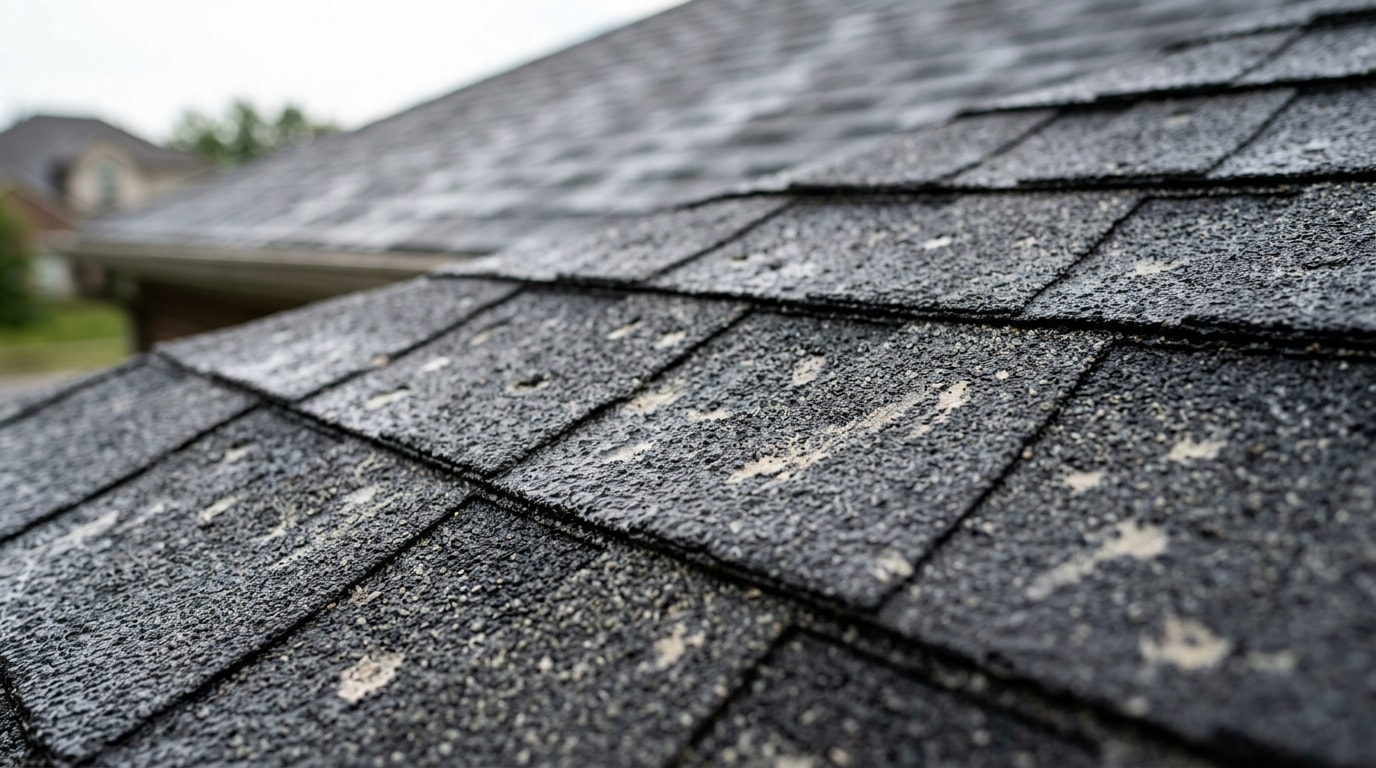
In more than a decade of inspecting roofs across North Texas, the damage we see most often isn't from hail or wind. It's from a homeowner's own cleaning attempt with a rented pressure washer. High-pressure water strips the mineral granules that shield asphalt shingles from UV rays, and once those granules are gone, they don't grow back.
The Asphalt Roofing Manufacturers Association (ARMA), the trade group representing major shingle manufacturers, doesn't hedge on this point. ARMA advises against using a power washer or any type of brush or broom to clean algae from the roof surface, noting that high-pressure washing systems are likely to damage asphalt roofing. That's a stronger stance than "keep the PSI low." It's a flat no.
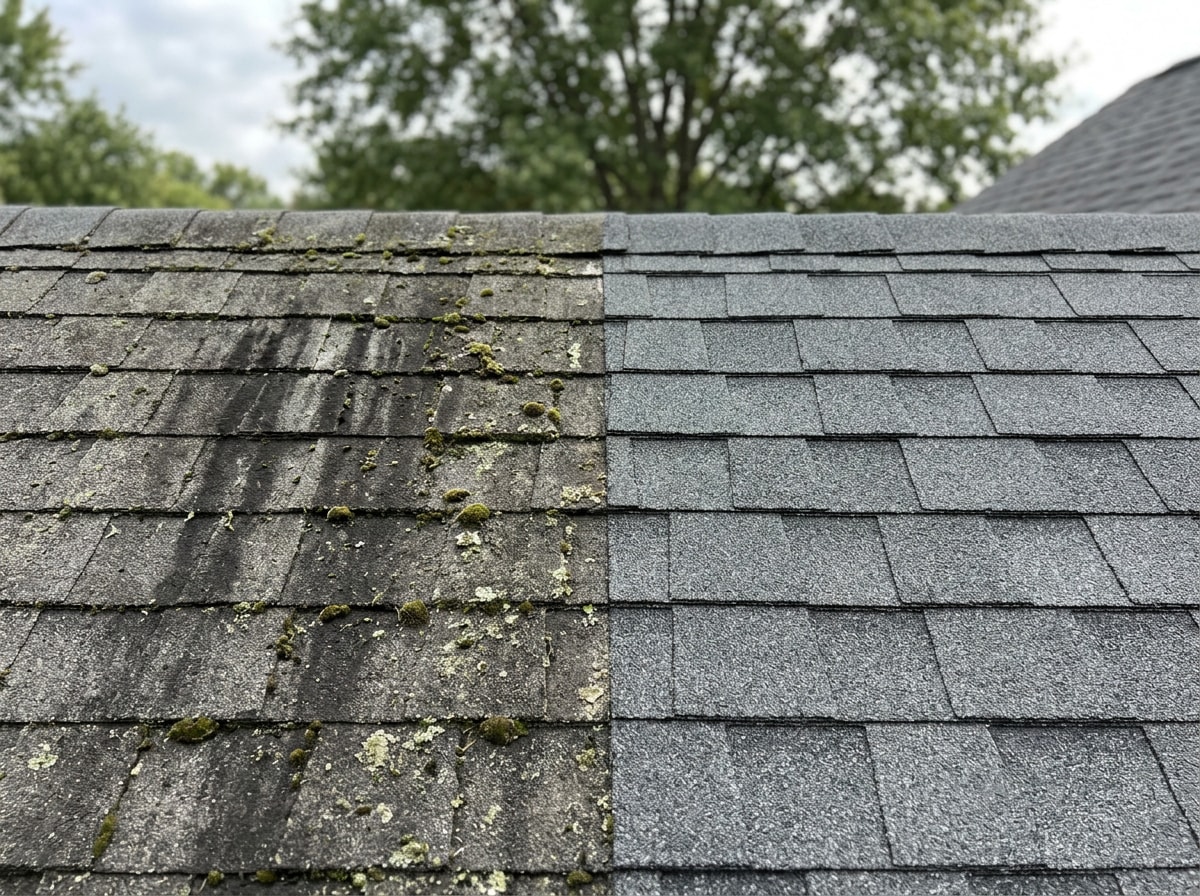
Here's a detail most cleaning guides skip: algae itself may not be the villain you think it is. There is no scientific evidence that algae is damaging to asphalt shingles, although it certainly affects the aesthetics of a roof, though on highly reflective or "cool" roofs it can hurt long-term effectiveness. Moss is the bigger structural threat. Moss build-up can lead to roof damage or shingle blow-off if left unchecked. That distinction changes how urgently you need to act, and with what method.
Tools and Supplies You'll Need
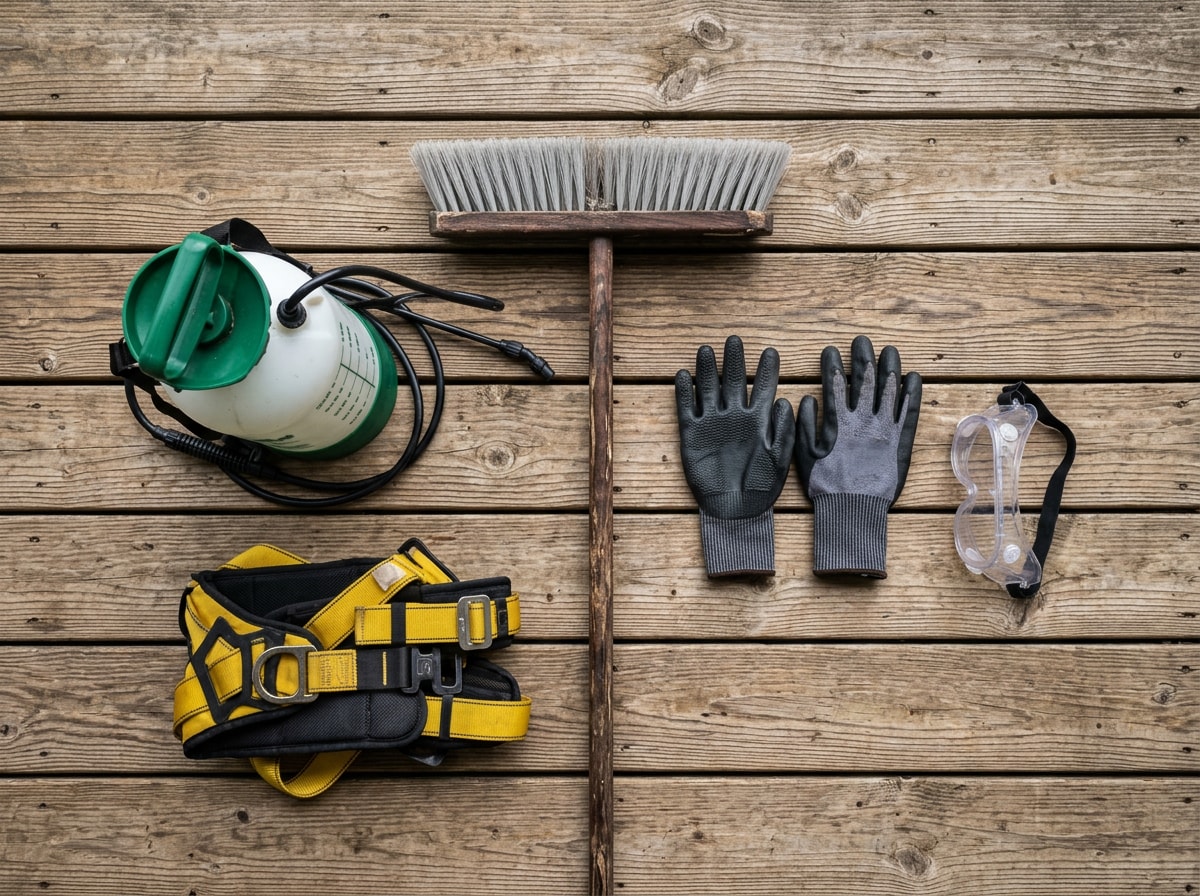
Gather everything before you climb, so you're not making trips up and down mid-job. Split your gear into safety equipment and cleaning equipment.
Safety gear:
- A sturdy, properly rated ladder
- A safety harness, especially on steep pitches
- Work boots with solid traction
- Gloves rated for chemical contact
Cleaning gear:
- A soft-bristle brush (hand-held or long-handled)
- A backpack or pump garden sprayer
- A standard garden hose for the final rinse
Not every roof calls for the same setup. Match your tools to your roof's pitch and your comfort level:
| Tool | Best For | Rooftop Access Needed? |
|---|---|---|
| Extension-pole soft brush | Low-pitch roofs, ground-level cleaning | No |
| Hand-held soft-bristle brush | Steep sections, close-up spot cleaning | Yes |
| Roof rake | Clearing leaves and debris pre-wash | Depends on roof height |
| Pump/backpack sprayer | Applying cleaning solution evenly | Either |
| Standard garden hose | Final rinse, low-pressure application | Either |
Choose ground-level tools whenever your roof's pitch allows it. Every minute you spend off the roof is a minute you're not exposed to a fall.
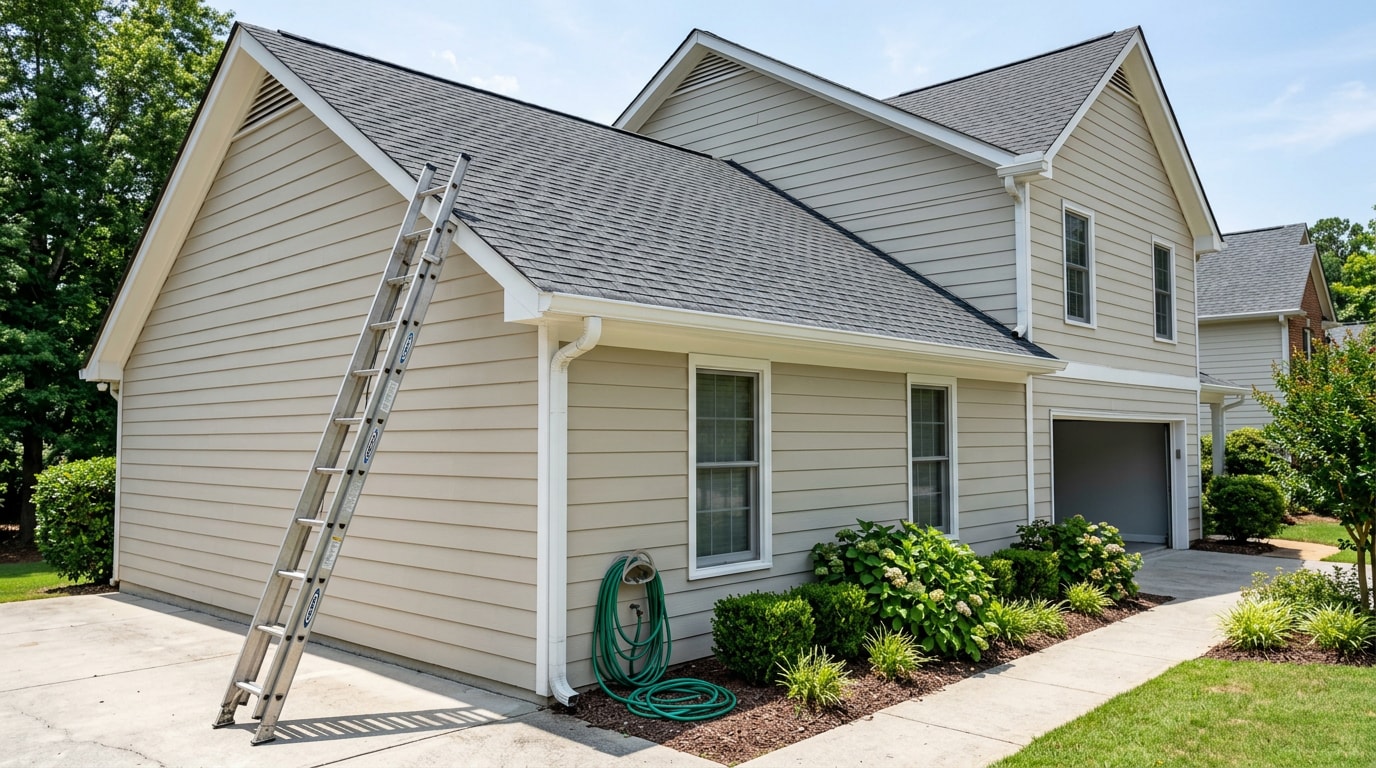
Most roof-cleaning injuries happen on the way up, not during the cleaning itself. Before you climb anything, run through the OSHA ladder safety fundamentals for construction work, including proper angle, secure footing, and keeping three points of contact at all times.
Step-by-Step: How to Clean Your Roof Without Damaging Shingles
With gear ready, follow this order. Skipping steps or doing them out of sequence is where most damage happens.
Step 1: Clear Debris First
Sweep the roof to remove loose debris, leaves, and dirt before applying anything wet. This keeps trapped material from blocking the cleaning solution's contact with the shingle surface. A medium-bristle push broom or leaf blower works well.
Be gentle. Aggressive sweeping can dislodge the same granules a pressure washer would strip, and once they're gone, that section of shingle has lost a layer of UV protection. While you're up there, check for cracked, curling, or missing shingles the debris may have been hiding. A quick roof inspection catches small problems before they become expensive ones, and it's worth knowing what actually sits under your shingles so you understand what a granule-loss problem is exposing.
Step 2: Choose the Right Cleaning Solution
The right solution depends on how bad the staining is.
| Solution | Mix Ratio | Dwell Time | Best For |
|---|---|---|---|
| White vinegar | Equal parts vinegar and water | ~20 minutes | Light surface staining |
| Sodium hypochlorite (bleach) | 1 part bleach to 1 part water | 15–20 minutes | Moderate to heavy algae/moss |
| Oxygen bleach | Per manufacturer's mix ratio | 15–20 minutes | Algae removal without chlorine fumes |
| Mild detergent | 1 cup detergent per gallon water | Scrub-and-rinse, no dwell | General dirt and grime |
For algae and moss, ARMA's own technical guidance is more concentrated than most blog advice you'll find: the most effective method of cleaning algae and moss from a roof is with a 50:50 mix of laundry strength liquid chlorine bleach and water, applied with a sprayer and left to dwell on the roof surface for 15 to 20 minutes before rinsing thoroughly with low pressure water. A weaker mix just means more repeat applications.
Whatever you mix, treat bleach with real caution. An Oregon State University Extension guide on removing moss with a bleach solution is a useful general reference here: you should never mix bleach with ammonia or other household cleaners, since mixing them will produce poisonous gas , and it's recommended to wear protective equipment such as rubber gloves and goggles when using bleach . That guidance was written for pavement, but the chemistry and the safety warning apply just as much on a roof.
If you'd rather skip bleach entirely, a detergent-and-water mixture scrubs away dirt and grime without breaking down the shingle surface, though it won't kill established algae the way bleach does.
Step 3: Apply Low and Rinse Top to Bottom
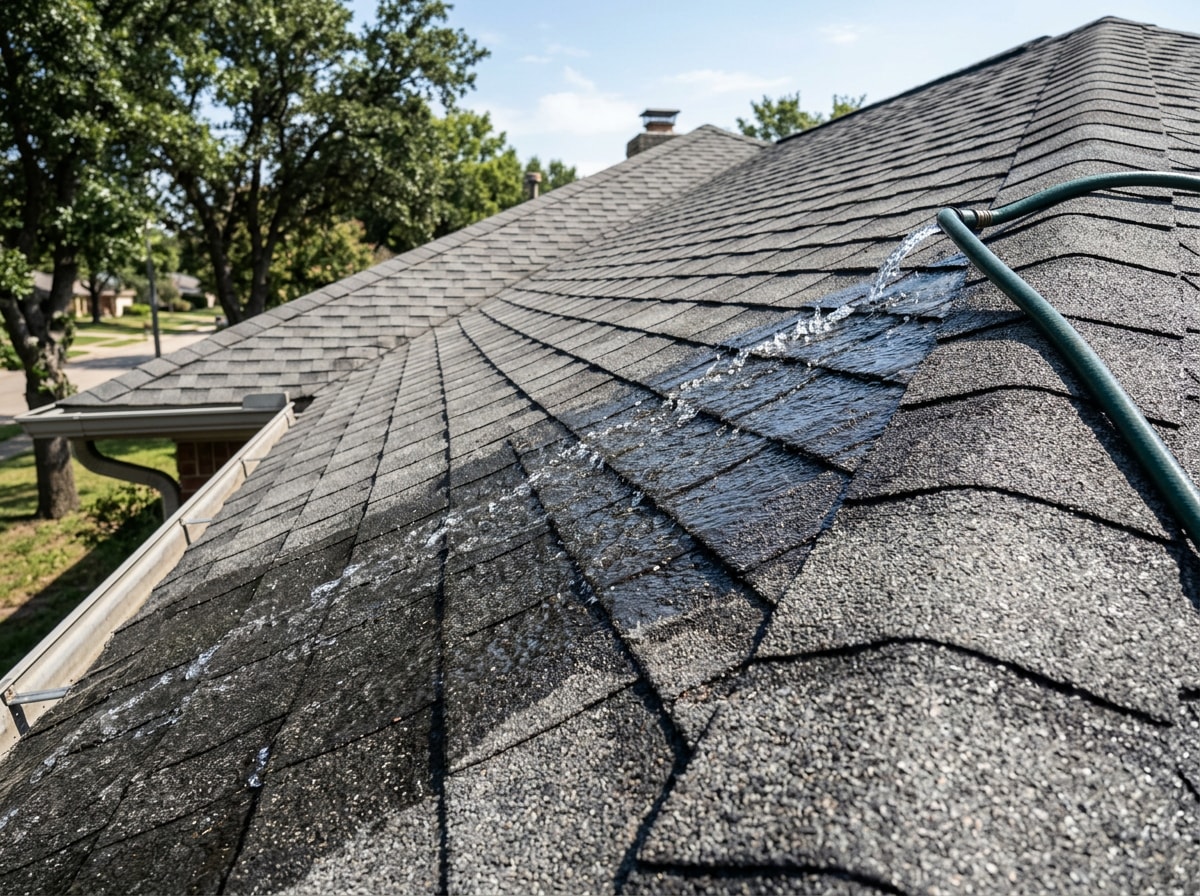
Start at the ridge and work down using a garden hose with gentle pressure, never a pressure washer. This direction matters because it prevents water from getting forced under the shingles, which causes leaks and rot you won't notice until much later.
If stains remain after rinsing, resist the urge to blast them with more force. Repeat the application-and-rinse process instead of increasing water pressure. Patience protects the shingles more than power ever will.
How to Prevent Algae and Moss From Coming Back
A few low-effort habits stretch the time between cleanings:
- Install zinc or copper strips near the roof's peak. As rainwater washes over them, it creates a surface that's inhospitable to moss and algae regrowth.
- Trim overhanging branches to cut down on shade and trapped moisture, the two conditions algae needs most.
- Keep gutters clear. Clogged gutters hold standing water against the roof edge, which speeds up both algae growth and shingle deterioration. If yours are backing up regularly, a gutter repair visit is usually cheaper than the water damage that follows.
None of these replace periodic cleaning. They just buy you more time between rounds.
DIY vs. Hiring a Professional Roof Cleaner
Safety is the number-one factor to weigh before doing any work on your roof. Steep pitches, tall ladders, and chemical solutions add up to real risk for a homeowner working alone, and that's exactly why hiring a qualified roofing contractor is often the smarter call.
If you're uncomfortable working at heights or handling cleaning chemicals, a professional brings the experience and equipment to clean the roof safely and effectively. That's especially true if the cleaning process turns up damage. Missing shingles, soft spots, or granule loss are jobs for roof repair or, if the roof is older and the damage is widespread, a full roof replacement conversation.
At Project Revitalize, our roofing contractor crews serve homeowners throughout Frisco, TX, Plano, TX, McKinney, TX, and the greater Dallas, TX area. If you'd rather leave the cleaning, inspection, or repair to someone else, reach out for a free estimate and we'll walk the roof with you before anything gets sprayed.
FAQ
What is the best homemade roof cleaner for shingles?
A mix of equal parts water and white vinegar works well for light staining. For tougher algae or moss, a 50:50 mix of chlorine bleach and water is the industry-standard ratio recommended by shingle manufacturers. Start with vinegar if the staining is mild and save bleach for stubborn buildup.
Is it safe to pressure wash asphalt shingles?
No. Shingle manufacturer guidance advises against using a power washer on asphalt shingles at all, since the pressure strips granules and can force water under the shingle line. Soft washing (low-pressure water plus a cleaning solution) is the recommended standard instead.
How often should you clean your roof shingles?
Most roofs benefit from cleaning every one to two years. Humid or heavily shaded roofs may need attention annually since algae and moss grow faster in damp conditions, while drier climates can often stretch that interval further.
What happens if you don't clean your roof?
Algae mostly affects appearance, not structural integrity. Moss is the bigger concern: left unchecked, it can trap moisture, accelerate granule loss, and in severe cases contribute to shingle blow-off. Debris buildup can also clog gutters and lead to water backing up under the roofline.
How do I get rid of algae on my roof without damaging the shingles?
Spray a bleach-and-water solution (50:50 for algae) over the affected area, let it dwell 15 to 20 minutes, then rinse with a garden hose from the top of the roof down. Skip the pressure washer and skip aggressive scrubbing. Both strip the same protective granules you're trying to preserve.
Can I use a leaf blower to clean my roof?
Yes, for loose debris like leaves and twigs. A leaf blower clears the surface without the scraping risk of a stiff broom. It won't remove algae or moss stains, which need a cleaning solution and a rinse.
Is vinegar safe for cleaning roof shingles?
Yes, for light staining. Equal parts white vinegar and water, sprayed on and left to sit around 20 minutes before a gentle low-pressure rinse, is a mild option that won't break down the shingle's granule layer the way overly concentrated bleach can.
Curious what a metal roof would run instead of another asphalt cleaning cycle? See our metal roof cost guide for current pricing by size and material.