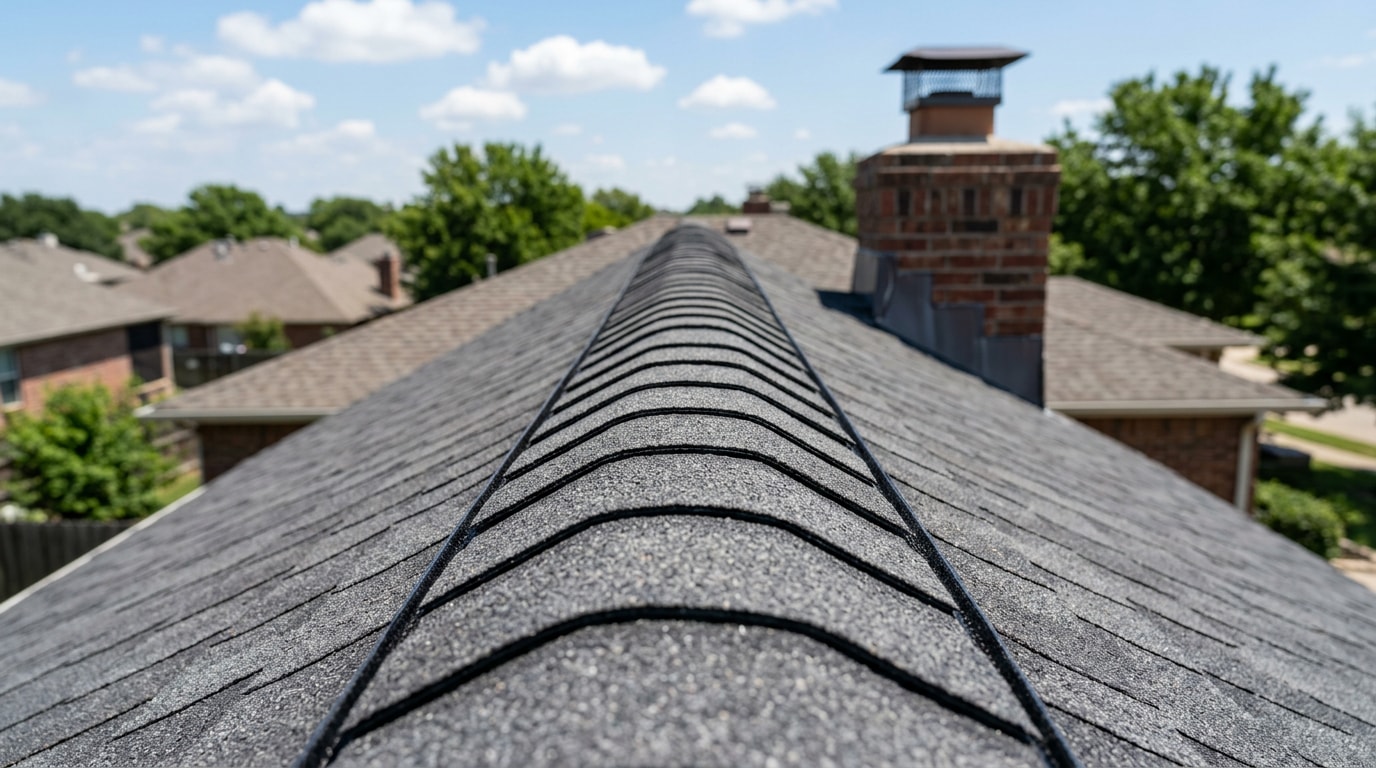

SPF roofing in Fort Worth, TX has moved from a niche commercial option to a serious contender for any flat or low-slope building fighting Texas heat and hail. If you're comparing it against TPO, EPDM, or another recover, this guide breaks down the real costs, the install process, and the questions that actually separate a good spray foam job from a callback-prone one.
What Is SPF Roofing?
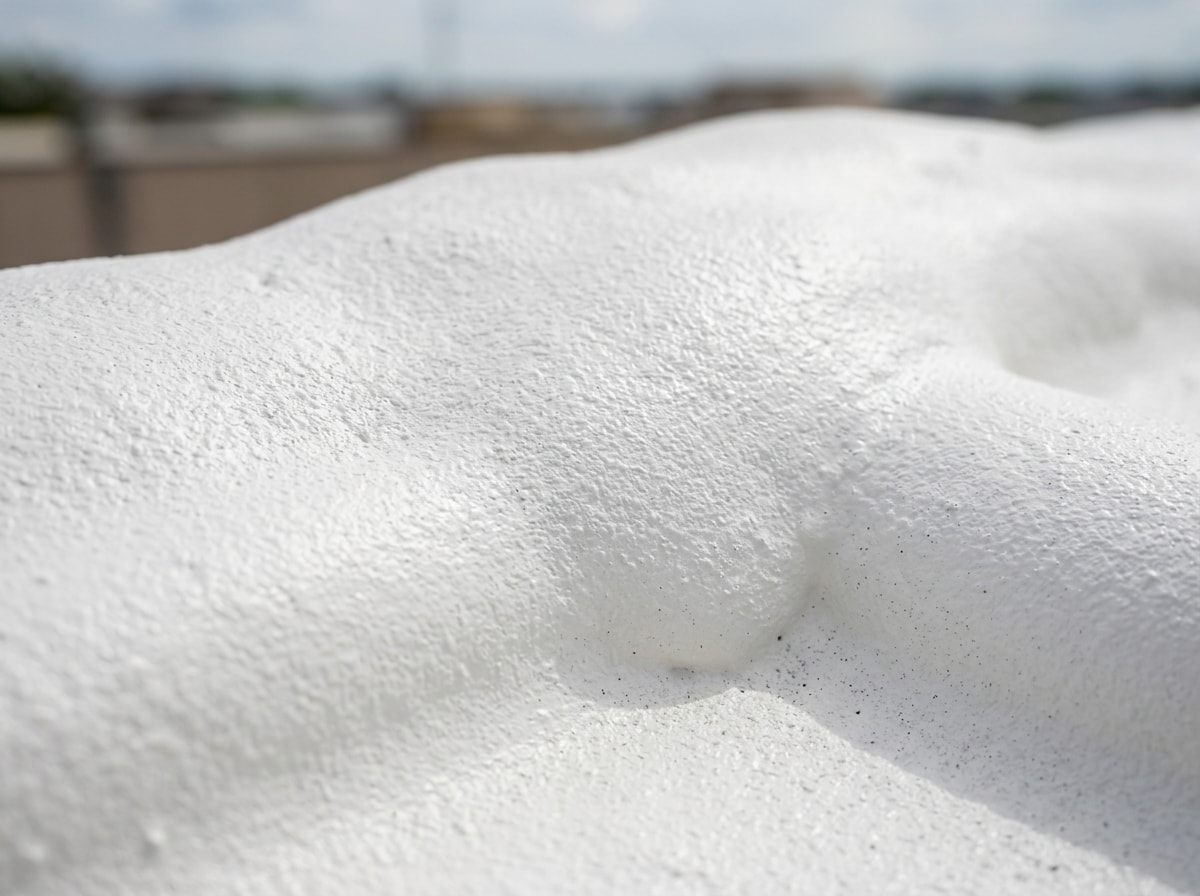
Spray polyurethane foam (SPF) is a liquid roofing material made from two components, isocyanate and polyol, that react and expand roughly 20 times their original volume when sprayed onto a roof deck. The result cures into a seamless, rigid foam membrane that acts as insulation and waterproofing in a single application. SPF has been used on commercial roofs since the 1970s, which gives it a long enough track record that building owners can check how specific systems have actually aged.
Despite that history, SPF still covers a smaller share of commercial roofs than TPO, EPDM, or modified bitumen nationally. That's partly a visibility problem. Most building owners never see the roof, so they never ask about it until a flat roof starts leaking or an energy bill gets out of hand.
Why Fort Worth Property Owners Are Looking at SPF
Two local factors push Fort Worth and Tarrant County owners toward SPF specifically: heat and hail.
Heat. A seamless foam membrane with a high R-value per inch reduces how much heat transfers into the building through the roof deck during the months when Fort Worth routinely sits above 95°F. Lower rooftop heat gain means less strain on HVAC equipment, which is where a lot of SPF's cost premium gets paid back over the life of the roof.
Hail. Tarrant County isn't a minor player in Texas hail activity. An analysis of NOAA records found that <a-data>Tarrant County had 126 severe hail days since 2000, the second-highest total of any Texas county after Potter County</a-data>, which is worth knowing before you choose a roofing system for a low-slope building here. SPF's seamless surface doesn't eliminate hail risk, but it does remove the lap seams and mechanical fasteners that are usually the first failure point after a hard storm. In our own roof inspections around Fort Worth after spring storms, the buildings with the fewest post-hail callbacks are almost always the ones without a patchwork of old seams and flashing details.
If you're not sure whether your current roof could even support a foam recover, a roof inspection is the right first step before any contractor quotes a number.
SPF vs. TPO, EPDM, and Modified Bitumen
Property owners comparing flat roof systems usually want numbers, not adjectives. Here's how SPF stacks up against the systems most commonly installed on Fort Worth commercial buildings.
| System | R-Value per Inch | Seam/Leak Risk | Tear-Off Usually Required | Typical Recoat/Replace Interval |
|---|---|---|---|---|
| SPF | ~6.5–7 | Very low (seamless) | Rarely | 10–15 years (recoat) |
| TPO | ~5–6 with insulation board | Moderate (heat-welded seams) | Often | 15–20 years (replacement) |
| EPDM | ~4–5 with insulation board | Moderate to high (adhered/taped seams) | Often | 15–20 years (replacement) |
| Modified Bitumen | ~4 with insulation board | Moderate | Often | 10–15 years (recoat/replace) |
The practical difference is seams. SPF doesn't have any. On an older Fort Worth roof with years of added penetrations, HVAC curbs, and patch jobs, that self-flashing quality is usually where SPF earns back its higher upfront cost fastest.
New SPF Installation vs. SPF Roof Recover
Most Fort Worth SPF projects fall into one of two categories, and the difference matters for both cost and timeline.
New installation. Closed-cell foam is sprayed directly onto a clean, structurally sound deck. It adheres to nearly any substrate: metal, concrete, wood, or modified bitumen.
Roof recover. This is where SPF tends to outperform other systems on value. Spray foam can go directly over most existing roof systems without a full tear-off. In one pass, it:
- Adds insulation value to an aging roof assembly
- Seals existing leaks and cracked seams
- Levels out ponding areas that collect standing water after storms
- Avoids the labor and landfill cost of removing the old roof
Whether a recover triggers additional insulation requirements under current energy code depends on your specific building and jurisdiction, so it's worth confirming with the City of Fort Worth building department before the project is scoped. If a recover isn't realistic because of deck condition, a full roof replacement may be the more honest recommendation, and a contractor who only pitches one option regardless of your roof's condition is a red flag.
How SPF Roofing Is Installed
A reputable crew follows the same basic sequence regardless of brand or manufacturer.
1. Surface preparation. The existing roof is cleaned of dirt, debris, and ponding residue. The crew inspects the substrate to confirm it's structurally sound. Soft or damaged decking gets repaired first; spraying foam over a compromised deck just locks the problem under a new surface.
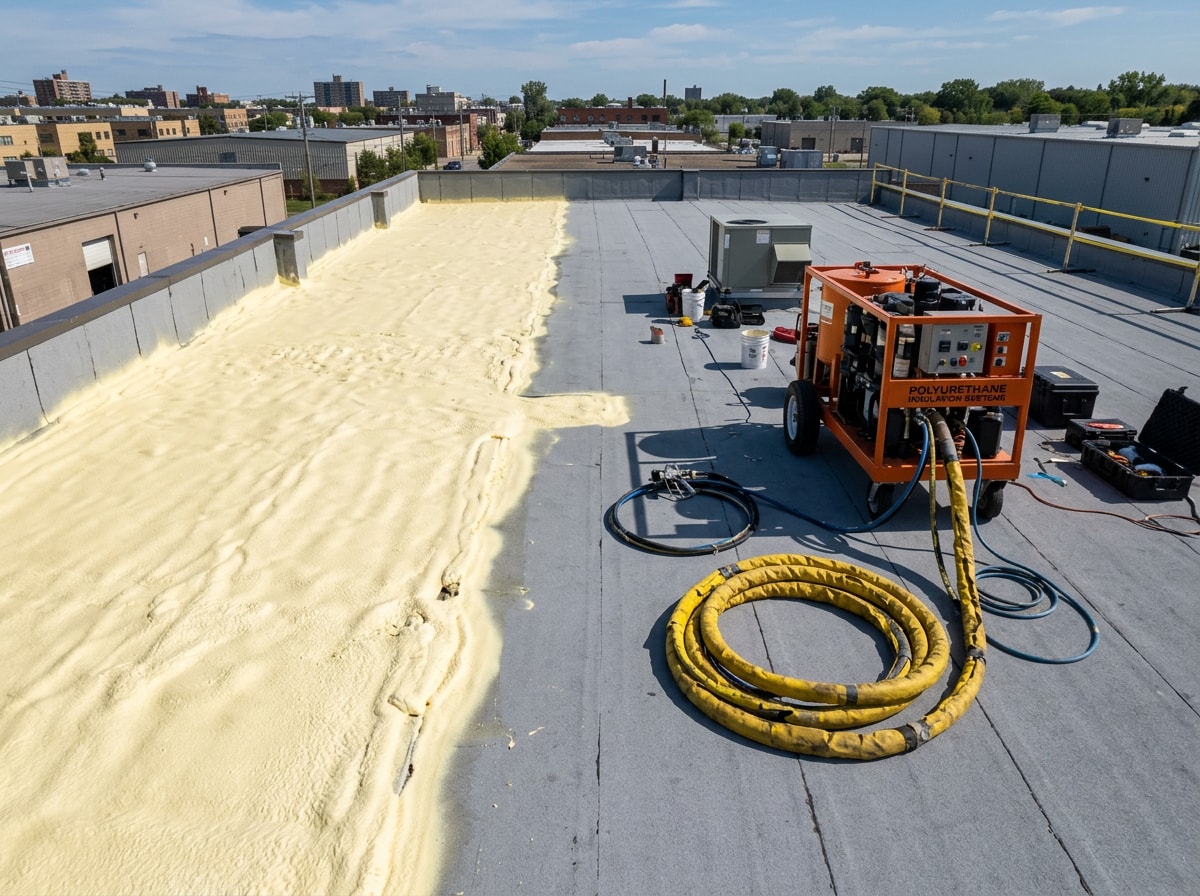
2. Foam application. Technicians combine polyol and isocyanate through a specialized spray rig that mixes the two liquids on contact. The foam expands roughly 20 times its liquid volume within seconds and cures into a solid, seamless surface. Applied thickness typically runs one to two inches depending on the target R-value.
3. Protective topcoat. Cured foam is not UV-stable on its own. Every SPF roof needs a protective elastomeric coating, usually silicone or acrylic, applied over the foam. Silicone generally holds up better against ponding water; acrylic costs less upfront. According to the Spray Polyurethane Foam Alliance, SPF roofs that are inspected and recoated on a regular schedule can last the lifetime of the building, while skipping recoats shortens that lifespan considerably.
What Does SPF Roofing Cost in Fort Worth in 2026?
Pricing varies more with deck condition and coating choice than with brand, but current national cost data for commercial SPF installation generally clusters in a predictable range.
| Project Type | Typical Installed Cost per Sq. Ft. | What Drives the Price |
|---|---|---|
| SPF recover (over existing roof) | $4.50 – $7.50 | Deck condition, foam thickness, coating type |
| New SPF installation (full tear-off) | $6.00 – $10.00 | Tear-off/disposal, deck repair, substrate prep |
| Recoat only (existing SPF roof) | $1.50 – $4.00 | Coating type, roof size, access |
Deck condition, target foam thickness and R-value, and the choice between silicone and acrylic topcoat all move these numbers up or down. Weigh the upfront figure against long-term HVAC savings; for context on cool-roof energy benefits generally, the U.S. Department of Energy has published guidance on purchasing energy-efficient cool roof products that's useful when you're trying to estimate payback period. If you're also weighing SPF against a steep-slope metal or shingle replacement elsewhere on the property, our metal roof cost comparison breaks down those numbers separately.
Want a number specific to your building instead of a national range? Request a free estimate and we'll walk the roof with you before quoting anything.
How to Hire the Right SPF Roofing Contractor in Fort Worth
Before signing anything:
- Get the system spec in writing. Foam thickness, target R-value, and coating type should all be on the proposal, not just "spray foam roof."
- Ask for substrate documentation. Photos or notes on the existing deck's condition tell you whether you're getting an honest assessment or a rushed quote.
- Confirm manufacturer approval. A crew that's manufacturer-trained on SPF specifically is different from a general roofer who occasionally sprays foam.
- Read the warranty terms. Material and labor warranties should be spelled out separately, with clear language on what voids each one.
- Check the recoat plan. Ask who's responsible for the first scheduled recoat and what it costs, since that's the maintenance item most owners forget to budget for.
A roofing contractor who's comfortable walking you through all five of these without hedging is usually one worth hiring. If your roof has existing leaks or soft spots, pair that conversation with a roof repair estimate so you know what you're covering up before foam goes down.
At Project Revitalize, we serve property owners across Fort Worth and the surrounding Metroplex, and we'd rather tell you a recover won't work on your roof than sell you one that fails in three years.
FAQ
Is SPF good for every flat roof in Fort Worth or North Texas?
Not always. SPF suitability depends heavily on deck condition, drainage, and project budget. A thorough inspection is the best way to confirm whether your specific flat roof is a good candidate, especially on older buildings with a history of patch repairs.
How long does a spray foam roof last?
A well-maintained SPF roof can last 30 years or more, provided the protective topcoat is recoated on schedule, typically every 10 to 15 years. Skipping recoats shortens that lifespan considerably because the underlying foam loses its UV protection.
Is spray foam roofing safe?
Installation involves isocyanate chemicals, so it requires a trained, properly equipped applicator following standard safety protocols. The EPA's guidance on safer workplace practices for spray polyurethane foam installation covers ventilation and PPE requirements in detail. Once cured and topcoated, SPF is generally considered safe for building occupants.
Can SPF be installed over an existing roof without tearing it off?
Yes, in most cases. SPF recovers are one of its biggest advantages. It adheres to metal, concrete, modified bitumen, and most other substrates without removing the old roof, as long as the deck underneath is structurally sound.
How does SPF roofing perform in hail?
SPF's seamless membrane removes the lap seams and fasteners that are usually the first thing to fail after hail impact. It doesn't make a roof hail-proof, but seamless systems generally require less post-storm patching than roofs with mechanically fastened seams.
How much does SPF roofing cost compared to a new metal or shingle roof?
SPF is typically priced per square foot similarly to a mid-range metal roof system, though the comparison depends heavily on building size and roof pitch. For a side-by-side look at steep-slope pricing, see our guide on how much a metal roof costs per square foot.