Finding the best roofing company near me starts with a simple truth: a roof is one of the few home investments you can't easily undo once the crew leaves. Most homeowners search the same way, by asking a neighbor, scanning reviews, or both, but very few know what separates a reliable local roofer from a risky one. This guide breaks down the exact vetting steps, red flags, and questions worth asking before you sign anything.
We've walked thousands of roofs across the Dallas-Fort Worth area, from Plano to Frisco, and the homeowners who end up happiest are almost always the ones who did this research first.
How to Find the Best Roofing Companies Near You
Most people start their search for a local roofer in one of two places: asking someone they trust, or looking the company up online. Both work best together. A referral gives you a real-world reference point. Online research confirms that the company still holds up to scrutiny today.
Ask Family and Friends Who Have Recently Had Roof Work Done
A recommendation from someone who just had roofing work done usually carries more weight than a five-star post from a stranger. A neighbor can tell you how the crew behaved, how cleanup went, and whether the final price matched the quote.
When you get a referral, dig a little deeper:
- Was the work done recently, or years ago under different ownership or staff?
- Would they hire the same contractor again?
- Did the contractor provide proof of insurance before starting?
Word of mouth is a strong starting point, but it still deserves a quick check against current reviews.
Check Their Website and Online Reviews
Customer reviews offer a fast, honest look at how a roofing company treats customers once the contract is signed. Most established contractors maintain an active online presence, so a thin or outdated footprint is worth noting.
Go beyond the star rating. Look at how recent the reviews are, since glowing feedback from five years ago with nothing since may mean the company changed hands or quality dropped. Read how the business responds to negative reviews. A professional, solution-focused reply often says more than the complaint itself. You can see how our own team approaches customer work by browsing our homepage.
Qualities of a Reputable Roofing Contractor
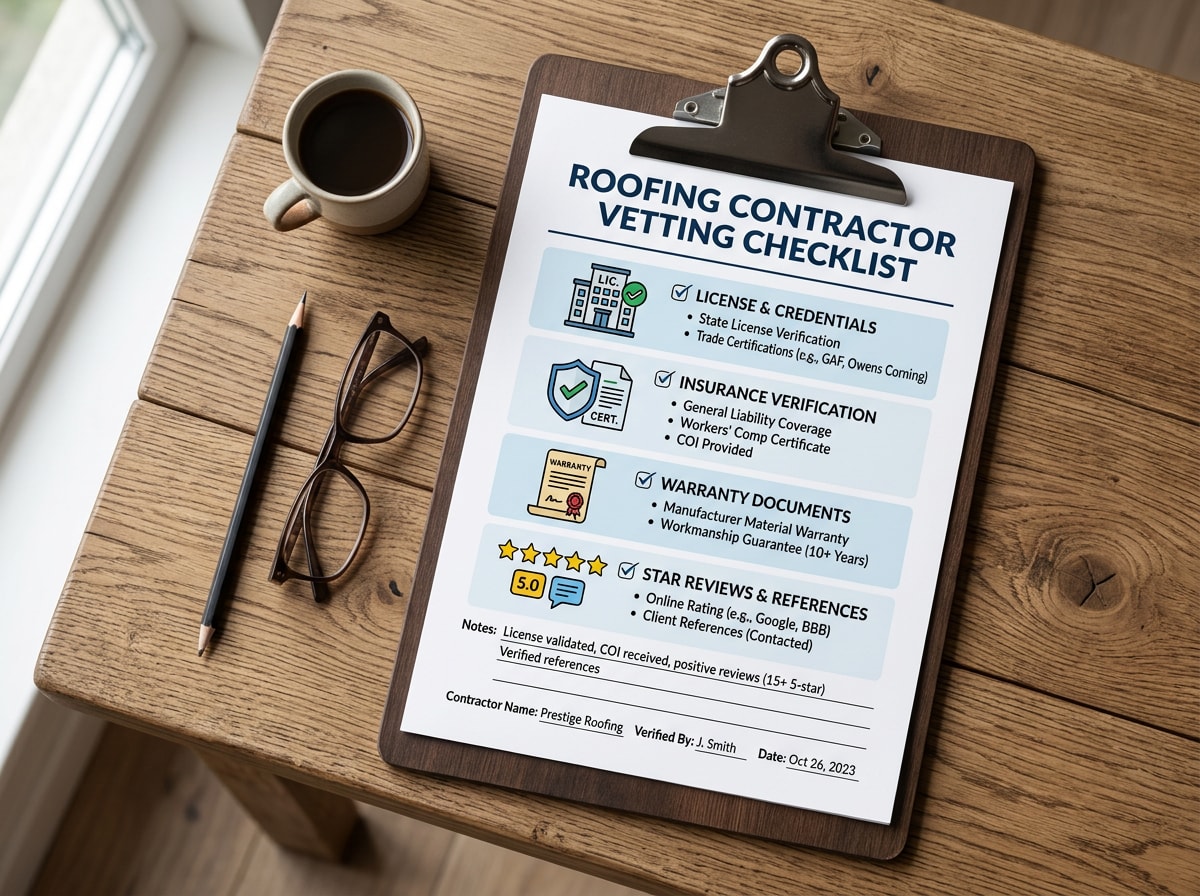
A reputable roofing contractor shares a few traits every time: proven experience with your type of project, verifiable licensing and insurance, written warranties, and a consistent public track record. These form the core checklist for separating a dependable local roofer from a risky one.
Experience and Expertise
Look for a contractor with a track record of completed projects similar to yours. Several years in business usually means the company has already handled permit issues, inspection snags, and supply delays without surprises.
Specialization matters too. A company that mostly installs asphalt shingles may not have the same depth with standing-seam metal or specialty tile. Ask directly whether they've completed projects matching your roof type, not just roofing in general, and ask to see examples.
Licensing and Insurance
Confirming that a contractor is licensed and insured protects you from liability if something goes wrong on your property. Ask for copies of the contractor's liability insurance coverage and workers' compensation certificates and make sure both are in effect through the duration of your job.
Many homeowners stop too early by simply asking "are you insured?" Dig further. General liability covers property damage during the project. Workers' compensation covers injuries to the crew, and without it, an injured worker could potentially hold you liable. Ask for a certificate of insurance that lists current policy dates, coverage limits, and your name as the certificate holder, not just a logo on a PDF.
#### A Texas-Specific Note on Licensing
Here's something most national guides get wrong when applied to North Texas: Texas doesn't require roofers to hold a state license. The Texas Department of Licensing and Regulation oversees dozens of trades and professions but does not list roofing as a licensed trade at the state level. You can confirm which trades the state actually regulates directly on the Texas Department of Licensing and Regulation site.
That means in Frisco, Dallas, McKinney, Plano, Fort Worth, Denton, or Allen, a "license lookup" won't tell you much about a roofer the way it would for an electrician or plumber. Insurance, workmanship history, and local permits do the heavy lifting instead, so weigh those three factors more heavily than license status when you're vetting a DFW-area roofer.
Warranty and Guarantees
A reputable roofing company backs its work with two separate warranties: one from the material manufacturer covering product defects, and one from the contractor covering workmanship. Both should spell out the coverage period and any conditions in writing, not just verbally promised.
A workmanship warranty typically runs shorter than the manufacturer warranty, and it's worth asking what voids each one. If you want to see how roof layers and materials affect warranty terms, our guide on what goes under shingles walks through the components most warranties actually cover.
Questions to Ask Before You Hire a Roofing Contractor
Run through a short list of direct questions before hiring anyone. It doesn't need to be formal, it just needs to cover the basics that protect you later.
- Can you confirm full insurance coverage for this specific project, not just a general policy?
- What's the realistic timeline from contract signing to completed cleanup?
- Who pulls the required permits, you or the contractor?
- How is debris and old roofing material removed and disposed of?
- What does the payment schedule look like, and is a deposit required upfront?
Treat this as a reusable checklist for every contractor you call. If you want to see what a typical scope and timeline looks like in your city, review our roofing contractor services before that first call.
Get Quotes From Multiple Roofers
Contact at least three roofing contractors before deciding. Comparing estimates side by side helps you spot outliers, both the quote that seems too cheap to be real and the one padded with vague line items.
When you compare quotes, look past the bottom-line number. Check what materials are specified, how long the warranty runs, and what's included versus billed separately later. Multiple bids also give you negotiating context and a clearer sense of fair market pricing in your area. If you're ready to start that process, you can request a free roof inspection to get your own baseline quote, or get a free estimate directly from our team.
Warning Signs of a Dishonest Roofing Contractor
A few red flags show up repeatedly in roofing complaints, and they're worth memorizing before storm season. Watch for door-to-door "storm chasers" with no local address, high-pressure demands for full payment upfront, and no online presence at all.
Other warning signs include refusing to put the scope of work in a written contract, pushing you to sign immediately "before the price goes up," or asking for cash only. Federal law entitles you to a written statement of your right to cancel the contract within three business days if you signed it in your home or at a location other than the seller's permanent place of business. The FTC's consumer guidance on weather-related scams covers these tactics in more detail and is worth a quick read after any hailstorm or high winds move through your area.
Checking with a local home builders' association can also confirm whether complaints have been filed against a contractor you're considering. If you notice more than one of these behaviors, it's reasonable to walk away and keep looking.
Making Your Final Decision
Once you've checked referrals, read reviews, verified licensing and insurance, and compared a few quotes, you're in a strong position to make a final call. At this point, the decision often comes down to fit as much as price.
Price is only one criterion for selecting a roofing contractor. Weigh communication style and responsiveness too. A contractor who answers questions clearly before the job starts is more likely to stay reachable after it's done. Choosing a roofing contractor isn't only about the lowest bid, it's about confidence that the crew will show up, do the work as described, and stand behind it.
When you're ready, explore our roofing services to see how we approach each step covered in this guide, or contact us directly for a free estimate.
FAQ
What should I look for in a roofing company?
Verified licensing where applicable, proof of insurance, a workmanship and manufacturer warranty in writing, consistent recent reviews, and proven experience with your specific roof type. Together, these cover most of what separates a dependable contractor from a risky one.
Is it better to use a local roofing company?
A local roofer typically knows regional building codes and weather patterns better than an out-of-area crew. They're also easier to reach for warranty follow-up and tend to have a community reputation that's easy to verify through neighbors or local reviews.
What questions should I ask local roofers?
Start with insurance coverage for the specific job, the expected project timeline, and who's responsible for pulling permits. Asking about cleanup and the payment schedule rounds out a solid first call before you request a written quote.
How do I find the best rated roofers near me?
Start with referrals from neighbors or family who've had recent roofing work done, then cross-check those names against recent reviews and the contractor's own website. Consistency between word of mouth and online reputation is usually a good sign.
Do roofers need a state license in Texas?
No. Texas does not require a statewide roofing license, so a license lookup won't tell you much about a DFW-area roofer. Insurance, workmanship warranties, and verifiable project history matter more here than license status.
How much does a new roof cost?
Costs vary widely by material, roof size, and region, so there's no single accurate number that applies everywhere. Our roof cost pricing breakdown walks through current ranges by material and size so you can sanity-check any quote you receive.