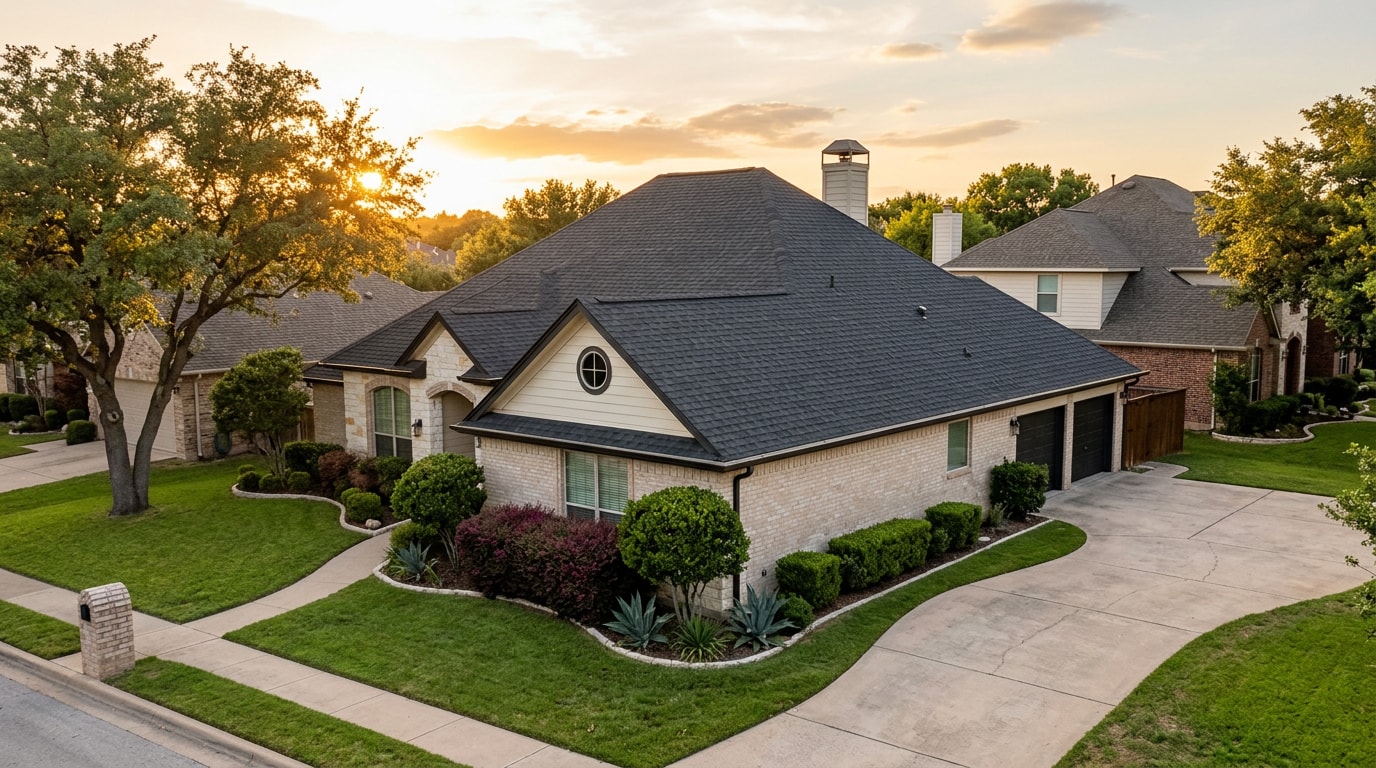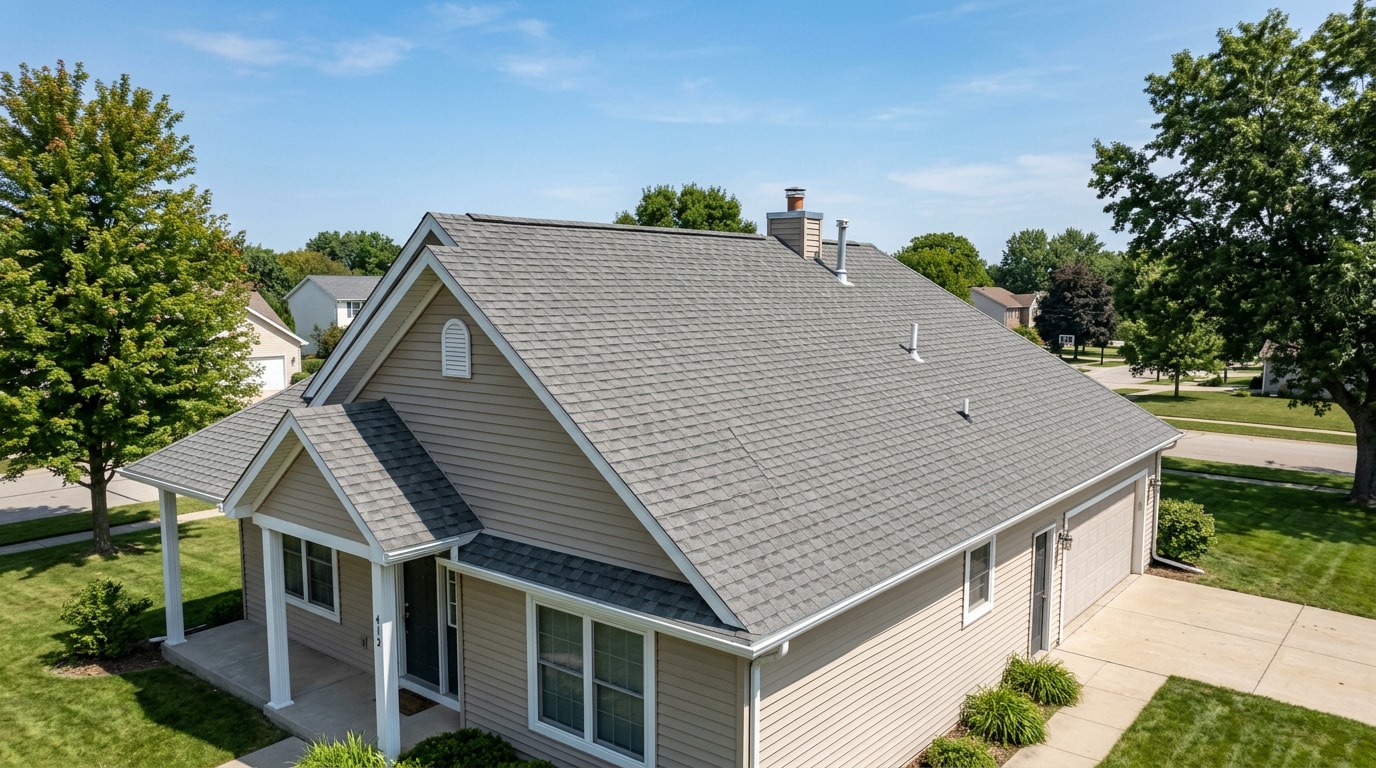
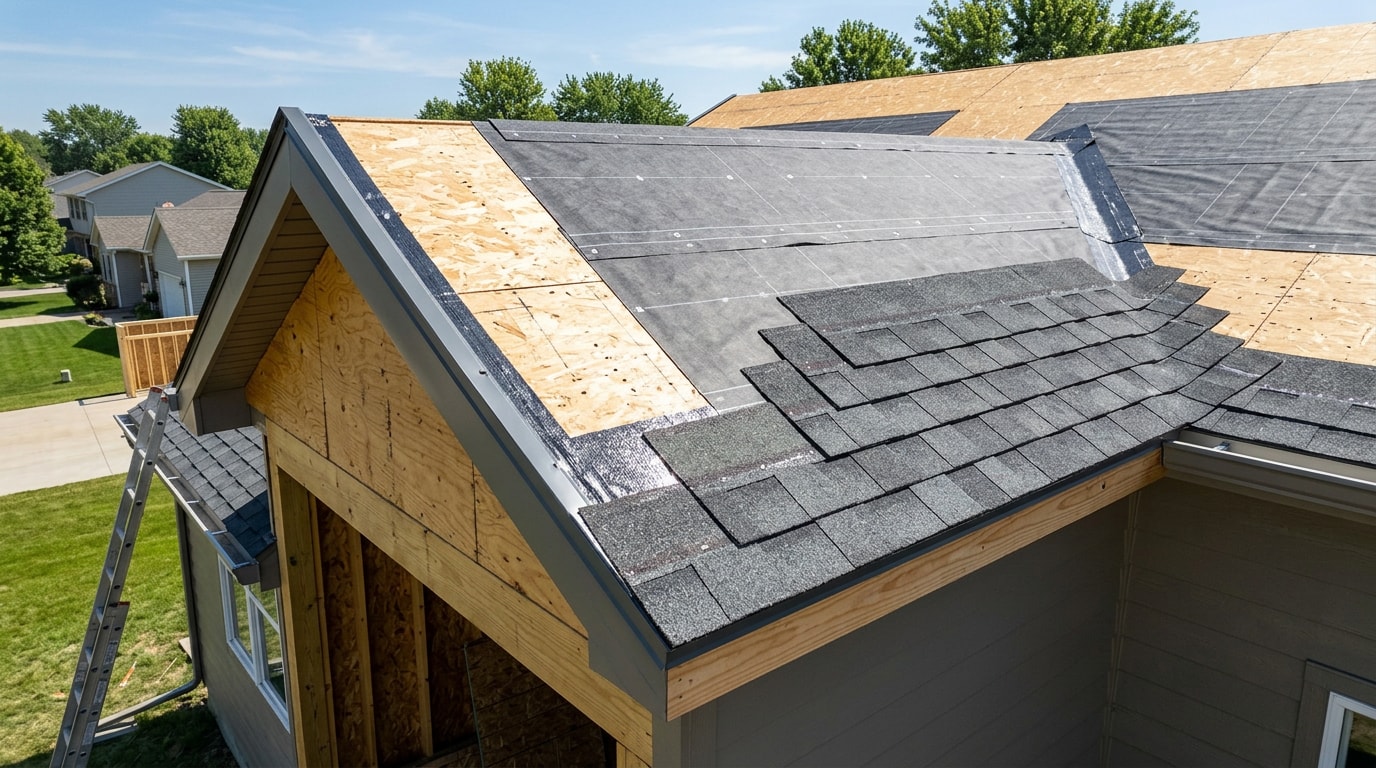
What goes under shingles is a stack of layers, not a single material: decking, drip edge, ice and water shield, underlayment, a starter course, and flashing, each one doing a different job to keep water out. Skip or skimp on any single layer and the whole system ages faster, no matter how good the shingles on top look. Here's what's actually under there, in the order it goes down, and why each layer earns its place.
The Layers Under Shingles, Top to Bottom
Roofers build this system from the deck up, and the sequence matters almost as much as the materials. Here's the full stack and what each piece is responsible for.
| Layer | Where It Goes | Main Job |
|---|---|---|
| Roof decking | Fastened to the rafters or trusses | Structural base for every other layer |
| Drip edge (eave) | Over the decking, under the underlayment at the eaves | Directs runoff into the gutter, protects the fascia |
| Ice and water shield | Over the decking at eaves, valleys, and penetrations | Seals around nail holes, stops ice-dam backup |
| Underlayment | Across the entire deck | Secondary water barrier if shingles fail |
| Drip edge (rake) | Over the underlayment at the rake edges | Shields the gable edge from wind-driven rain |
| Starter strip | Along eaves and rakes, under the first course | Seals the first row, resists wind uplift |
| Flashing | Valleys, chimneys, skylights, sidewalls | Seals every joint and penetration |
| Shingles | Top layer | Primary weather protection |
That eave-versus-rake drip edge sequence trips up a lot of DIY research: underlayment goes over the drip edge at the eaves but under it at the rakes. Get that order backward and water can track behind the metal instead of over it.
Roof Decking: The Structural Base
Roof decking, sometimes called sheathing, is what every other layer is fastened to. Most homes use plywood or OSB, generally 7/16 inch to 5/8 inch thick depending on rafter spacing and local code.
Panel makers set spacing and thickness limits through span-rating standards published by the APA, The Engineered Wood Association, so a deck can carry roofing weight plus wind and snow loads without sagging between supports.
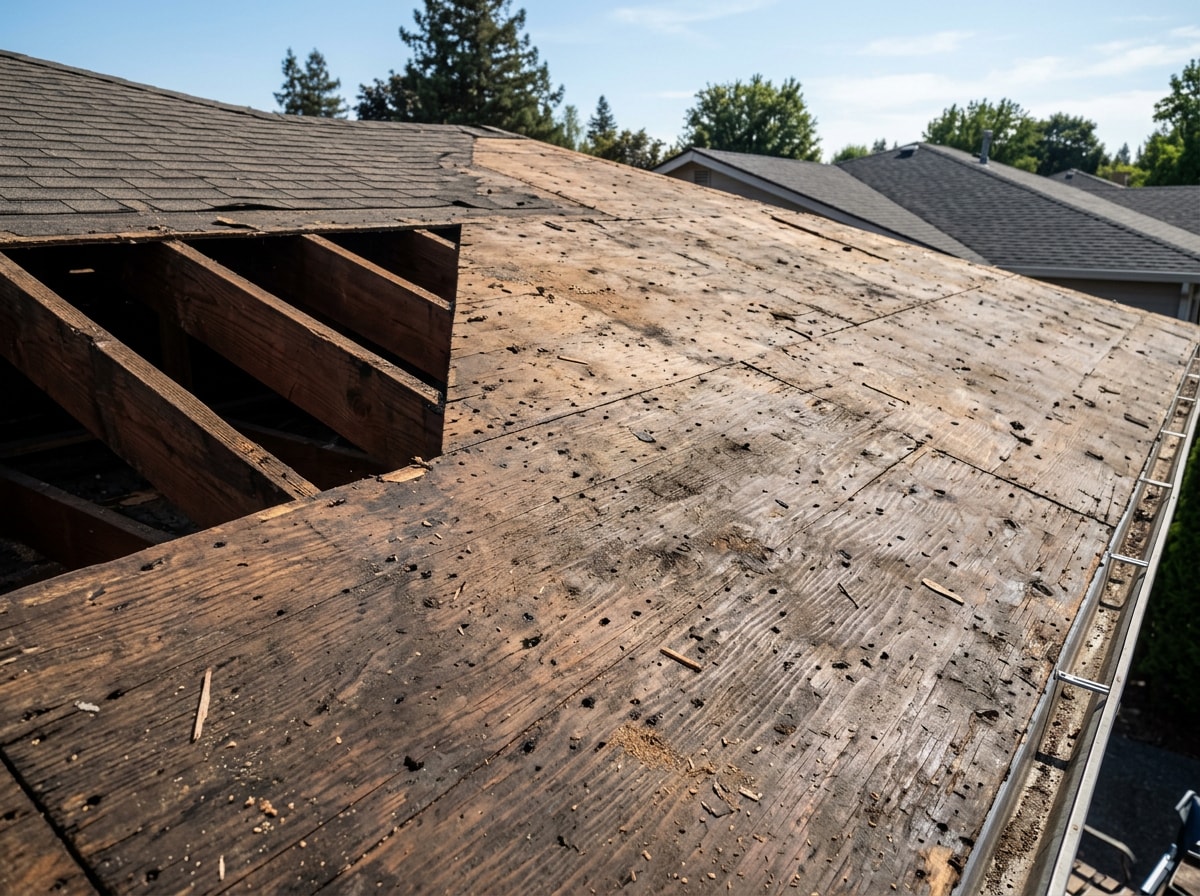
During a full roof replacement, a crew should pull the old shingles and underlayment, then check the exposed decking for soft spots, delamination, or staining. Damaged panels get cut out and replaced before anything new goes down. Installing fresh shingles over soft decking just hides a structural problem under a new warranty.
Drip Edge: The Roof's Edge Protection
Drip edge is an L-shaped metal strip installed along the eaves and rake edges. It carries water off the roof and into the gutter instead of letting it wick back under the shingles and into the fascia board.
The International Residential Code requires drip edge at every eave and rake on shingle roofs, with adjacent pieces overlapped at least 2 inches and the metal extending onto the deck. It's typically aluminum or galvanized steel, chosen to resist corrosion over decades of exposure.
Homes without it often show rotted fascia boards years before the shingles themselves wear out, since water has a direct path behind the gutter line every time it rains.
Ice and Water Shield: Where Leaks Start
Ice and water shield is a self-adhering waterproof membrane applied directly to the decking in a roof's most vulnerable spots: eaves, valleys, and around penetrations like chimneys, skylights, and vent pipes. The peel-and-stick backing bonds tightly to the deck and seals around nail penetrations added later.
A lot of roofing content repeats a vague "three to six feet" rule for eave coverage, but the actual code language is more specific. Under the International Residential Code's ice barrier requirement, the membrane must extend from the eave to a point at least 24 inches inside the exterior wall line, not 24 inches from the gutter. On a roof with a deep overhang, that inside-the-wall measurement can push the real coverage well past the fascia, and on slopes of 8:12 or steeper, code adds another 36 inches up the slope. It's a detail worth asking a contractor about by name rather than taking "we cover the eaves" at face value.
Valleys get the same treatment because they funnel the heaviest volume of water during a storm. Skipping ice and water shield there is one of the more common and more costly shortcuts in reroofing, and it's one our crews find on almost every storm-damage inspection across North Texas, usually right where a leak eventually shows up on the ceiling below.
Underlayment: The Secondary Water Barrier
Applied directly over the decking, underlayment is the backup water barrier beneath the shingles. Shingles alone can't seal a roof completely. They're built to shed water and block impacts, not to seal tightly at every cut edge, so wind-driven rain can still work its way underneath during a storm.
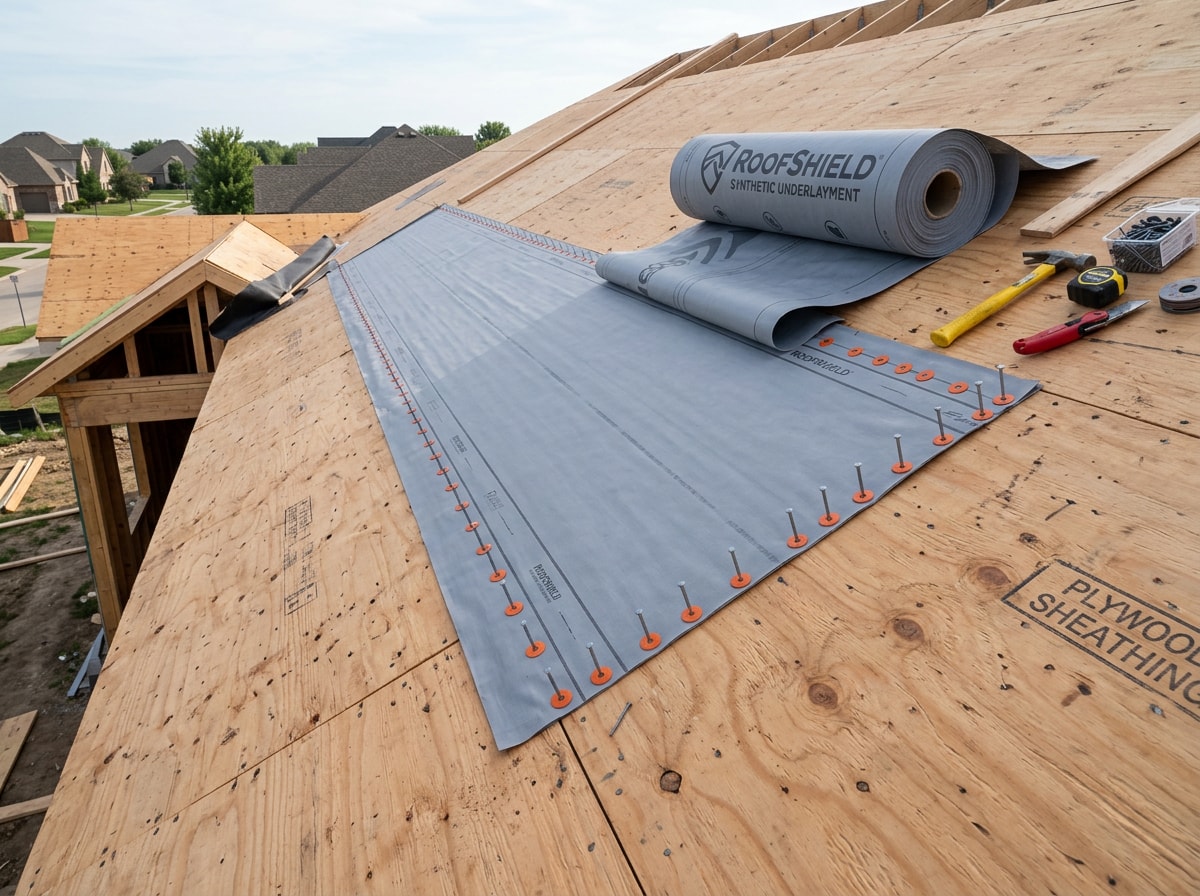
Underlayment comes in a few main types, and the right one depends on climate, budget, and how long the roof needs to perform.
| Underlayment Type | Typical Lifespan | Relative Cost | Best For |
|---|---|---|---|
| Felt (asphalt-saturated) | 10-20 years | Lowest | Moderate climates, budget projects |
| Synthetic underlayment | 25+ years | Mid-range | Most climates, faster installation |
| Rubberized / self-adhered | 30+ years | Highest | Cold climates, high-wind zones |
Felt, made from asphalt-saturated paper, has been the standard for generations and stays breathable enough to support attic ventilation. Synthetic underlayment is lighter, tears less during installation, and usually installs faster since the sheets cover more area per roll. Rubberized or self-adhered membranes cost more but offer the strongest moisture barrier, which is why they're often reserved for eaves, valleys, and ice-dam-prone regions.
Underlayment choice also depends on which shingle you're pairing it with. Our guide to the best shingles for a roof breaks down how shingle type and underlayment work together as a system rather than two separate purchases.
Starter Strip Shingles: Sealing the First Course
Starter strip shingles are adhesive-backed strips installed along the eaves and rakes before the first visible course of regular shingles goes down. They create a sealed, uniform edge and give that first row something solid to bond to.
Without a proper starter course, roof edges are far more vulnerable to wind uplift. Gusts can slip underneath the first row and peel shingles back from the edge in. Starter strips also fill the gaps left by shingle cutouts along the edge, so water can't sneak through at the tabs.
A roofer checking for this during a roof inspection can often tell whether starter strips were installed correctly just by looking at how tightly the first course lies along the eaves. If you've noticed shingles lifting right at the edge of your roof, that's frequently a starter-strip problem rather than a shingle problem, and it's usually a roof repair rather than a full tear-off.
Flashing: Sealing the Transitions
Flashing is metal, usually aluminum or galvanized steel, installed wherever the roof plane changes direction or meets another surface: valleys, chimneys, skylights, dormers, and the point where a roof meets a sidewall.
Shingles alone can't bend around a chimney or seal a valley where two roof planes collide, so flashing does that job instead. Step flashing is woven in course by course along sidewalls, valley flashing runs the full length of a valley under the shingles on both sides, and counter-flashing tucks into masonry or siding to shed water over the step flashing below it.
Most roof leaks that aren't storm damage trace back to failed or missing flashing rather than worn-out shingles, which is why a thorough inspection checks every penetration, not just the shingle field.
Roof Ventilation: Not Under the Shingles, But Critical
Ventilation isn't technically part of what goes under shingles, but it determines how long those layers last. Soffit vents installed under the eaves let cool outside air into the attic, while ridge vents along the peak let hot, moist air escape.
Building codes typically require a minimum net free ventilating area of 1/150 of the attic floor space, or 1/300 when intake and exhaust vents are balanced and a vapor retarder is present on the ceiling. The National Roofing Contractors Association recommends balancing ventilation between the eave and ridge, with roughly half the vent area placed near the ridge for the system to work as intended.
Poor ventilation traps heat and moisture against the underside of the decking, which softens wood over time and can shorten the life of the shingles above it. The U.S. Department of Energy's guide to durable attics notes that moisture control and proper airflow are the two biggest factors in keeping an attic structure sound. Insulation isn't part of the under-shingle stack either; it sits on the attic floor, separating living space from attic space, while ventilation handles the airflow above it.
How Long Can Underlayment Sit Exposed Before Shingles Go On?
Weather delays and material backorders happen, so this comes up often. Felt underlayment should be covered within days; it wrinkles and degrades quickly in direct sun. Most synthetic underlayments are rated by the manufacturer for 60 to 180 days of UV exposure, but that window varies by product, so it's worth checking the specific data sheet rather than assuming every synthetic roll behaves the same.
Get a Second Opinion on What's Under Your Roof
None of these layers are visible from the ground, which is exactly why so many roofs fail at the deck or underlayment level years before the shingles show obvious wear. If you're planning a reroof or just want to know what's actually protecting your attic right now, get a free estimate and we'll walk you through what's there and what needs attention. We work on homes across Frisco and the surrounding Dallas-Fort Worth area, and the same layer-by-layer check applies whether your roof is three years old or thirty. You can also browse our full roofing services to see everything we handle beyond the shingle layer itself.
FAQ
What are the layers under roof shingles?
From bottom to top: roof decking, drip edge at the eaves, ice and water shield, underlayment, drip edge at the rakes, starter strip shingles, flashing at valleys and penetrations, and finally the shingles themselves. Each layer protects the one below it.
Do you need underlayment under roof shingles?
Yes. Most building codes and shingle manufacturer warranties require it because it provides a secondary water barrier if wind or storm damage lets moisture past the shingles. Skipping it can void warranty coverage and expose the decking to moisture damage.
How does underlayment protect a roof?
It acts as a backup water barrier beneath the shingles, catching moisture that works its way through damaged, missing, or wind-lifted shingles before it reaches the decking. Without it, even small gaps in shingle coverage can let water soak into the structural base underneath.
Are insulation materials used beneath shingles?
No. Insulation sits on the attic floor, well below the roof deck and shingle layers, not directly under the shingles. Installing it against the underside of the deck would block the airflow that roof ventilation depends on and could trap moisture against the wood.
Is drip edge required under shingles?
Yes, under the current International Residential Code. It must be installed at every eave and rake edge on a shingle roof, with underlayment running over the drip edge at the eaves and under it at the rakes.
What does flashing do under shingles?
Flashing seals the places shingles can't cover on their own, such as valleys, chimneys, skylights, and sidewalls. Most non-storm roof leaks trace back to failed or missing flashing rather than worn shingles.
How long can underlayment be left exposed before shingles are installed?
Felt should be covered within days to avoid wrinkling and UV damage. Synthetic underlayment is typically rated for 60 to 180 days of exposure, depending on the manufacturer, so check the product's data sheet if a project is delayed.