Are metal roofs hail resistant enough to survive a North Texas hailstorm? Yes, when the panel carries a UL 2218 Class 4 rating and is installed at the right gauge, metal is one of the toughest roofing materials hail can hit. Here's exactly what "resistant" means, where the limits are, and how to pick a system that actually holds up.
Quick Answer: Are Metal Roofs Hail Resistant?
Yes. Metal roofing, especially panels carrying a UL 2218 Class 4 impact rating, resists punctures and cracking far better than asphalt shingles. Dents and cosmetic marking are still possible depending on hail size and panel gauge.
- Look for: A UL 2218 Class 4 certification on the specific product, not just the material family
- Insurance perk: Discounts for impact-resistant roofing are commonly reported in a wide range, historically as high as 4% to 35% depending on the carrier and rating territory
- Trade-off: Even a hail-resistant metal roof can dent visibly while performing structurally fine
The best-documented figures are Texas's original 1998 mandatory schedule, which ran from 4% to 35% for a Class 4 roof depending on rating territory . The exact number for your home depends entirely on your carrier, so ask directly. If you want a second opinion on your current roof before a storm season hits, a professional roof inspection is the fastest way to find out where you stand.
How Metal Roofs Perform Against Hail
Metal behaves nothing like asphalt or tile when a hailstone hits it. Instead of cracking or losing granules, a quality metal panel absorbs and redistributes that impact energy across its surface.
Rigidity is the first line of defense. Unlike asphalt shingles that can crack on impact, metal roofing distributes the force of hail impacts across a wider area, and the inherent strength of steel or aluminum helps prevent penetration even from larger hailstones.
Flexibility does the rest of the work. A malleable panel gives slightly on impact instead of fracturing. That same give also lets the panel tolerate thermal expansion and contraction without stress fatigue, which keeps seams and fasteners intact through repeated storm cycles.
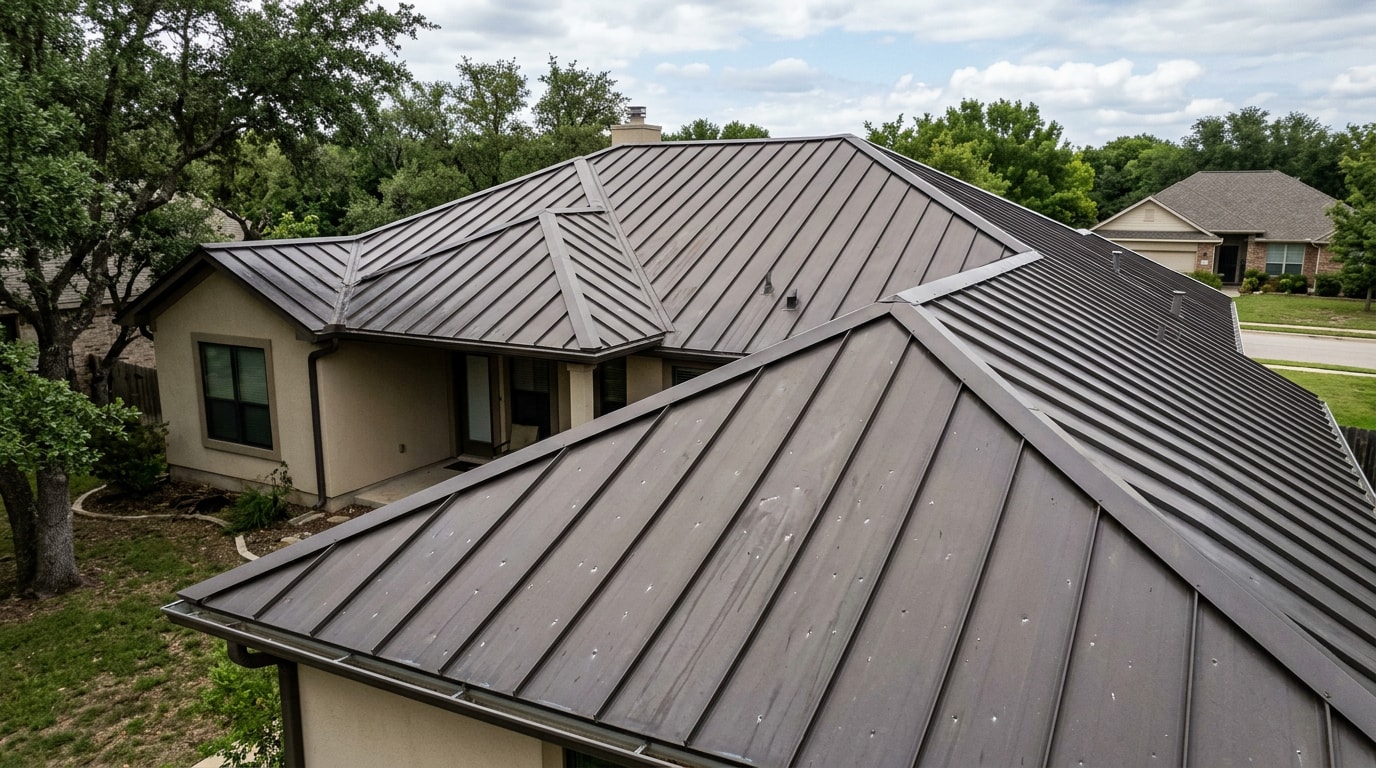
When our crews inspect roofs across Frisco and McKinney after a spring hail event, cracked or punctured panels are the exception. Dented ridge caps, loosened fasteners, and dinged gutter aprons are what we actually find on properly installed systems.
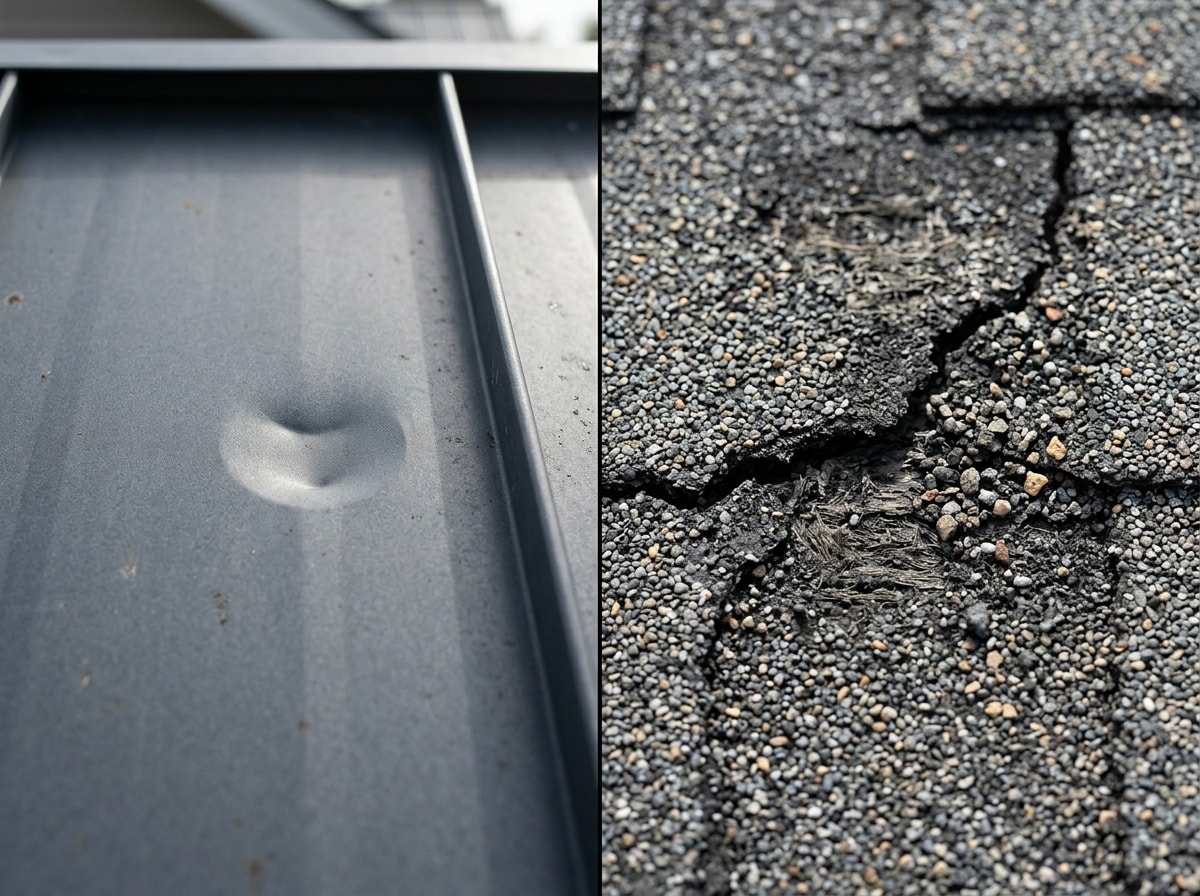
Cosmetic vs. Functional Damage: What's the Difference?
This distinction matters more than almost anything else in this guide.
- Cosmetic damage is surface-level marking, like dents or scuffs, that doesn't let water in.
- Functional damage is structural: punctures, cracked seams, or compromised flashing that allows leaks.
UL 2218 measures functional survival, not cosmetics: the pass/fail is whether the covering (and its coating, for metals) cracks, tears, or ruptures so water could pass . That means a roof can pass Class 4 testing and still show visible dents after a real storm. The panel didn't fail structurally, it just doesn't look pristine anymore.
For metal, severe hail may leave cosmetic dents while the interlocked, continuous metal surface remains completely watertight, which is why insurance policies in hail country often pair Class 4 premium discounts with cosmetic damage exclusions . Knowing that ahead of time saves a lot of frustration when you file a claim.
The UL 2218 Class 4 Test, Explained
UL 2218 is the industry standard for rating how roofing materials respond to simulated hail impact.
The impact resistance of a roofing shingle is typically evaluated using standardized impact tests, such as the UL 2218 test, which assigns a Class 1 to 4 rating to passing products based on their performance in a steel ball drop test conducted under controlled laboratory conditions.
Class 4 products withstand the impact of a 2-inch steel ball dropped from a height of 20 feet while Class 3 products withstand a smaller ball dropped from a lower height.
A pass requires no cracking, splitting, or tearing on the back of the material, even if a visible dent remains on the surface. When comparing quotes, ask for the specific UL file number for the product being installed, not just the general material type. You can look up the current test method directly through UL's published standard for impact resistance of roof covering materials.
Key Factors That Determine Metal Roof Hail Resistance
Not every metal roof performs the same in a storm. A few variables separate a genuinely hail-resistant system from one that's vulnerable to denting.
Metal Gauge
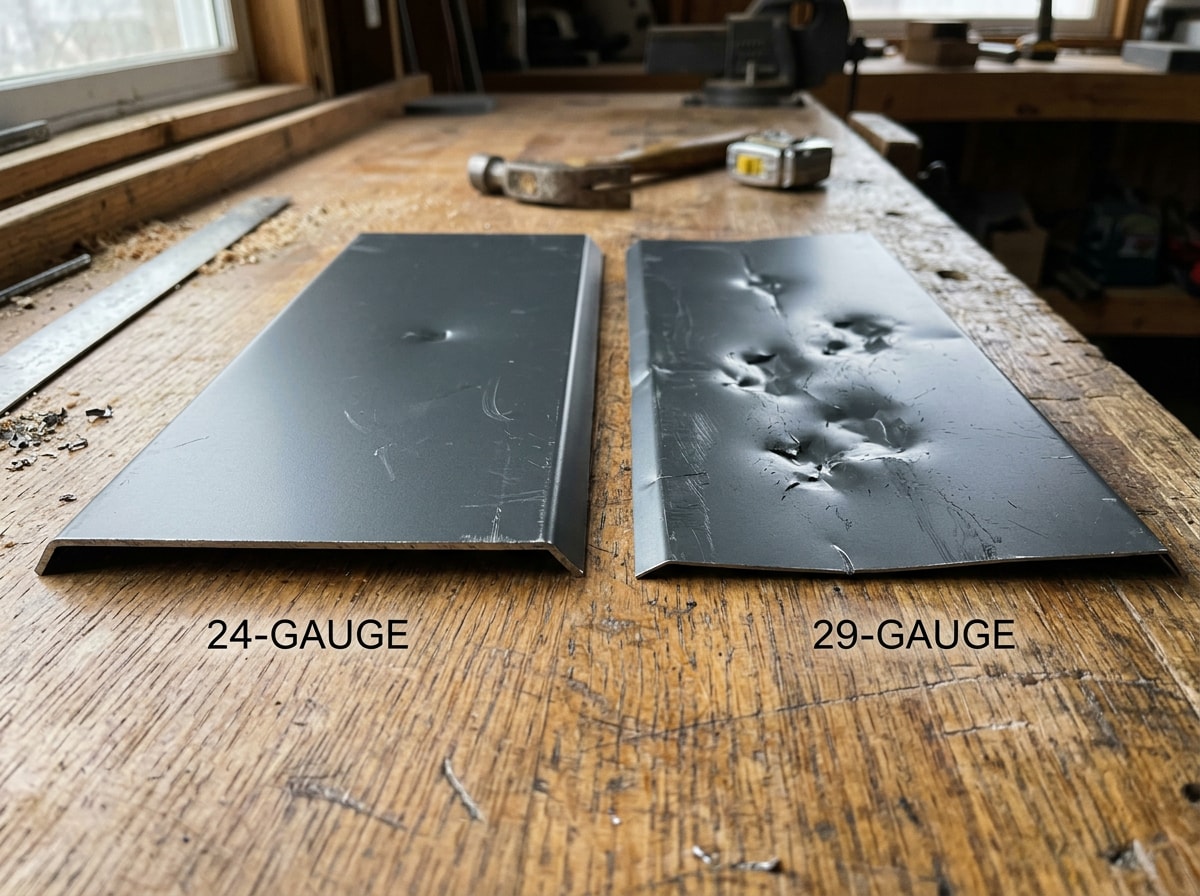
Lower gauge numbers mean thicker metal, and thicker metal dents less easily. These figures are approximate and vary slightly by manufacturer and base metal:
| Gauge | Approximate Thickness | Dent Resistance |
|---|---|---|
| 22 gauge | ~0.034 in | Highest |
| 24 gauge | ~0.024 in | High |
| 26 gauge | ~0.019 in | Moderate |
| 29 gauge | ~0.014 in | Lower |
Material Type
Steel, aluminum, and copper don't respond to hail the same way.
| Material | Hail Response | Trade-off |
|---|---|---|
| Steel | Resists denting best | Can rust if coating is scratched |
| Aluminum | Flexes and absorbs impact | Shows marks more readily than steel |
| Copper | Long-lasting, develops patina | Among the softest roofing metals |
Panel Profile and Installation
Standing seam profiles with raised ribs distribute impact differently than flat or low-profile panels. Solid substrate support and correct fastening also determine whether a panel performs the way its rating suggests. A panel rated Class 4 but installed over a spongy or uneven deck can still dent more than the lab test would suggest.
Understanding Hail Size and Damage Thresholds
Hail size is the single biggest predictor of whether a metal roof sustains cosmetic marking, functional damage, or nothing at all.
Standard hail-size references convert object comparisons to diameter: marble or moth ball at 0.50 inches, quarter at 1.00 inch, golf ball at 1.75 inches, baseball at 2.75 inches, and softball at 4.00 inches.
| Hail Size | Diameter | Likely Outcome on a Rated Metal Roof |
|---|---|---|
| Pea | 0.25 in | No visible impact |
| Marble | 0.50 in | Minimal to no marking |
| Quarter | 1.00 in | Light marking possible on thinner gauges |
| Golf ball | 1.75 in | Cosmetic dents likely |
| Baseball | 2.75 in | Cosmetic damage, possible functional risk |
| Softball | 4.00 in | Functional damage possible even on Class 4 |
Even a well-installed Class 4 roof can pick up cosmetic marking once hail crosses roughly 2 inches in diameter. For a full sizing reference, the National Weather Service Storm Prediction Center's hail size conversion chart is the standard that meteorologists use when reporting storm damage.
Potential Limitations and Realistic Expectations
Metal roofing has real strengths, but it's worth being upfront about where it falls short. Extreme hail, generally 2.5 inches or larger, can leave visible marks even on top-rated systems. Cosmetic-only damage is frequently excluded from standard insurance policies.
Hail resistant doesn't mean hail proof. A Class 4 metal roof dramatically lowers the odds of leaks and structural failure, but it doesn't guarantee a flawless surface after every storm. Setting that expectation early prevents disappointment later, especially if you're comparing quotes using our metal roof cost per square foot guide before committing to a product.
Choosing the Right Metal Roof for Hail Protection
Picking the best hail-resistant metal roof isn't just about the spec sheet. Installation quality, including proper deck support, correct attachment method, and quality underlayment, matters just as much as the panel itself. A premium panel installed poorly can still underperform in a storm, which is why the contractor matters as much as the material.
Geography should factor into the decision too. Homeowners in so-called hail alley states, including Texas, Colorado, Nebraska, Wyoming, and Kansas, face meaningfully higher storm exposure. One detail most hail guides skip: under the IBHS FORTIFIED Roof program, metal roof panels must be tested for site-specific design pressures, and if seeking the optional Hail Supplement, the panels must also meet a UL 2218 Class 4 impact rating. That's a higher bar than the baseline code requirement in most municipalities, and it's worth asking any contractor whether their proposed system would qualify.
If you're weighing metal against asphalt for a North Texas home, our steel vs. shingles cost comparison breaks down the long-term math. We install and inspect both systems across Frisco, Plano, Dallas, and the surrounding Metroplex, and gauge selection is one of the first conversations we have with every homeowner.
Will Insurance Pay for Hail Damage on a Metal Roof?
In most policies, functional damage, meaning leaks, punctures, or compromised seams, is covered under standard homeowners insurance. Cosmetic-only damage, like dents that don't affect performance, is often excluded or limited unless your policy includes specific cosmetic damage coverage.
Effective loss mitigation benefits homeowners, insurers, and the broader insurance market by reducing the frequency and severity of losses, which is why Texas regulators encourage property and casualty insurers to develop meaningful, actuarially supported premium discounts, including for impact-resistant roofing materials. The exact discount size is set by each insurance company, not the state, so ask your agent directly rather than assuming a number you saw online. You can review the current process for documenting an impact-resistant roof installation on the Texas Department of Insurance's roofing discounts page.
If a storm has already come through and you're not sure whether your roof needs attention, start with an inspection rather than a guess. Our roof repair team can document functional versus cosmetic damage before you file a claim, which matters for how the claim gets handled.
FAQ
Does hail actually damage metal roofs?
Rarely in a functional way. A properly rated, properly installed metal roof resists punctures and cracking far better than asphalt. Cosmetic dents are possible with larger hail, but the roof typically keeps shedding water.
What gauge metal roof is best for hail?
For most homes in hail-prone regions, 24- to 26-gauge steel is the common recommendation. Thinner 29-gauge panels cost less but dent more easily and are better suited to milder climates or secondary structures.
Will insurance cover cosmetic dents on a metal roof?
Usually not under a standard policy. Cosmetic-only dents are commonly excluded or limited unless your policy specifically covers cosmetic roof damage. Ask your carrier before you assume coverage either way.
Does the type of metal change how a roof responds to hail?
Yes. Steel generally resists denting best, aluminum flexes and absorbs impact but shows marks more visibly, and copper is durable but among the softest roofing metals.
Are metal roofs noisy during a hailstorm?
They can be louder than asphalt without proper attic insulation or solid decking, but a correctly installed metal roof with standard underlayment is not dramatically noisier in most homes.
How should a metal roof be inspected after a hailstorm?
Check seams, fasteners, flashing, and penetrations for separation or gaps. Photograph any dents or marks before filing an insurance claim, and have a licensed contractor confirm whether damage is cosmetic or functional.
About This Guide
This guide was researched and written by the licensed roofing team at Project Revitalize, serving Frisco, Dallas, McKinney, Plano, Fort Worth, Denton, and Allen, TX. For more background on impact ratings, read our breakdown of what a Class 4 roof actually means. If you want a straight answer on how your current roof would hold up, contact us for a free estimate and we'll walk the roof with you.