Rubber roofing is the single-ply membrane system most flat and low-slope roofs rely on when asphalt shingles simply aren't an option. It comes in three main forms, EPDM, TPO, and PVC, and each one carries a different price tag, lifespan, and installation method. Here's how to tell them apart before a contractor ever sets foot on your roof.
What Is Rubber Roofing?
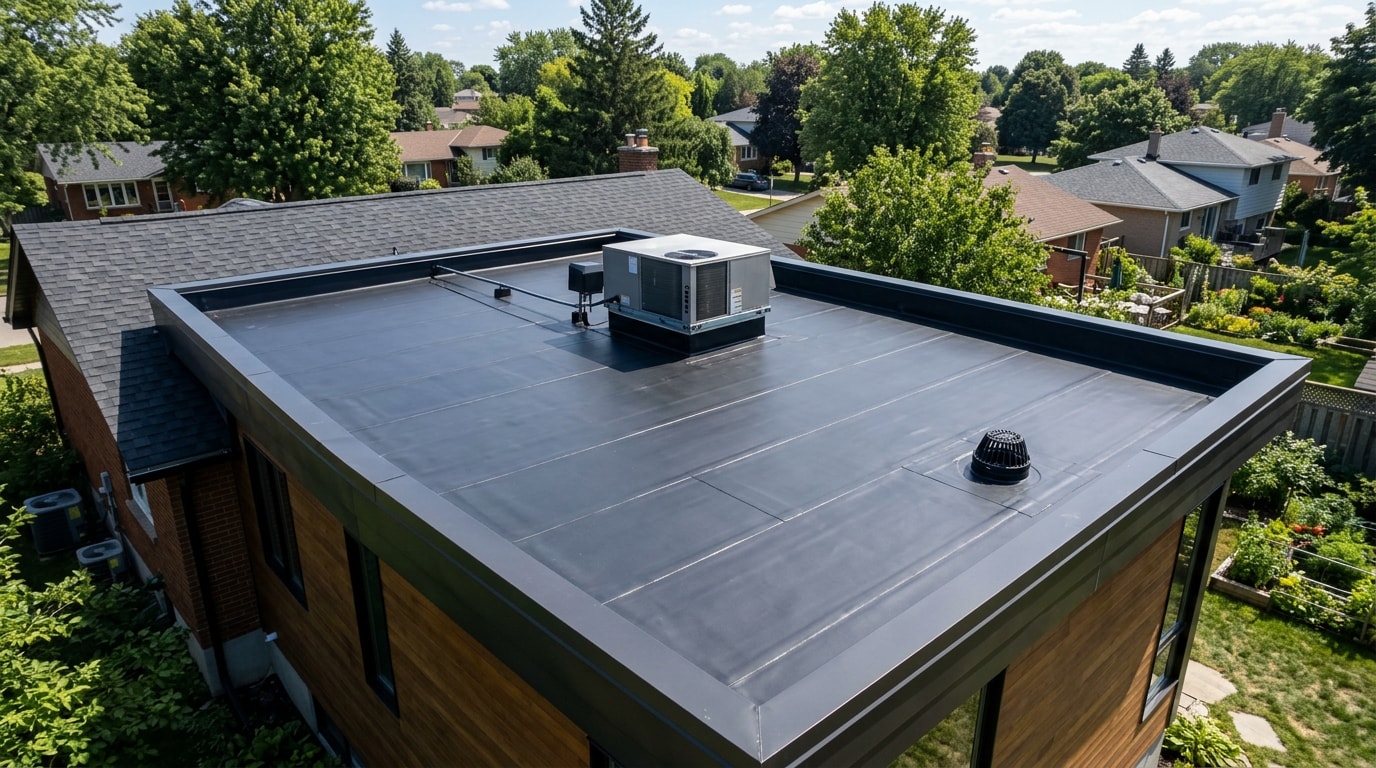
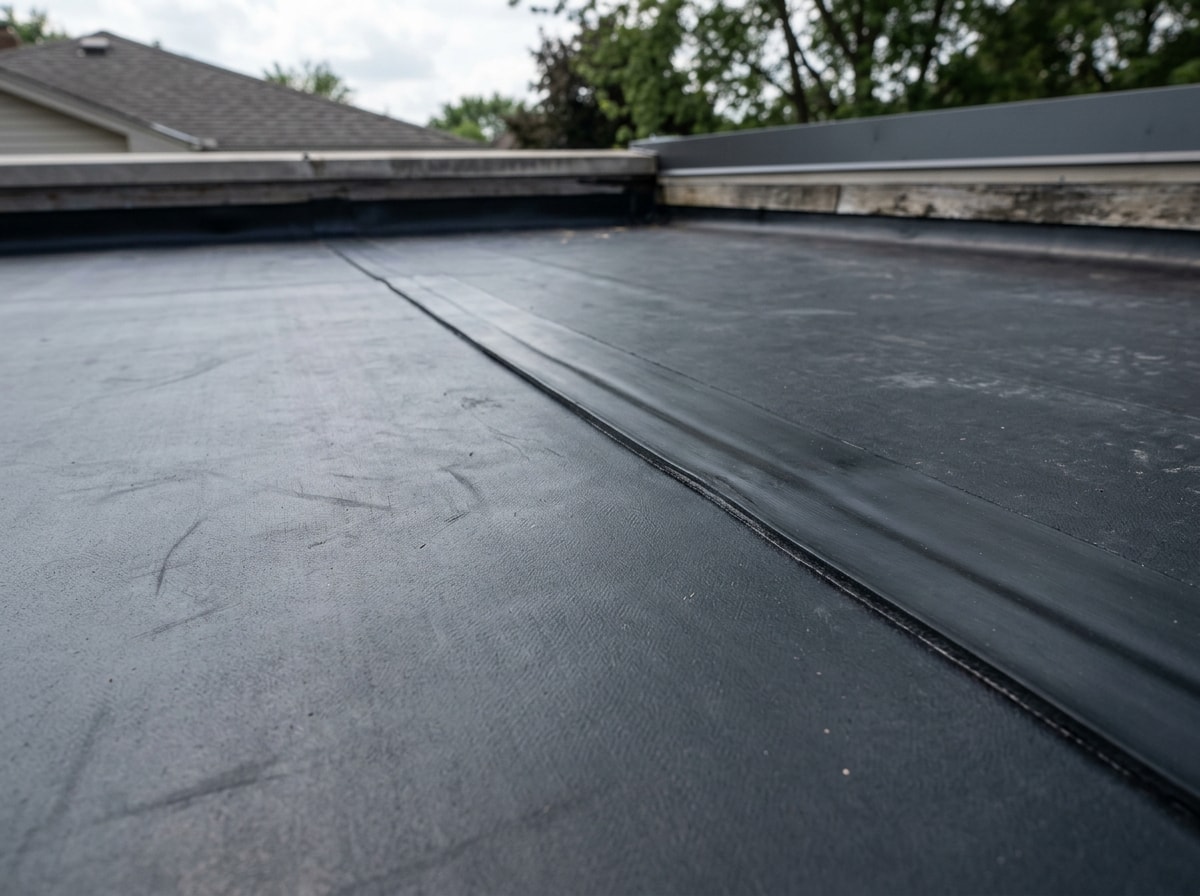
Rubber roofing is a category of single-ply membrane roofing, most commonly EPDM, along with PVC and TPO variants, built for flat and low-slope roofs where traditional shingles aren't practical. EPDM, also referred to as EPDM rubber, is a synthetic rubber membrane that is widely used on low-slope flat roofs , and it's categorized as a single-ply roofing membrane, meaning it's installed on roofing substrates in a single layer .
Most rubber roofing membranes arrive on-site in large rolls rather than individual shingles. The rubber roofing membrane comes in rolls that are adhered, screwed, or ballasted to the wood or metal roof surface . Each attachment method trades off cost, wind resistance, and ease of future repair differently, which is why the right approach depends on the specific roof deck and local wind exposure. If you're weighing this option for a home or commercial building, our roofing contractor team can walk through what fits your roof deck and budget.
Types of Rubber Roofing Materials
"Rubber roofing" is really an umbrella term. Underneath it sit three distinct membrane types, EPDM, TPO, and PVC, each with its own installation style, lifespan, and price point.
EPDM
EPDM is a synthetic rubber membrane widely used on low-slope flat roofs , and it's the material most people mean when they say "rubber roofing." EPDM is manufactured in rolls at widths ranging from 7.5 to 50 feet and at thicknesses of 30, 45, 60, and 100 mils , and most EPDM membranes are black in color but are also available in white, gray, tan, and various other tints .
Installers attach EPDM using one of three methods. An adhered membrane is glued directly to the roof deck or insulation board for a smooth, low-profile finish. Mechanically fastened systems use batten bars and screws along the seams. Ballasted systems rest the membrane loosely under a layer of stone, which protects it from UV exposure but adds significant roof weight.
Quality EPDM sheet has to meet a recognized industry benchmark before it goes on a roof. The ASTM specification for EPDM sheet used in single-ply roof membranes sets minimum thickness, reinforcement, and durability requirements that installers reference when selecting material.
TPO
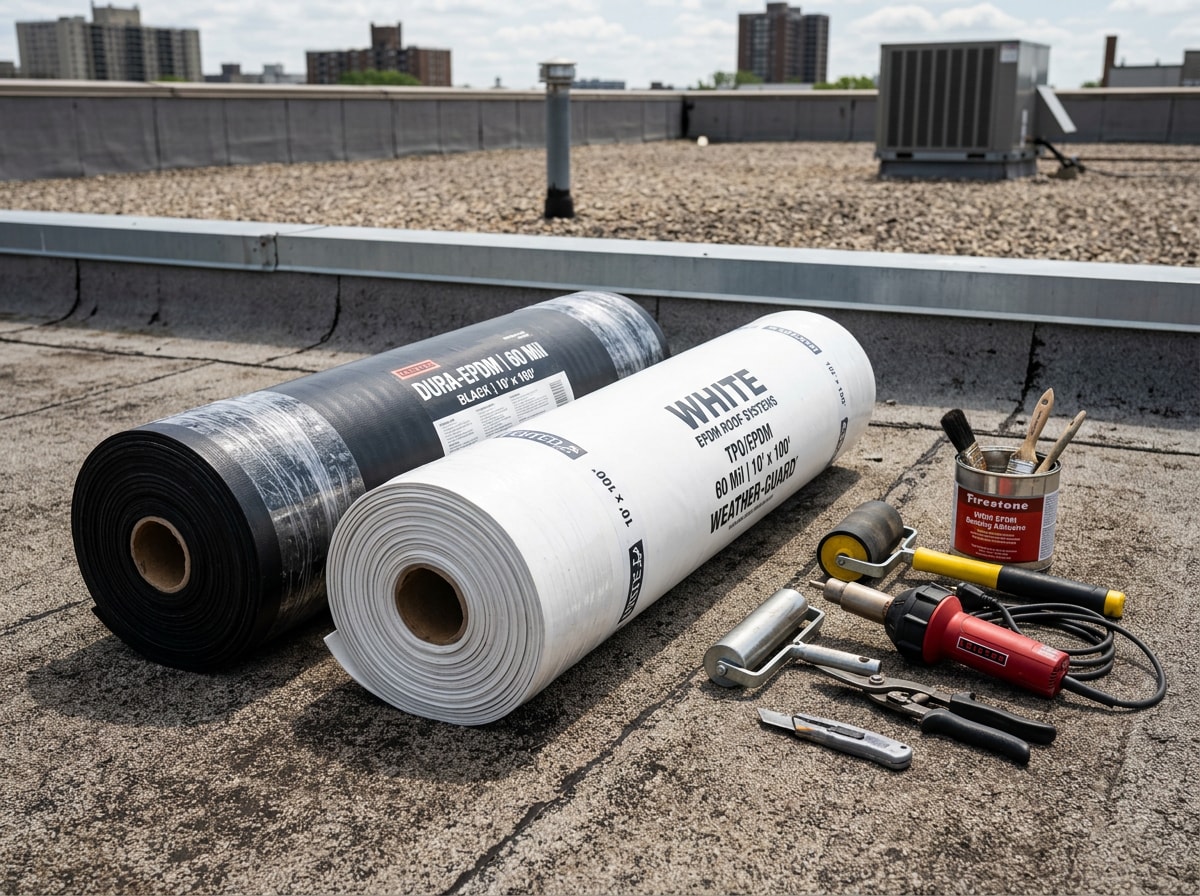
TPO (thermoplastic polyolefin) is technically a thermoplastic rather than a true rubber, but it's grouped with rubber roofing because it installs the same way and competes for the same flat-roof projects. TPO sheets are hot-air welded at the seams rather than taped or glued, which creates a bonded joint rather than an adhesive one. It's typically sold in white or light colors as a standard, which gives it better solar reflectance than black EPDM out of the box.
PVC
PVC roofing membrane is a related but chemically different option, built around heat-welded seams rather than adhesive or tape. The welded seams tend to be stronger than EPDM's taped seams, and the flexible membrane holds up well in areas with frequent roof traffic. Polyvinyl chloride rubber roofing is the most flexible and leak-resistant, but it can release toxins when breaking down , which is worth knowing about even though it's a less common pick than EPDM for most residential flat roofs.
How Much Does Rubber Roofing Cost?
Cost is one of the most-searched questions around rubber roofing, and for good reason. It varies by roof size, membrane thickness, and attachment method, and 2026 pricing guides put installed EPDM anywhere from roughly $3.50 to $14 per square foot depending on those variables. Rather than quote a single blended average, it helps to see how thickness and attachment method actually move the price.
| Membrane Thickness | Adhered | Mechanically Fastened | Ballasted |
|---|---|---|---|
| 45 mil | $4.00–$6.50/sq ft | $3.75–$6.00/sq ft | $3.50–$5.50/sq ft |
| 60 mil | $5.00–$8.00/sq ft | $4.75–$7.50/sq ft | $4.25–$7.00/sq ft |
| 90 mil | $6.50–$10.50/sq ft | $6.00–$9.50/sq ft | $5.50–$8.50/sq ft |
These are general planning ranges, not fixed quotes. Local labor rates, roof access, and deck condition all shift the final number. For a typical 1,500-square-foot flat roof, that works out to about $6,000 to $12,000 total for standard-grade EPDM. Larger 3,000-square-foot commercial-style flat roofs can reach $15,000 to $25,000 depending on thickness and attachment method. If you want numbers specific to your roof, get a free estimate and we'll measure and price it directly.
Factors to Consider When Choosing Rubber Roofing
Three things tend to decide whether rubber roofing is the right call: climate, roof pitch, and budget.
Hot, sun-heavy climates push many homeowners toward white EPDM, TPO, or a reflective coating to cut cooling costs, while colder regions generally do fine with standard black EPDM. On low-slope additions and porch roofs we've inspected across North Texas, the biggest mismatch we still see is a contractor trying to stretch a membrane system onto a roof pitch that's really steep enough for shingles.
Rubber roofing membranes are built for flat and low-slope roofs, generally anything under a 3:12 pitch, since steeper slopes shed water in ways that favor shingles or metal instead. Installing rubber on a steep roof usually isn't a good technical fit, regardless of cost.
Budget is where long-term value comes into play. Rubber roofing's upfront cost is often lower than PVC, and the real savings show up over 20-plus years of minimal repairs, assuming the installation and seam work were done correctly. For additions, garages, porch roofs, and most retrofit projects, it's frequently the practical choice. If you're comparing a full tear-off against a recover, our flat roof replacement page outlines which approach usually makes more sense by roof condition.
How Rubber Roofing Is Installed
Rubber roof installation is a job for licensed professionals, but knowing the basic sequence helps you evaluate quotes and understand what installation day actually involves.
Preparing the Roof Surface
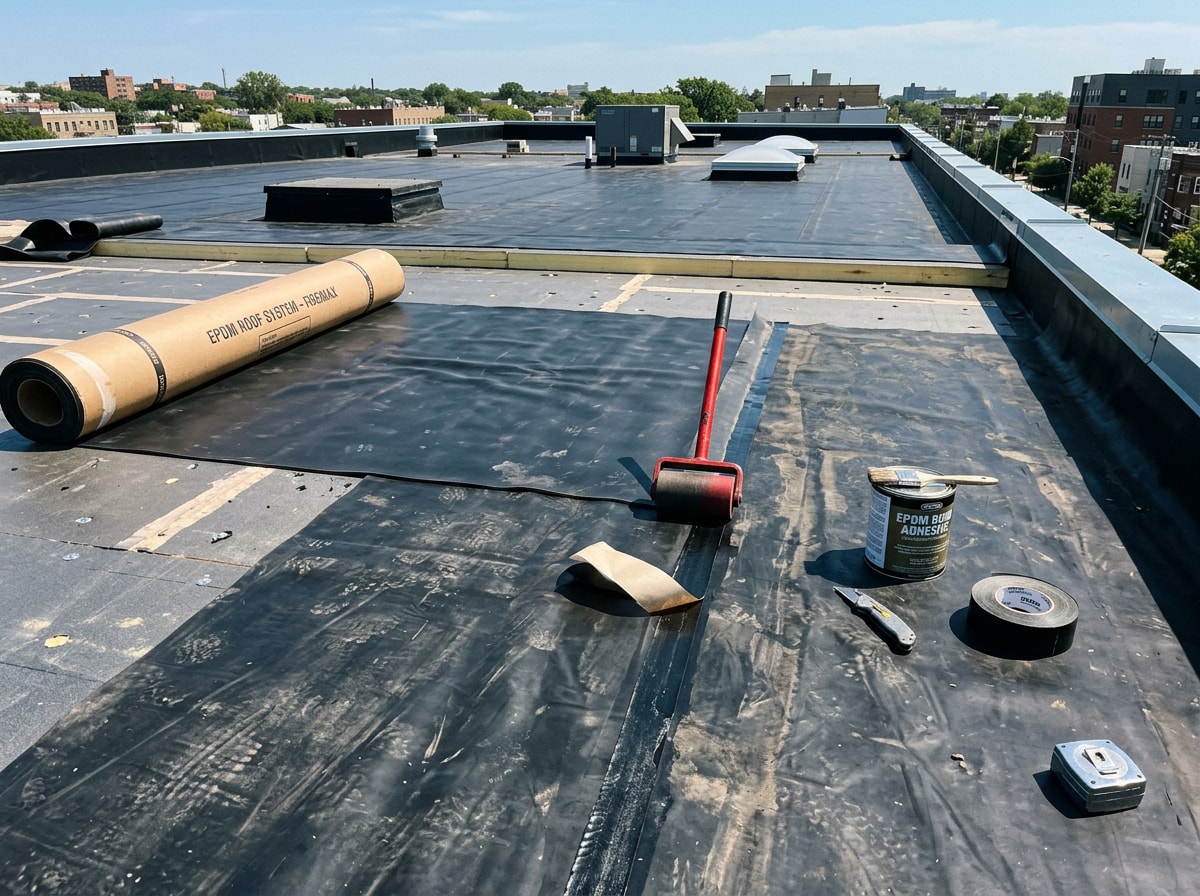
Before any membrane goes down, installers inspect the roof deck for soft spots, rot, or structural damage and repair whatever they find. The substrate is then cleaned of debris and old roofing material so the new membrane has a stable, even surface to bond to. Skipping this step is one of the most common causes of early membrane failure, which is why a roof inspection before any install quote is worth the extra step.
Laying and Seaming the Membrane
Once the deck is ready, crews roll out the membrane sheets across the roof, allowing them to relax and lie flat before trimming and positioning. Adjoining sheets are joined with seam tape, liquid adhesive, or hot-air welding depending on the membrane type, and the edges are rolled firmly to eliminate air pockets. Seam sealing is arguably the single most important step in the whole process. More roof leaks start at a poorly sealed seam than anywhere else on a rubber roof.
Weather and Timing Requirements
Installation conditions matter more than people expect. Most adhesives need a minimum air and surface temperature to cure properly, so installs are generally avoided in cold snaps or active rain and high wind. Materials are also staged on-site beforehand to acclimate to the roof's temperature, which helps prevent wrinkling or poor adhesion once the membrane is unrolled. Our roof installation crews build weather windows into every flat-roof schedule for exactly this reason.
Pros and Cons of Rubber Roofing
Rubber roofing earns its popularity on a few core strengths, but it has real trade-offs worth weighing honestly before you sign a contract.
Advantages:
- Strong durability and reliable waterproofing on flat and low-slope decks
- Straightforward, relatively fast installation compared to layered built-up systems
- Low ongoing maintenance once seams are properly sealed
- Good UV resistance over time, especially with thicker EPDM
Drawbacks:
- Standard black EPDM absorbs heat, raising cooling costs in hot climates unless a reflective membrane or coating is used
- Limited color and appearance options compared to shingles
- Seams remain the weak point where most leaks eventually develop as the roof ages
- Ballasted systems add significant dead load that the structure has to support
Durability and Lifespan
Perhaps the most important characteristic of an EPDM roof is its long lifespan, and a properly installed and maintained EPDM roof system can last as long as 40 years or more , though most contractors plan around a more conservative 20 to 30 years for real-world conditions. Thicker membranes generally outlast thinner ones, and installation quality matters as much as the material itself. A roof with sloppy seam work will fail well before its rated lifespan, no matter the mil thickness.
Rubber Roofing vs. Other Roofing Materials
EPDM, TPO, and PVC are the three main single-ply membranes competing for the same flat-roof projects, and each wins on different factors.
| Feature | EPDM | TPO | PVC |
|---|---|---|---|
| Installed cost per sq ft |
$4–$8
|
$5–$9
|
$6–$12
| Typical lifespan |
25–30 years
|
20–30 years
|
25–35 years
| Seam type |
Adhesive (weakest)
|
Heat-welded
|
Heat-welded (strongest)
| Standard color |
Black (white available)
|
White (standard)
|
White or gray
| Chemical resistance |
Moderate
|
Moderate
|
Excellent
|
Reflective color choices matter more than most homeowners expect. Programs that certify qualifying reflective roof products note that cutting a building's cooling load can meaningfully lower air conditioning energy use, which is part of why white TPO and reflective-coated EPDM have gained ground in hot climates. You can review the ENERGY STAR program requirements for roof products for the specific reflectance thresholds that qualify a membrane as a cool roof.
Best-practice guidance from national roofing trade groups also treats EPDM as a proven, long-standing category of single-ply membrane rather than a newer, unproven product, which is part of why it remains a default choice for flat-roof replacements. The NRCA's technical library on single-ply synthetic rubber membranes covers the design and performance considerations installers use when specifying a system.
Rubber Roofing for Flat Roofs
Rubber roofing holds its position as a go-to flat roof material because it handles standing water and minimal drainage slope better than most alternatives. Built-up roofing and modified bitumen can also work on flat roofs, but they generally involve more layers, more labor, and a shorter window between major repairs than a well-installed single-ply membrane. If a full membrane replacement isn't necessary yet, our guide on how to repair a flat roof walks through patching options before you commit to tearing off the whole system.
Maintenance Tips for Rubber Roofing
Low maintenance doesn't mean no maintenance. A simple annual routine goes a long way toward hitting the upper end of a rubber roof's expected lifespan.
- Walk the roof once or twice a year, ideally in spring and fall
- Clean the surface with mild soap and water rather than petroleum-based cleaners, which can degrade the membrane over time
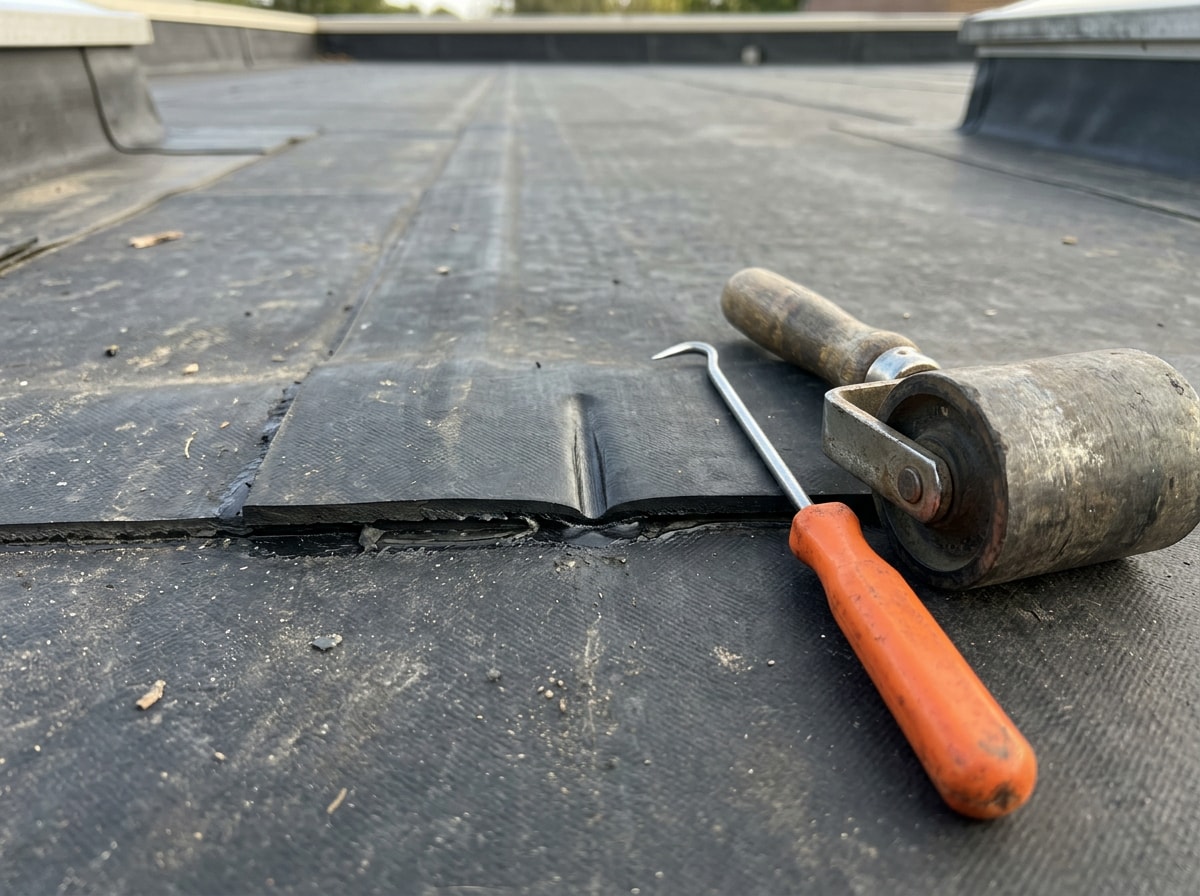
- Check flashing and seams closely for lifting or separation
- Address ponding water promptly; standing water that doesn't drain within 48 hours can accelerate wear and promote leaks
- Clear off leaves, branches, and debris that trap moisture against the membrane
If insulation feels soft or spongy underfoot during a walk-through, that's usually a sign water has already gotten underneath and a repair call is overdue. Catching these issues early is typically a far smaller roof repair job than waiting for a full leak. Anyone considering DIY work on a flat roof should also review OSHA's fall protection standard for roofing work before climbing up, since fall hazards on flat roofs are easy to underestimate.
About the Author
This guide was written by the roofing team at Project Revitalize, a licensed roofing contractor serving Frisco, Dallas, McKinney, Plano, Fort Worth, Denton, and Allen, TX. Our crews inspect and install flat-roof systems across North Texas and have fielded the EPDM, TPO, and PVC questions above directly from homeowners and property managers. For a roof-specific recommendation, contact us for a free estimate.
FAQ
How Much Does Rubber Roofing Cost?
Most rubber roof installations fall between $4 and $10.50 per square foot installed, depending on membrane thickness and attachment method. A typical 1,500-square-foot flat roof usually totals somewhere in the $6,000 to $12,000 range, though local labor rates and deck condition can shift that figure in either direction.
How Long Does a Rubber Roof Last?
A properly installed EPDM roof typically lasts 20 to 30 years, with some well-maintained systems reaching 40 years or more. Installation quality and membrane thickness are the biggest factors. A thicker, well-seamed roof will consistently outlast a thinner one installed with shortcuts.
Is Rubber Roofing a Good Choice for a Home?
For most flat and low-slope roofs, yes. Rubber roofing's upfront cost is often lower than PVC, and its long lifespan combined with minimal maintenance usually delivers strong value over 20-plus years. It's a less obvious fit if you want a specific aesthetic or have a steeply pitched roof, since shingles or metal are built for that application instead.
What Is the Most Common Type of Rubber Roofing?
EPDM is by far the most common type, largely because it's less expensive than PVC and has a long track record of reliable performance across varied climates. It's also one of the easier membranes to patch with basic seam tape, which keeps long-term maintenance costs manageable.
Can You Walk on a Rubber Roof?
Yes, EPDM, TPO, and PVC membranes are all designed to handle normal foot traffic for inspections and maintenance. Avoid dragging sharp tools or equipment across the surface, and stick to walking directly over supported areas of the deck rather than unsupported spans.
How Does Rubber Roofing Compare to TPO?
EPDM generally costs less upfront and has a longer proven track record, while TPO offers better heat reflectivity and welded seams that some installers consider more durable long-term. The right choice often comes down to climate: EPDM for moderate conditions, TPO where cooling costs are a bigger concern.
How Much Does It Cost to Repair a Rubber Roof?
Most rubber roof repairs run $150 to $600 depending on the issue. A simple patch costs $150 to $400, seam repair runs roughly $5 to $15 per linear foot, and flashing repair typically costs $200 to $600. Most repairs are straightforward because membrane patches bond easily with adhesive or seam tape.