If you're asking how do I repair a flat roof after spotting a stain on your ceiling, the good news is most small leaks are fixable in an afternoon with basic tools and the right membrane patch. This guide walks through finding the damage, matching your materials, and patching it correctly, plus when it's smarter to stop and call a professional. One thing most DIY guides skip: patching a roof the wrong way can void its manufacturer warranty, so check your paperwork before you climb up.
Common Signs Your Flat Roof Needs Repair
A flat roof needs repair when you notice any of these warning signs:
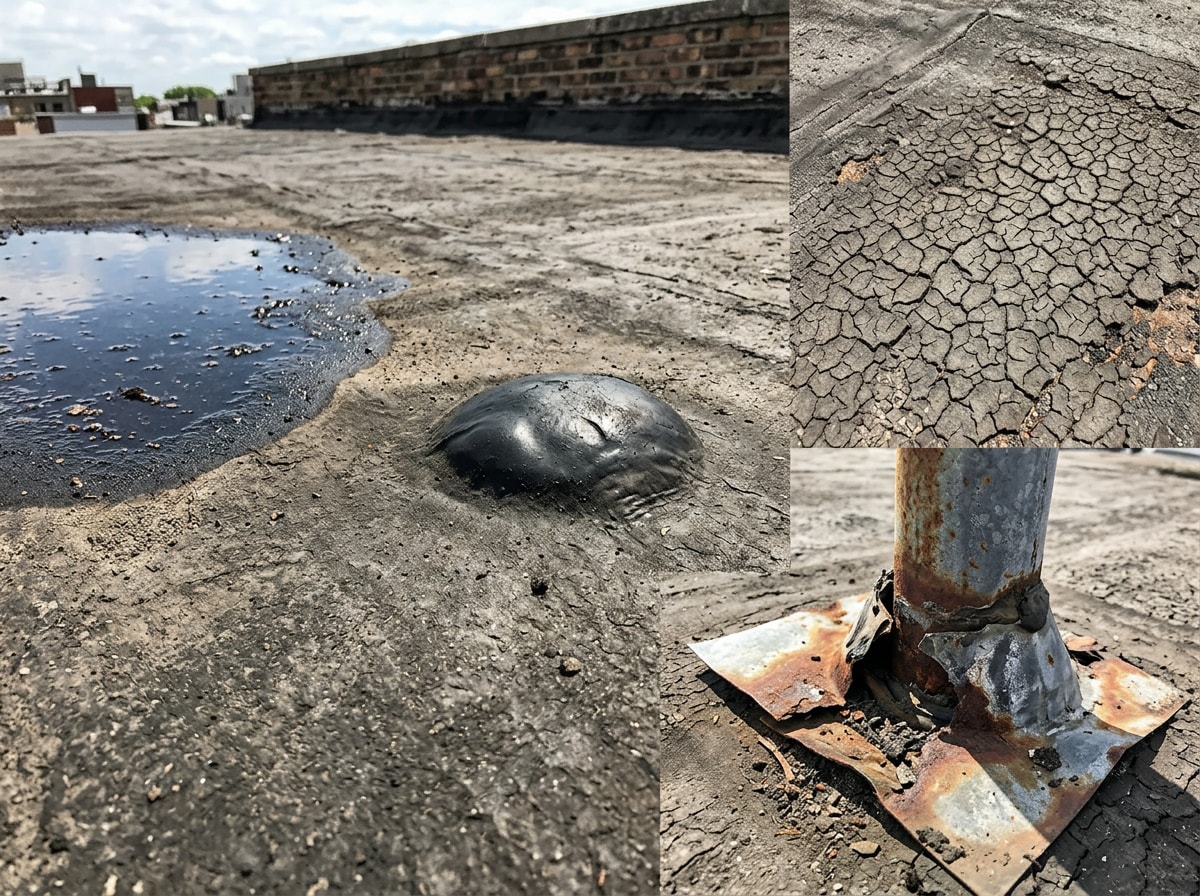
- Ponding water that doesn't drain within 48 hours
- Cracked or blistered membrane surface
- Separated or lifting seams
- Missing or damaged flashing around vents, chimneys, and edges
- Interior water stains, bubbling paint, or musty odors
Standing water is one of the most common culprits. It adds weight, accelerates membrane breakdown, and eventually works its way through seams or fastener points. Cracking and alligatoring, a pattern of scaly, interlocking cracks, usually shows up after years of UV exposure and temperature swings.
Watch for blisters too. They form when trapped moisture or air pushes the membrane up from the deck below. Flashing damage around vents, chimneys, and roof edges is another frequent entry point for water, since flashing seals the transitions where the membrane meets a vertical surface.
Our crews inspect flat roofs across Plano, Frisco, and the rest of the Dallas-Fort Worth metro every week, and loose or deteriorated flashing causes more repeat callbacks than any other single issue, even more than membrane punctures. If you're not sure what you're looking at, a roof inspection can confirm the problem before it spreads, and if the damage is beyond a patch, our roof replacement team can walk you through full replacement options.
Understanding Flat Roofs
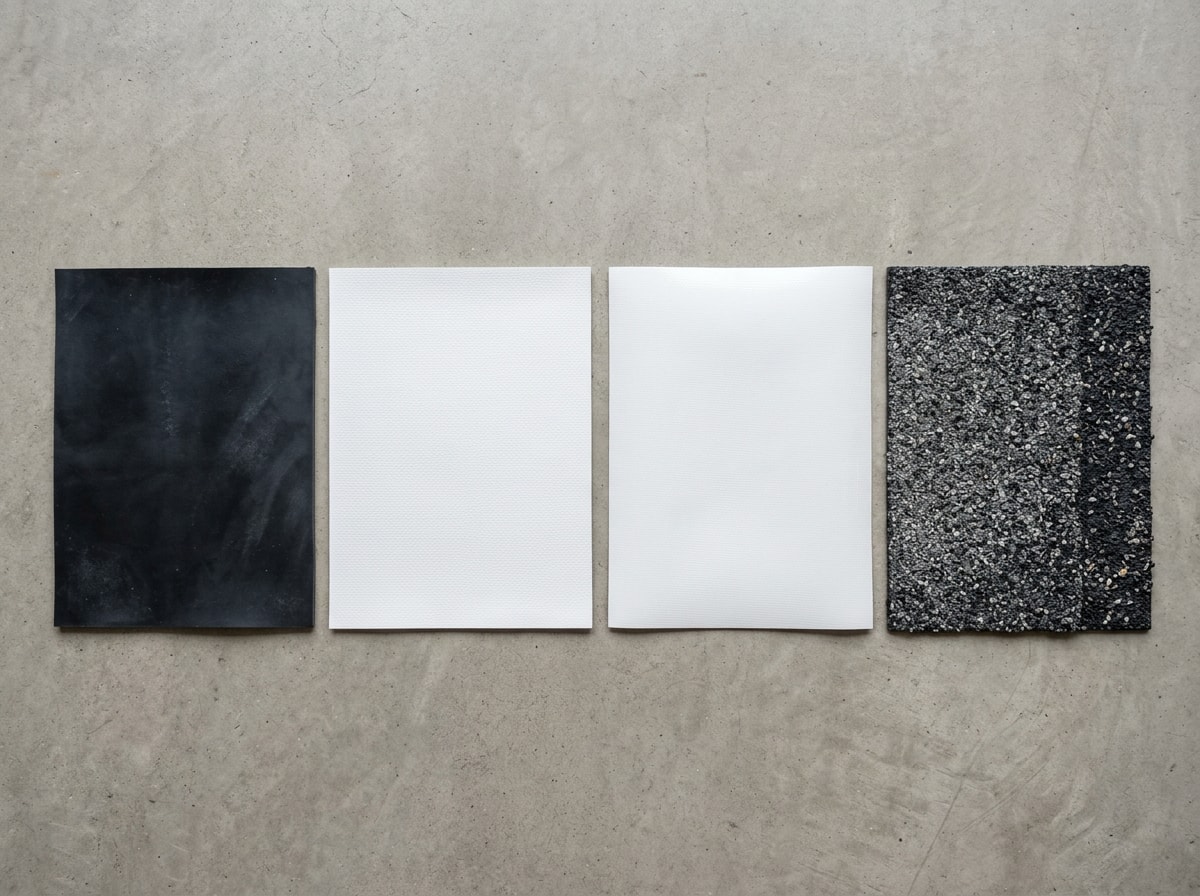
Flat roofs are built from one of four common membrane types: EPDM, TPO, PVC, or modified bitumen, and the right repair method depends entirely on which one covers your roof. Mixing up materials or adhesives can make a patch fail within months, so identifying the membrane first is worth the extra few minutes.
EPDM is a synthetic rubber membrane known for flexibility and a long service life, typically repaired with adhesive-based patches. TPO is a single-ply membrane valued for reflecting heat and reducing cooling loads; it's usually repaired with heat-welding. The EPA notes that reflective, "cool" roofing products like TPO can stay noticeably cooler than conventional materials during peak summer weather, which is part of why cool roofs are often preferred for low-budget energy savings over green roofs. PVC resists chemicals and fire well and also takes heat-welded seams. Modified bitumen is a reinforced asphalt product repaired with torch- or cement-applied patches.
If your roof uses a built-up or modified bitumen system, our Built Up Roof Repair Dallas, TX guide covers the BUR-specific signs and repair steps in more depth.
| Membrane | Typical Lifespan | DIY Repair Difficulty | Common Repair Method |
|---|---|---|---|
| EPDM | 20–25 years | Easier | Adhesive patch |
| TPO | 20–25 years | Moderate | Heat-weld |
| PVC | 20–30 years | Moderate–Hard | Heat-weld |
| Modified Bitumen | 15–20 years | Moderate | Torch or cement-applied |
Tools and Materials You'll Need
Gather everything on the ground before you climb. It saves repeat trips up and down the ladder, and it keeps you off the roof longer than necessary.
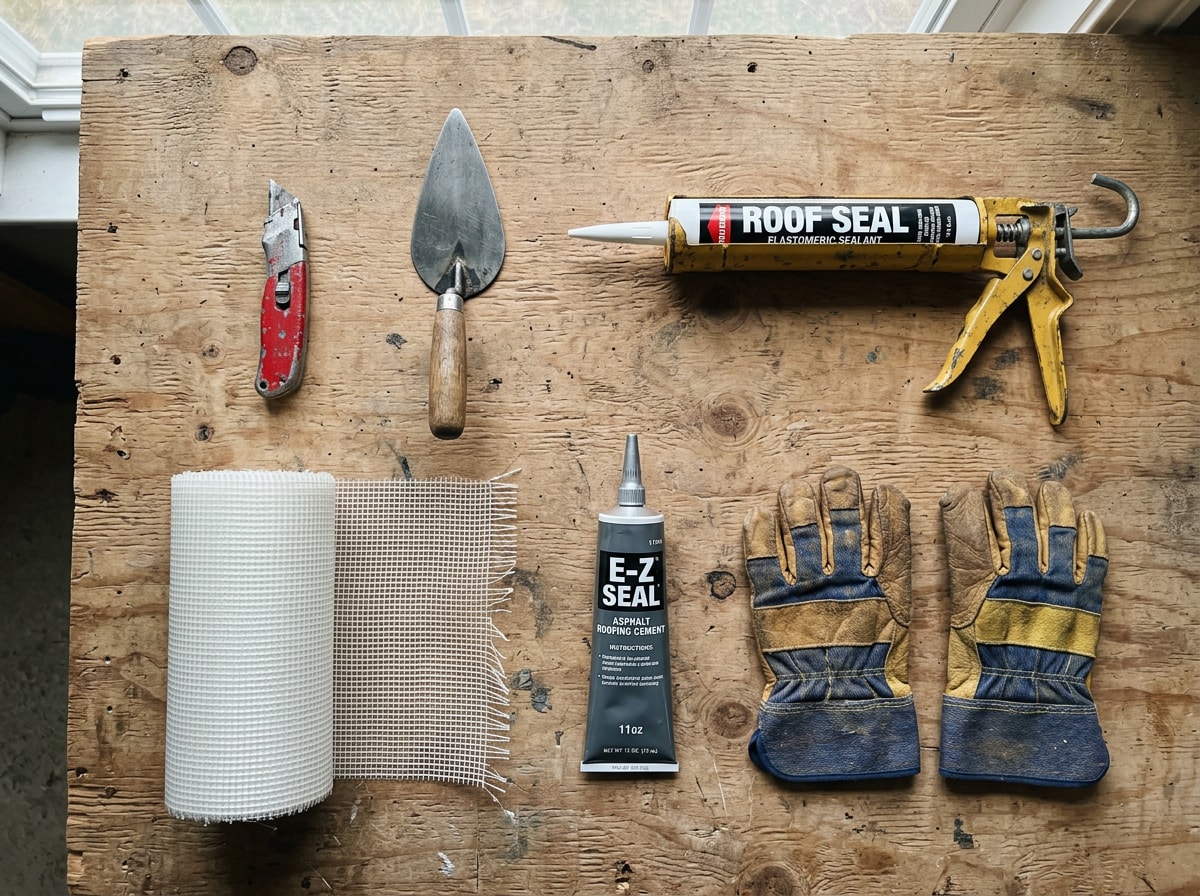
Basic tools:
- Utility knife
- Stiff broom
- Trowel or putty knife
- Caulking gun
- Heat gun (for TPO or PVC)
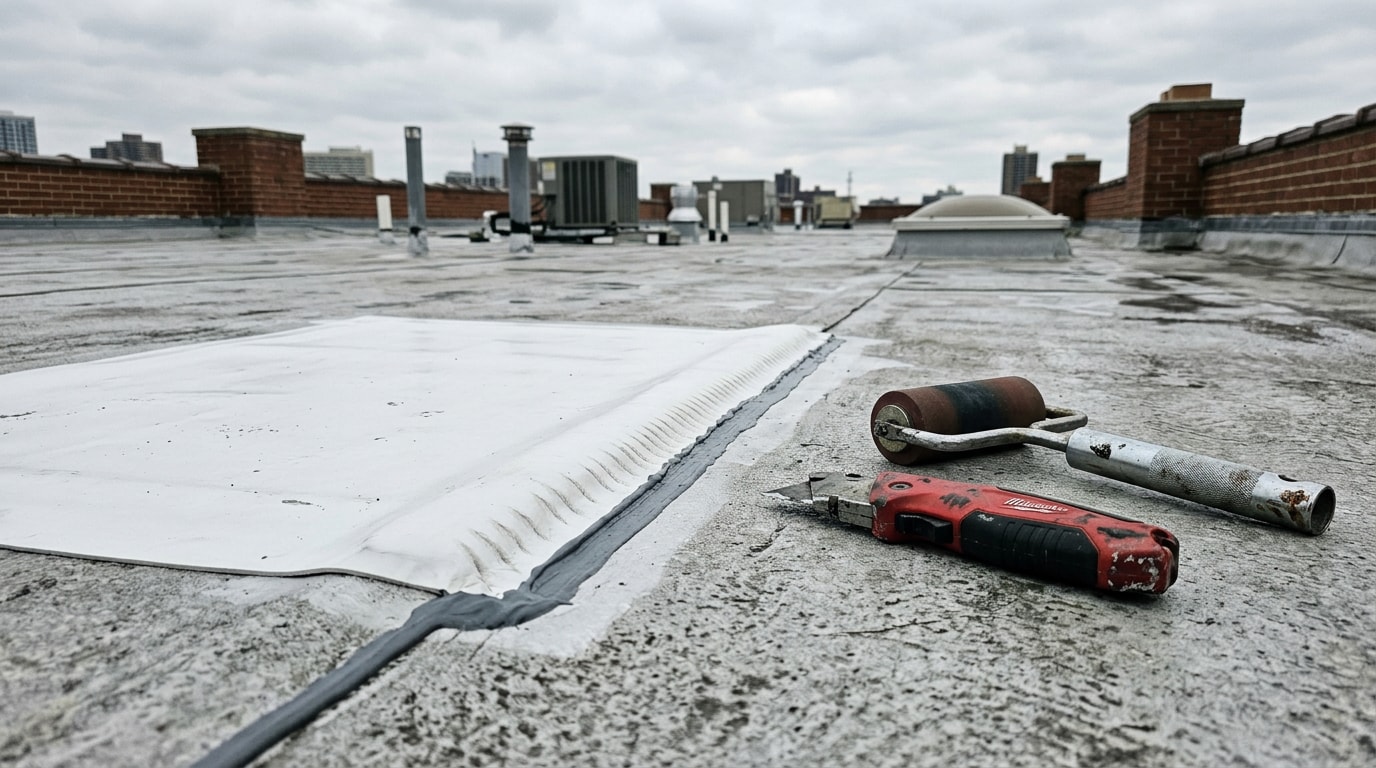
- Seam roller
Core repair materials:
- Roofing cement
- Roofing sealant
- Fiberglass mesh
- Flashing tape
- A patch of membrane that matches your roof
- Roofing nails or screws
- Replacement gravel or coating for finishing
Before you set foot on the roof, confirm it's dry and structurally sound. Walking a wet, sagging, or storm-damaged flat roof carries real fall risk, and OSHA requires fall protection, such as guardrails or a personal fall arrest system, for low-slope roofing work where workers are exposed to a fall of 6 feet or more. A harness or at minimum a spotter is worth the setup time.
Step-by-Step Guide to Repairing a Flat Roof
Once you've identified the damage and gathered your materials, the repair follows a consistent sequence regardless of membrane type.
Inspect the Roof and Find the Leak
Trace interior stains back to their source, then check three to five feet uphill and in every direction from that point. Water often travels before it drips through the deck. Mark the stain's location and measurements inside first, then use those as a reference once you're on the roof.
Look closely at seams, vents, chimneys, and roof edges for cracks, holes, or blisters. These are the most common failure points.
Prepare the Area
Clear debris (dirt, leaves, loose gravel, or granules) with a broom or brush. Use a mild cleaning solution on stubborn grime.
Remove any standing water and let the surface dry completely before moving forward. A damp surface prevents roofing cement and adhesives from bonding properly. This is one of the most common reasons DIY patches fail early.
Apply Roofing Adhesive
Choose an adhesive rated for your specific roof type. Asphalt, EPDM, TPO, and metal all require different formulas, so check the label before buying. Using an incompatible product is a frequent cause of repeat leaks on membrane roofs.
For small breaches, dry the area with clean rags and let it air out for at least 15 minutes. Then spread roofing cement across the breach, extending at least 2 inches past the damaged area in every direction.
Patch the Damage
Cut a patch from matching membrane material, sized to extend at least 2 inches beyond the edges of the damage on all sides. The exact application method depends on what your roof is made of.
| Membrane | Patch Method | Approx. Cure Time | Best For |
|---|---|---|---|
| TPO | Prime, apply patch tape or heat-weld, roll out air pockets | 24–48 hours | Larger seams, energy-efficient roofs |
| EPDM | Apply primer to both surfaces, let tack 5–10 min, press and roll from center out | 24 hours | Flexible, rubber-based roofs |
| Modified Bitumen | Trowel cement, embed patch, add feathered second layer | 12–24 hours | Older asphalt-based roofs |
Rolling from the center toward the edges on any membrane helps push out trapped air before it cures into a permanent bubble.
Seal the Edges
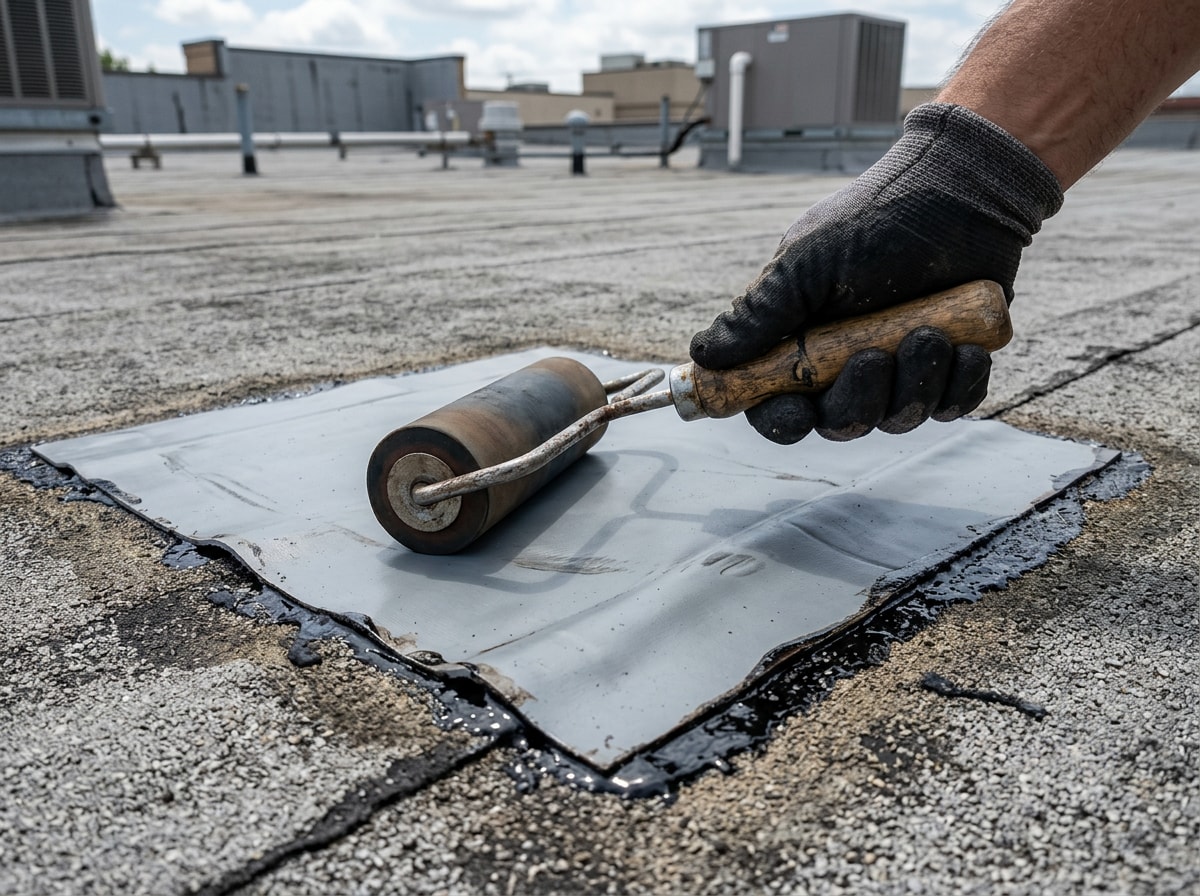
Run an additional bead of adhesive or sealant around the entire perimeter of the patch once it's set. Smooth it with a trowel or brush so coverage is even. This perimeter seal is what makes the repair watertight long-term.
Finalize the Repair
Press the patch down firmly with a roofing roller to remove any remaining air bubbles. Once it's flat and bonded, inspect the whole repair closely for gaps, thin spots, or areas that need a touch-up of sealant before you consider the job done.
Flat Roof Repair Costs: DIY vs. Professional
Cost usually decides whether a homeowner grabs a caulking gun or calls a crew. Professionally installed flat roof patch repairs typically run $2.50 to $10 per square foot, or roughly $300 to $1,100 total for a standard small-to-mid-size repair, depending on membrane type and damage extent. DIY materials for the same basic patch usually run $50 to $300.
A full reflective coating or recoat job runs higher: expect $150 to $400 in DIY materials versus roughly $500 to $2,500 professionally installed, depending on roof size, with labor adding a half-day to a full day of work.
These ranges shift with material choice, roof access, and local labor rates, so treat them as a planning baseline rather than a quote. For a closer estimate on your specific roof, get a free estimate from a local crew before deciding which route makes sense.
Choosing the Right Roofing Contractor
Once a repair goes beyond a small patch, the contractor you hire matters as much as the materials used. Confirm licensing and insurance first, then ask for a written estimate that spells out scope, materials, and timeline.
Check warranty terms carefully. Workmanship warranties and material warranties are different things, and both matter. Look for local experience with your specific membrane type, since EPDM, TPO, PVC, and modified bitumen each require different installation skills. The FTC's consumer guidance on avoiding home improvement scams recommends getting written estimates from multiple firms and checking a contractor's track record before signing anything.
If you're in the Dallas area, you can see our Dallas, TX service page, or visit our homepage to browse our full roofing and remodeling services. Our licensed crews handle everything from small flat roof patches to full roof repair and inspection work across the DFW metro, so you don't have to guess at membrane compatibility on your own.
FAQ
Can a flat roof be repaired?
Yes, flat roofs can almost always be repaired using techniques like sealing leaks, applying patches, or recoating worn sections, which extends the roof's usable life significantly. The main exception is widespread structural damage or extensive membrane failure, where full replacement becomes the more practical and cost-effective option.
How do you repair a small leak on a flat roof?
Find the source, clean and dry the area, then apply roofing sealant or cement across the gap. Cover it with a properly sized patch, seal the edges, and let it cure fully before exposing it to rain or foot traffic again.
What is the best material to repair a flat roof?
EPDM rubber patches are flexible, UV-resistant, and durable for most repairs. Clean the area, apply primer and adhesive, then press the patch firmly into place. Liquid coatings work well for larger worn sections, while modified bitumen suits budget-conscious asphalt roof repairs. See the Understanding Flat Roofs section above for a full material comparison.
How much does it cost to repair a flat roof?
Costs vary based on damage size, material, and whether you DIY or hire a pro, generally ranging from under $100 for small DIY patches to a few thousand dollars for professional full-section repairs. See the Flat Roof Repair Costs section above for a detailed breakdown.
How long does a flat roof repair last?
A properly installed patch typically lasts several years to a decade, depending on the membrane and how well it was applied. A full reflective recoat can add roughly 5 to 10 more years to a roof that's nearing the end of its service life, though it won't fix underlying deck or insulation damage.
How do you fix standing water on a flat roof?
Standing water that doesn't drain within 48 hours usually means a low spot or clogged drain, not just a membrane problem. Clear gutters and drains first, then check for a sagging deck or missing tapered insulation that's creating the dip. Persistent ponding often needs tapered insulation or crickets installed by a professional rather than a surface patch.
Can I repair a flat roof myself?
Small patches on accessible, structurally sound roofs are reasonable DIY projects if you match the adhesive and patch material to your membrane type. Widespread leaks, soft or sagging decking, or roofs still under a manufacturer warranty are better left to a licensed contractor, since a DIY patch can sometimes void that warranty.