Shopping for roofing plywood Denton, TX homeowners actually install means sorting through three words — sheathing, decking, and plywood — that get used interchangeably but aren't identical. Know the difference before you sign a re-roof estimate. It's the one layer of your roof you'll never see again once shingles go down, so getting it right the first time matters.
This guide covers what roof sheathing does, how plywood compares to OSB in North Texas weather, what thickness your roof needs, what replacement costs in 2026, and a Denton-specific permit detail most guides skip entirely.
What Is Roof Sheathing (Roofing Plywood)?
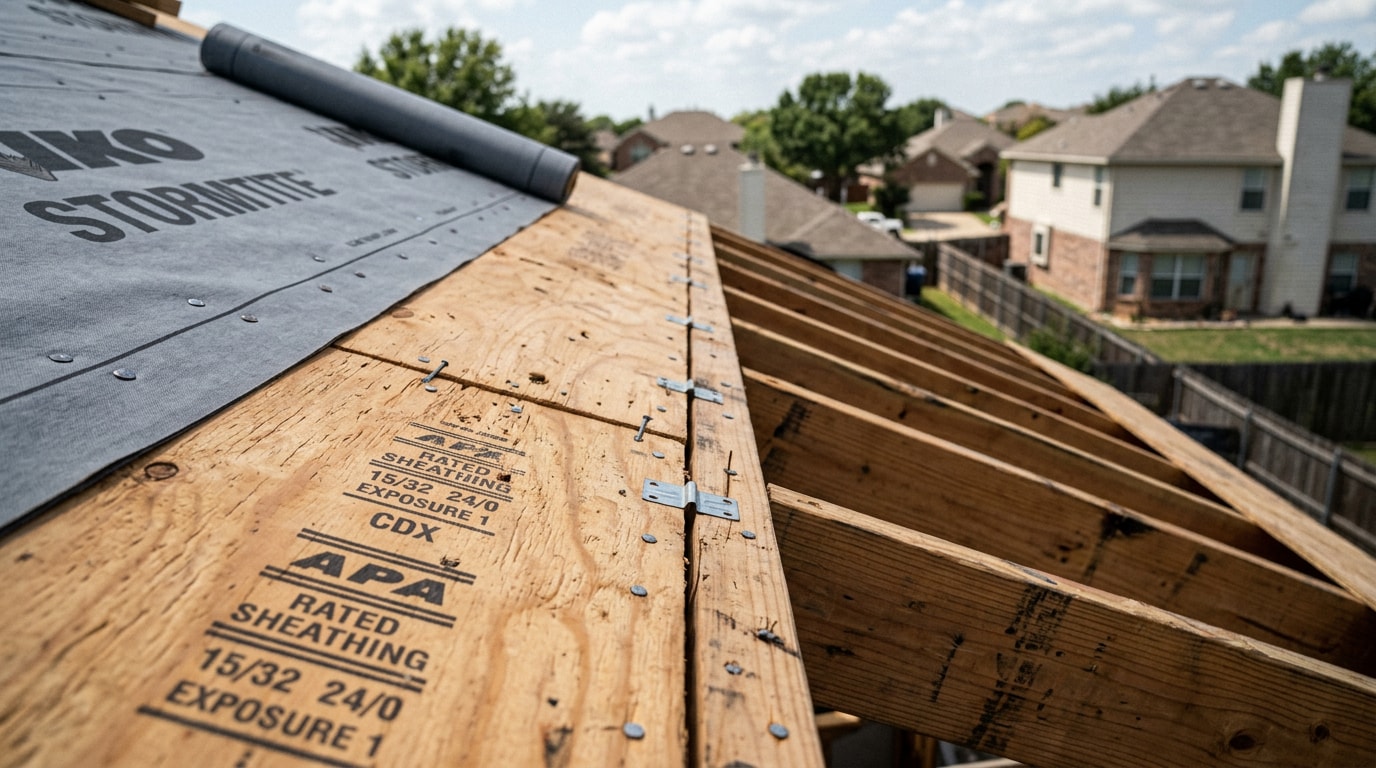
Roof sheathing is the flat wood panel fastened directly to your rafters or trusses. It forms the solid surface everything else on your roof attaches to.
Roofing plywood is one of two materials used to make that panel. OSB is the other.
Where Sheathing Sits in the Roof System
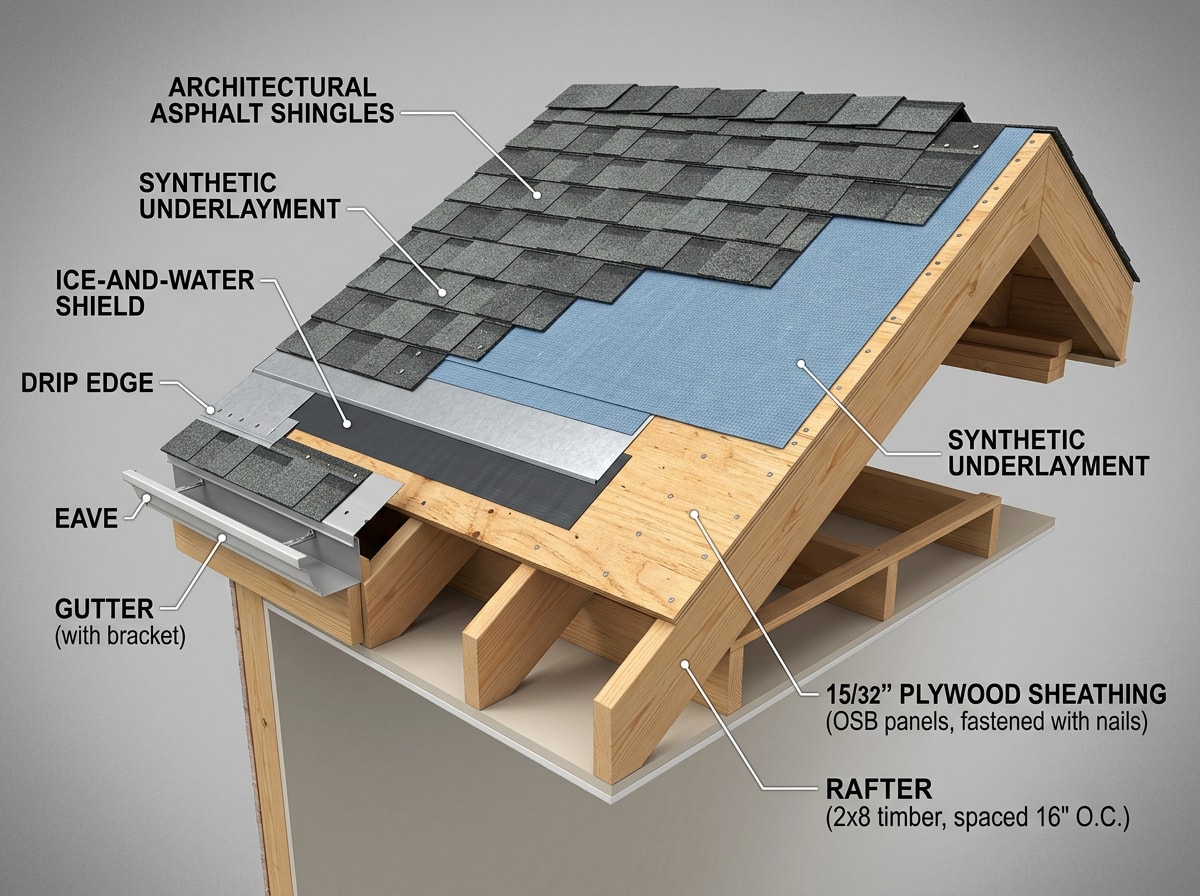
Picture the roof as a stack. Rafters support the sheathing. Sheathing supports an ice-and-water shield at vulnerable areas, then underlayment, drip edge, and finally shingles.
Roof decking and roof sheathing mean the same thing. Underlayment is a separate felt or synthetic layer above it, not a substitute for it. If you want the full layer-by-layer breakdown, our guide on what goes under shingles on a roof walks through every component above the deck.
What Sheathing Actually Does
Sheathing carries structural load across the rafter spans. It acts as a secondary water barrier if shingles or underlayment fail. It gives roofing nails something solid to grip.
Building code sets minimum rules for how it must be installed and fastened, so this isn't a spot where corners get cut quietly. If you're weighing a full tear-off versus a repair, a roof replacement specialist can confirm whether your existing decking still meets current code.
Roof Sheathing Types: Plywood vs. OSB
Nearly every roof in Denton today is sheathed with one of two materials: oriented strand board (OSB) or CDX plywood.
OSB
OSB is made from compressed, cross-oriented wood strands bonded with resin. It's the material builders default to because it's cheaper and comes in large, consistent sheets.
Its main weakness shows up at the edges. Once OSB absorbs water, it swells and doesn't always return to its original thickness, which can telegraph through shingles over time.
CDX Plywood
CDX plywood is built from thin wood veneers glued in alternating grain directions. That cross-grain layup gives it strength in both directions, with a rougher "C" and "D" grade face suited to roofing rather than finish work.
It costs more per sheet than OSB. But it tends to dry back closer to its original shape after getting wet, which is why many Denton roofers prefer it for re-decks after storm damage or on premium builds. If a recent inspection flagged soft spots, a roof repair and inspection specialist can tell you whether plywood or OSB makes more sense for your fix.
OSB vs. Plywood: What Denton Homeowners Should Know
The real difference shows up when water gets past the shingles, whether from a cracked flashing detail or a slow leak nobody noticed for a season.
According to APA – The Engineered Wood Association, panels exposed to extended moisture can develop a rough or uneven surface, with OSB more prone to lifting or flaking of surface strands and thickness swelling than plywood. That gap matters in a region that cycles between heavy spring rain and brutal summer heat.
| Factor | OSB | CDX Plywood |
|---|---|---|
| Cost per sheet (2026) | ~$18–$35 | ~$30–$60 |
| Swelling after prolonged wetting | Higher, less reversible | Lower, more reversible |
| Dry-back behavior | Slower, partial recovery | Faster, closer to original |
| Typical use case | New construction, budget re-roofs | Storm re-decks, premium builds |
Southern Denton County saw baseball-size hail tear through the Bartonville and Lantana areas in March 2024, exposing sheathing on dozens of roofs to weeks of open-air rain before tarps and repair crews caught up. On jobs like that, plywood holds its shape noticeably better than OSB after the kind of prolonged soaking storm damage causes, which is why most experienced crews lean toward it for the replaced sections.
How Sheathing Holds Up to Denton's Wind, Hail, and Heat
Denton's hail and straight-line wind exposure puts real stress on fastener holding power. Sheathing thickness and nailing pattern matter as much as the material itself.
Summer attic heat is the quieter threat. A poorly ventilated attic cooks the underside of decking for years, drying it out and making it more brittle over time.
The Insurance Institute for Business & Home Safety (IBHS) found that stronger roof-edge attachment and ring-shank nailing patterns roughly double a roof deck's resistance to wind forces compared to standard smooth-nail installation. Good ventilation and a correct fastening schedule do more for long-term performance than picking plywood over OSB alone.
Roof Sheathing Thickness: What Size Do I Need?
Standard Thickness Ranges
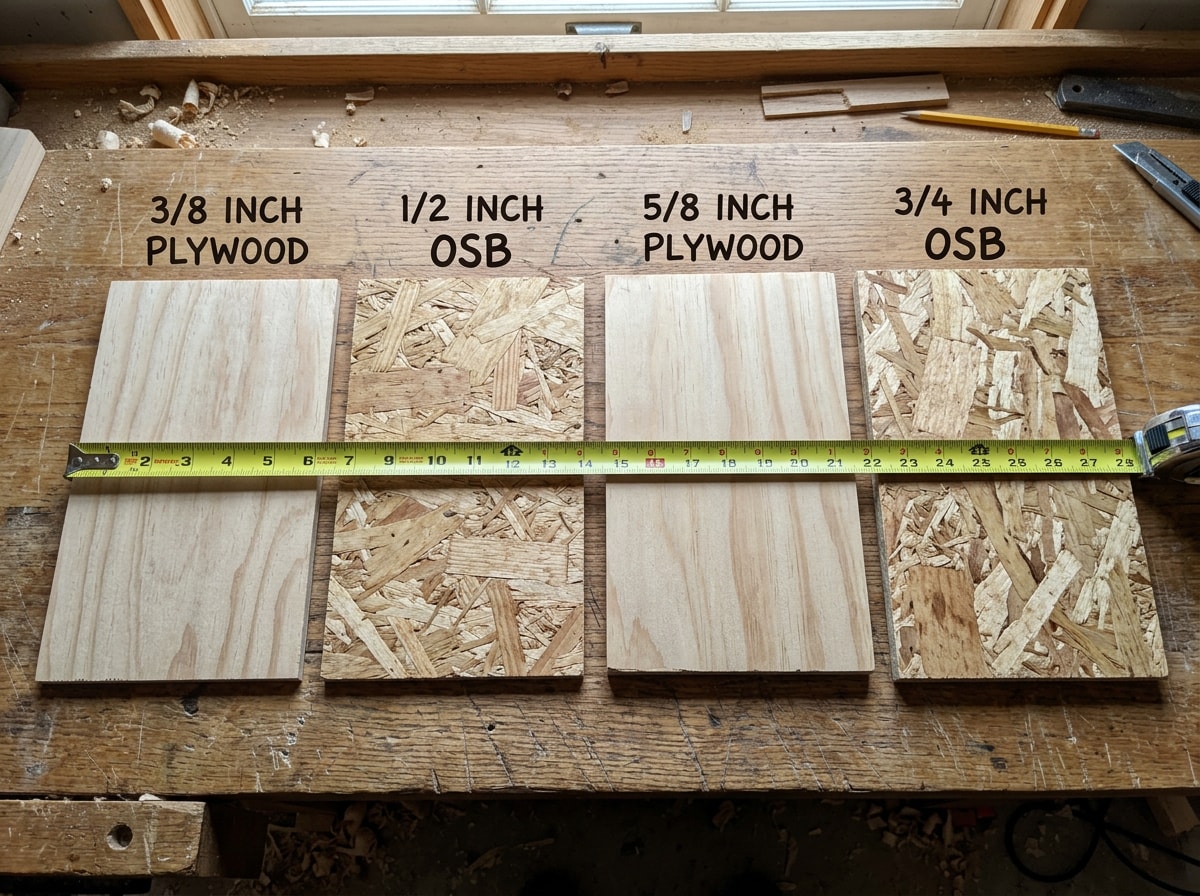
Standard roof sheathing thickness ranges from 3/8 inch to 3/4 inch. The most common choices for residential roofs are 7/16", 1/2", and 5/8".
The right thickness depends mainly on two things: how far apart your rafters or trusses are spaced, and how heavy your roofing material is. Wider rafter spacing and heavier materials like tile generally call for thicker panels.
Thickness by Rafter Spacing
| Rafter/Truss Spacing | Typical Minimum Thickness | Common Roofing Use |
|---|---|---|
| 16" on center | 7/16" | Standard asphalt shingles |
| 19.2" on center | 1/2" | Standard to heavier shingles |
| 24" on center | 5/8" | Shingles, light tile, most Denton re-roofs |
| Wider spans or heavy tile | 3/4" | Heavy tile, large spans |
The International Residential Code (IRC) Section R803 sets the enforceable minimums behind this table. It governs both lumber and wood structural panel sheathing nationwide, and Texas municipalities adopt it with local amendments.
Denton Permit Rules You Need to Know Before You Re-Deck
Here's the part most roofing-plywood guides never mention: the City of Denton requires a roofing permit for every residential re-roof, and the rules get stricter the moment decking is involved.
Since June 1, 2022, the City of Denton has required a roof permit for all residential roof and re-roof projects. If any portion of the roof decking is being replaced, a separate Residential Alteration Permit is required on top of the standard roof permit.
A few details worth knowing before you call a contractor:
- An interior attic inspection is required on every permitted roof job.
- Decking thickness must be sized to current code, which in Denton means the 2021 International Residential Code with local amendments, adopted citywide effective June 1, 2022.
- The standard roof permit fee is $50, separate from any alteration permit fee for decking work.
- Drip edge is mandatory on all asphalt shingle roofs.
Skipping this step isn't a minor paperwork miss. An unpermitted re-deck can complicate insurance claims and resale inspections later. A licensed roofing contractor handles the permit application and inspection scheduling as part of the job, so you're not navigating eTRAKiT yourself.
Cost to Replace Roof Decking & Roofing Plywood Prices
Replacing roof decking typically runs $2 to $5 per square foot all-in, driven by roof size, pitch, and whether you choose OSB or plywood.
| Cost Component | OSB | CDX Plywood |
|---|---|---|
| Material per sheet (2026) | ~$18–$35 | ~$30–$60 |
| Labor to remove + install | $1.50–$3.00/sq ft | $1.50–$3.00/sq ft |
| Typical total installed per sq ft | ~$2–$4 | ~$2.50–$5 |
Labor generally runs $45–$75 per hour and usually covers removing old material plus repairing any damaged rafters found underneath. A roof replacement contractor can bundle decking work into a full re-roof quote so you're not paying for two separate site visits.
When to Replace Plywood on a Roof
The clearest triggers that decking needs replacing, not just the shingles above it:
- Dry rot or a musty smell in the attic
- Visible sagging between rafters
- Soft, spongy spots underfoot during a walk-on inspection
- Extensive water staining on the underside of the deck
If an inspection turns up none of that, many contractors leave existing decking in place during a re-roof rather than replace it unnecessarily. That's a reasonable call, and it can save real money.
Not sure which category your roof falls into? A free local roof inspection settles it before you commit to a full re-deck. We serve Denton and the surrounding North Texas corridor, and most inspections take less than an hour.
FAQ
Is OSB or Plywood Better for a Roof?
Plywood generally handles moisture exposure better and holds its shape after getting wet. OSB costs less and performs fine on roofs with good ventilation and prompt leak repairs. For storm-prone areas like Denton, plywood is often the safer long-term choice for re-decks.
What Thickness Plywood Should I Use for a Roof?
Most residential roofs use 7/16" to 5/8" plywood or OSB, with the exact thickness set by rafter spacing, roofing material weight, and local code minimums under IRC R803. A roofer or the City of Denton building department can confirm the required thickness for your specific home.
How Much Does Roofing Plywood Cost Per Sheet?
CDX plywood sheets typically run $30–$60 each as of 2026, compared to roughly $18–$35 for a comparable OSB sheet. Prices shift with lumber markets, so get a current quote before budgeting a project.
How Do I Know If My Roof Decking Needs to Be Replaced?
Soft or spongy spots underfoot, visible sagging between rafters, and water stains on the attic ceiling are the clearest warning signs. If you're noticing any of these, a professional inspection confirms whether decking replacement is actually needed before shingles go back on.
Does Denton Require a Permit to Replace Roof Decking?
Yes. The City of Denton has required a roof permit for all residential re-roof projects since June 1, 2022, and replacing any portion of the decking triggers a separate Residential Alteration Permit with a mandatory interior attic inspection.
How Many Sheets of Plywood Do I Need for an Average Roof?
Divide your total roof area (in square feet) by 32, since standard sheets cover 32 square feet each, then add 10–15% for waste and cuts around valleys and ridges. A contractor doing your estimate will confirm the exact count during inspection.
About the Author
This guide was written by the Project Revitalize team, a Texas-based roofing and remodeling contractor serving Denton, Frisco, Plano, McKinney, Dallas, Fort Worth, and Allen. Our crews re-deck and re-shingle homes across Denton County every storm season, including after the hail events that regularly roll through the Bartonville, Lantana, and Loop 288 corridors, so the thickness and cost figures above reflect current local material and labor pricing, not just national averages.
Have questions about your specific roof? Contact us or visit the Project Revitalize homepage to get a free estimate before you approve any decking replacement.