
Built up roof repair Dallas, TX property owners search for usually starts with the same three clues: a ceiling stain, a soft spot near a drain, or a contractor mentioning "BUR" during an inspection. This guide explains what that roof system actually is, what repair involves, and what it tends to cost before you ever sign a proposal.
What Is a Built-Up Roof (BUR)?
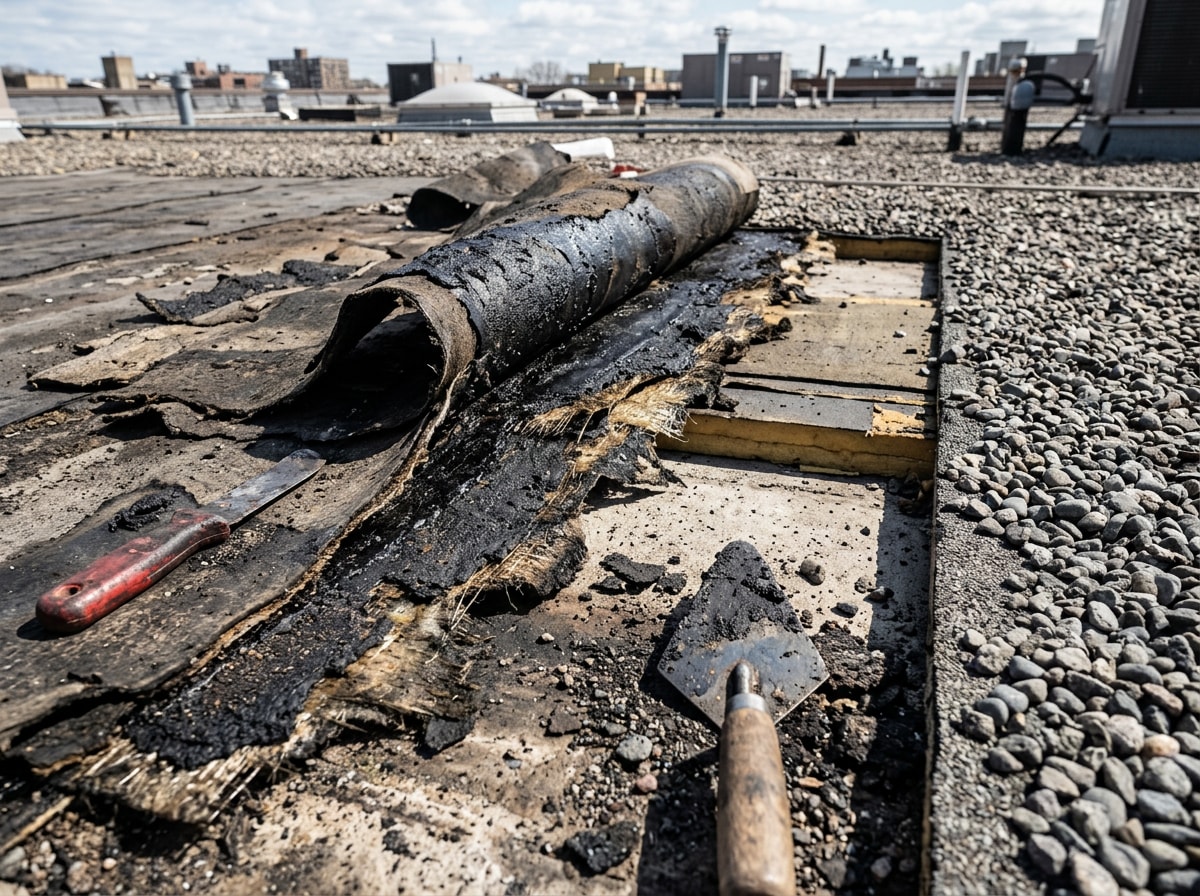
A built-up roof is a low-slope roofing system made of alternating layers of asphalt or bitumen and reinforcing felt, finished with a protective top layer of gravel or a mineral cap sheet. Most property owners know it by its nickname: the "tar and gravel roof." If you've ever walked across a flat commercial roof and noticed embedded stones instead of shingles or a smooth rubber membrane, you were standing on a BUR.
BUR systems are known for providing excellent protection due to their redundant nature, made of multiple layers of ply sheets and asphalt that give the building weather resistance, topped off with a cap sheet or a flood coat of asphalt and gravel. That layered redundancy is the entire point. Water has to work through several plies before it reaches the deck, which is why the surfacing layer is almost always the first thing to show wear. Gravel migration, cracking, and granule loss on the cap sheet are typically the earliest visible signs that repair work is coming.
In our own inspections across Dallas-Fort Worth, blistering on south- and west-facing cap sheets is consistently the first thing we flag, often weeks before a tenant ever reports a ceiling stain.
Signs Your Built-Up Roof Needs Repair
Not every imperfection on a BUR means trouble, but a few patterns should trigger a call:
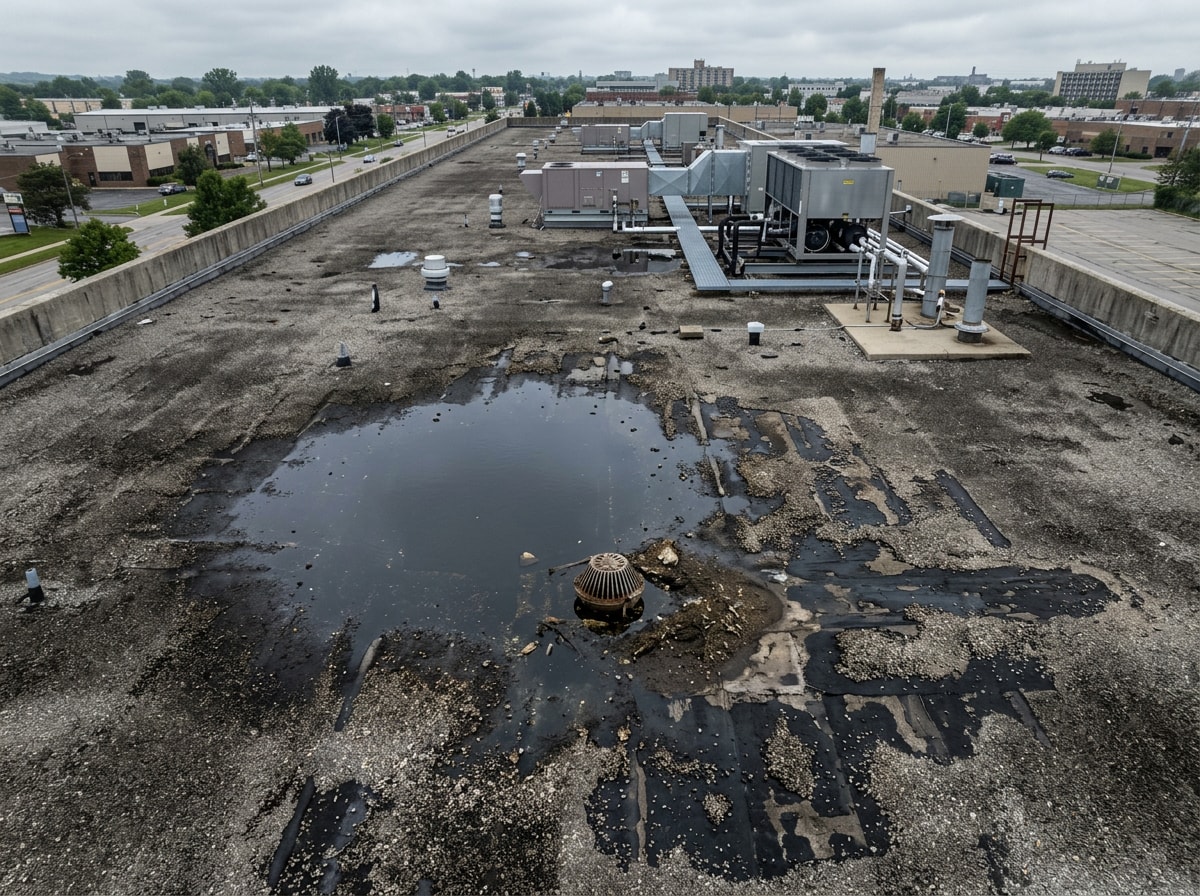
- Ponding water that lingers more than 48 hours after a rain event, especially near drains or low spots in the deck
- Blistering or bubbling in the surfacing, which signals trapped moisture or air between plies
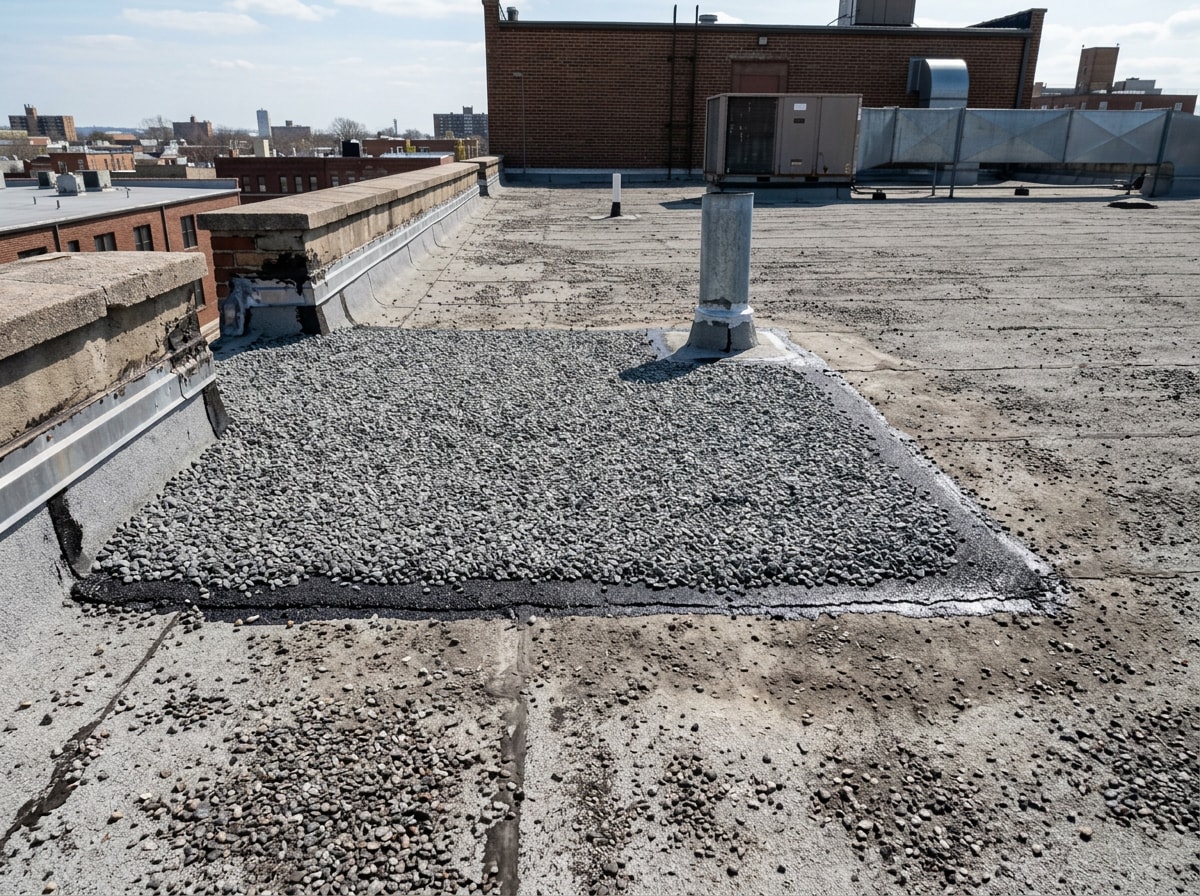
- Gravel loss exposing bare felt, often concentrated in high-traffic or high-wind areas
- Cracking or alligatoring in the bitumen, usually from prolonged UV exposure
- Soft or spongy decking underfoot, which points to a leak that has already reached the insulation
- Visible daylight or staining around flashing at parapets, drains, and rooftop penetrations
Catching these issues at the patch stage is far cheaper than waiting for a split membrane to reach the deck. If you're seeing any of the above, a roof inspection is the fastest way to find out whether you're looking at a minor repair or something larger.
Built-Up Roof Repair Cost in Dallas, TX
Built-up roof repair cost in Dallas tends to fall into tiers rather than one flat number:
| Repair Tier | Typical Scope | Cost Driver |
|---|---|---|
| Minor patch | Resealing a small blister, isolated flashing fix | Lowest cost per visit; limited material and labor |
| Section repair | Cutting back and rebuilding multiple plies | Higher cost due to layering and labor time |
| Flashing/penetration rebuild | Parapets, drains, HVAC curbs | Varies with access and detail complexity |
| Full coating or recover | Reflective coating over existing BUR | Priced by square footage, less than full tear-off |
Repair pricing depends more on damage size, roof access, and how many plies are affected than on a simple per-square-foot formula. Full BUR replacement, by contrast, typically costs more per square foot than single-ply systems because of the multi-layer build. An on-site assessment is the only reliable way to know which tier applies to your building, and you can request a free estimate before committing to any scope of work.
What's Included in Our Built-Up Roof Repair
BUR-specific repair work generally includes asphalt or coal tar patching over damaged sections, re-flashing around parapets, drains, and rooftop penetrations, and seam or ply repair where layers have separated. Because many Dallas commercial buildings mix roofing systems across additions or rooftop units, a repair crew also needs working knowledge of adjacent systems like TPO, EPDM, and modified bitumen for clean transitions and flashing details.
A typical visit starts with isolating the damaged area, removing compromised layers, and rebuilding the ply structure to match the surrounding roof before resealing and re-surfacing. Done correctly, this restores the membrane's redundancy without requiring a full tear-off. For buildings weighing a coating refresh instead of a patch repair, our roof repair services page covers how that decision gets made, and our roof replacement page outlines what a full system swap involves if the BUR has reached the end of its service life.
BUR vs. Single-Ply: Repair or Replace?
| Factor | Built-Up Roof (BUR) | TPO / EPDM (Single-Ply) |
|---|---|---|
| Lifespan | 20-30+ years | 15-25 years |
| Installation time | Longer, labor-intensive | Faster |
| Weight on structure | Heavier | Lighter |
| Repair approach | Patchable by ply/section | Seam/membrane patching |
| Upfront cost | Higher | Generally lower |
| Fire resistance | Strong | Varies by product |
GAF's own mod-bit and BUR systems are eligible for No Dollar Limit guarantees up to 35 years for qualifying installations , which is one reason well-maintained BUR roofs regularly outlast their original estimated service life rather than needing replacement on a fixed schedule. That's a detail worth knowing before a contractor steers you straight to a tear-off.
Dallas-Area Stressors on Flat Roofs
North Texas puts low-slope roofs through a specific mix of punishment: intense summer heat that drives surface blistering, rapid temperature swings that cause cracking in aging bitumen, sudden hailstorms, and ponding after heavy spring downpours. These conditions compound over time rather than causing sudden failure. A roof that's handled a decade of Texas summers without maintenance is far more likely to show cracking, granule loss, and weakened seams than one with a consistent inspection schedule.
Wind uplift is a related concern. Low-slope built-up, modified bitumen, and single-ply roof system metal edge securement must be designed and installed for wind loads and tested for resistance under current code , which is why a contractor familiar with local requirements will factor uplift resistance into a repair plan rather than treating every patch as one-size-fits-all. Most repair work beyond minor patching also requires a building permit from the local jurisdiction, so confirm that paperwork is handled before work begins.
Hot Asphalt Safety on Repair Jobs
If your repair calls for hot-mopped bitumen, the crew is working with material heated to several hundred degrees. Controlling exposure to asphalt fumes is done through engineering controls like heating systems that maintain a constant temperature and exhaust systems that evacuate fumes, along with administrative actions such as substituting low-fuming asphalt and limiting exposure time.
Crews are also expected to maintain kettle temperatures at least 25 degrees below the asphalt's flash point to prevent fires. A contractor who treats this as routine, rather than an afterthought, is one worth hiring.
Built-Up Roof Maintenance and Inspection
Routine BUR maintenance should include two inspections a year, typically spring and fall, plus a check after any major storm. Inspectors look for blistering, cracking in the surfacing, ponding water, and gravel loss exposing the felt layers underneath. A blister resealed during a routine visit might cost a fraction of what it costs to repair after it splits open and lets water into the deck. Inspection frequency is genuinely one of the few things property owners control that directly affects long-term repair costs.
Property owners managing coatings or recover projects alongside repair sometimes ask how waterproofing strategy changes for flat commercial roofs in general. Our commercial roof waterproofing guide breaks down coating options and protection layers that apply to BUR assemblies as well as other low-slope systems.
How Our Built-Up Roof Repair Process Works
- Free inspection – a technician documents visible damage and checks for hidden moisture with a moisture meter or core sample.
- Written estimate – scope and cost tier are outlined before any work starts.
- Scheduling – repairs are typically scheduled within a few days, weather and materials permitting.
- Repair execution – damaged plies are isolated, removed, and rebuilt to match the surrounding membrane.
- Warranty documentation – reputable contractors provide paperwork covering the repaired section, which matters if issues resurface nearby later.
Where We Provide Built-Up Roof Repair
Coverage extends across the Dallas-Fort Worth metroplex, including Dallas, TX, Fort Worth, TX, Plano, TX, Frisco, TX, McKinney, TX, Allen, TX, and Denton, TX. You can see our full range of low-slope and steep-slope services on the roofing contractor page.
Choosing a Contractor for BUR Repair
A short checklist before you hire: confirm the company is a licensed roofer in Dallas, ask about experience specifically with multi-ply systems, and get repair warranty terms in writing before work starts. A contractor willing to provide a free on-site assessment before quoting is usually a good early sign. Guaranteed roofing systems must be flashed according to manufacturer requirements, and the manufacturer is the sole judge of whether a roofing guarantee will be issued to cover any completed roof , so ask up front whether your repair will preserve any existing manufacturer guarantee or restart the clock on a new one.
Ready to get a repair plan started? Request a free estimate or visit our homepage to see the full scope of services we bring to Dallas-area property owners.
FAQ
How long does a built-up roof last?
A well-maintained built-up roof typically lasts 20 to 30 years. Ply count, installation quality, and climate exposure all affect how long a given roof performs before needing replacement, and some manufacturer-backed systems carry guarantees well beyond that range.
Can a built-up roof be repaired, or does it need full replacement?
In most cases, BUR can be repaired rather than replaced. Its layered design is one of its biggest advantages: isolated damage can usually be patched at the affected plies without tearing off the entire membrane, as long as the underlying deck is sound.
Is built-up roofing (BUR) still used today?
Yes. While single-ply systems dominate new commercial construction, BUR is still specified for certain projects and remains common on existing buildings across Dallas. Many property owners maintain and repair their current BUR system rather than switching entirely.
How much does built-up roof repair cost?
Built-up roof repair cost in Dallas varies based on damage size, roof access, and how many plies are affected, with minor patches costing far less than larger membrane section rebuilds. An on-site estimate is the most accurate way to get pricing for your specific building.
What causes a built-up roof to leak?
Most BUR leaks start at flashing details around parapets, drains, and rooftop penetrations, not in the open field of the membrane. Ponding water, gravel loss that exposes felt to UV, and blistering from trapped moisture are the next most common causes.
Does insurance cover built-up roof repair after a hailstorm?
It depends on your policy and whether you carry a wind/hail endorsement. A documented inspection report with photos of the damage, taken as soon as possible after the storm, is typically required to support a claim either way.