Commercial roofing services cover everything a business property needs to protect its building envelope: inspections, repairs, full replacements, and ongoing maintenance that keeps a manufacturer warranty valid. The right contractor treats your roof as a long-term asset, not a one-time job, and documents every visit so you're never guessing where your budget stands. This guide breaks down what each service actually includes, how systems compare, and when repair beats replacement, so you can vet quotes with confidence.
Commercial Roofing Services We Provide
A dependable commercial roofing contractor handles the entire lifespan of your roof, not just the moment something breaks. That means inspections to catch problems early, repairs that stop small issues from becoming expensive ones, replacement when a roof has genuinely reached the end of its service life, and maintenance programs that keep everything running in between.
Full-service roofing means one point of contact for all of it, instead of juggling separate vendors for each stage.
Commercial Roof Inspections
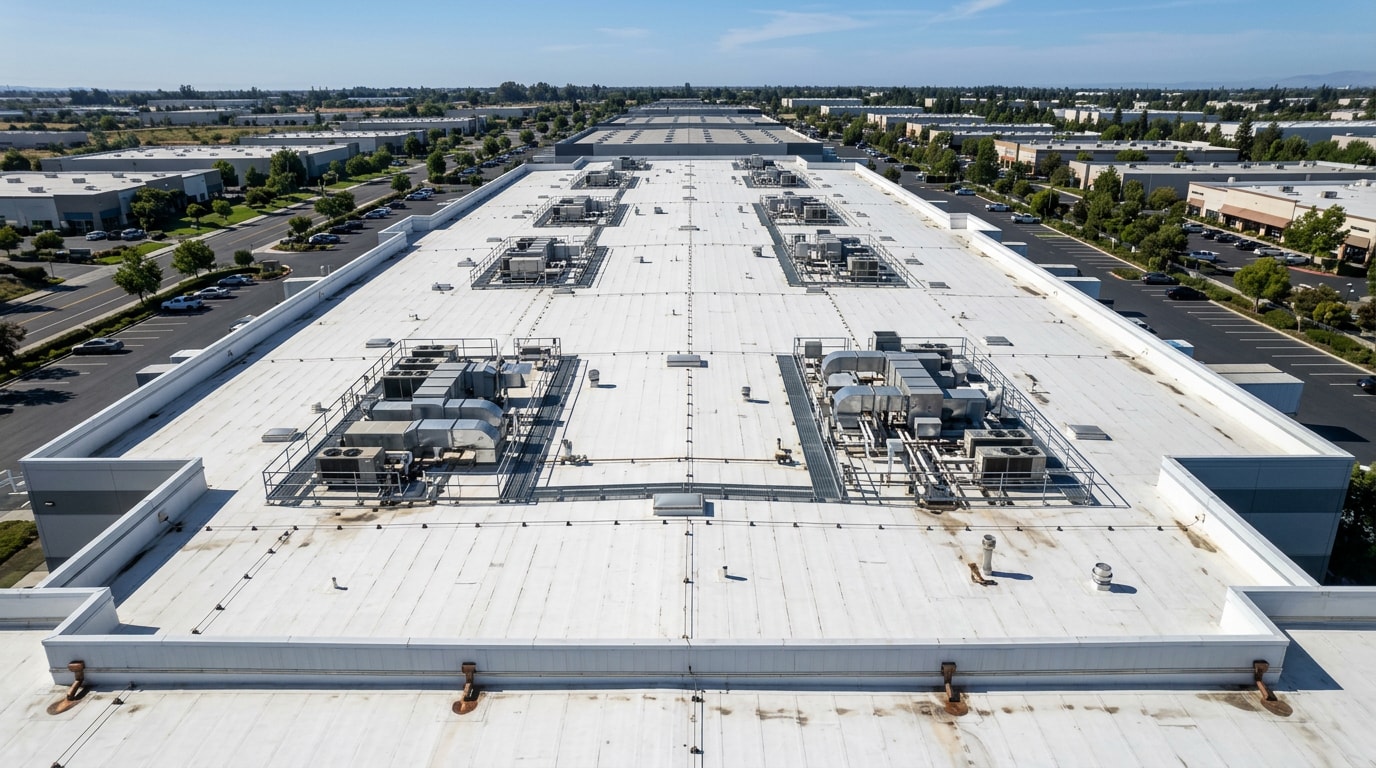
A commercial roof inspection is a systematic check of the membrane, seams, flashing, drains, and penetrations. Technicians look for ponding water, punctures, seam separation, and deteriorating flashing, then document findings in a written report.
Many contractors now pair drone or visual surveys with walked inspections for faster, lower-risk diagnostics on larger roofs. Most commercial roofs benefit from inspection at least twice a year, typically one in spring and one in fall, with additional reviews after major storms and before any property transaction. That cadence comes from the National Roofing Contractors Association, the industry's leading trade group.
Commercial Roof Repair
Most commercial roof repair calls start the same way: a leak, storm damage, a punctured membrane, or a seam that has pulled apart. Flashing repair around rooftop equipment and parapet walls is one of the most common fixes, since these transition points fail more often than the field membrane itself.
Repair is generally prioritized over replacement whenever the damage is localized and the roof still has usable life left. In cases involving active leaks, an emergency roof repair crew should be able to stabilize the area the same day.
Commercial Roof Replacement
Commercial roof replacement becomes the right call when damage is widespread, the membrane is past its expected service life, or repairs are no longer cost-effective. A full replacement involves tear-off down to the deck followed by new installation of an updated system.
In some cases a recover or layover approach can replace a full tear-off where code and existing roof condition allow it. This re-roofing option can reduce cost and project time, though it is not suitable for every building. For low-slope buildings specifically, a flat roof replacement follows a different sequencing than steep-slope tear-offs.
Commercial Roof Maintenance Programs
A commercial roof maintenance program typically bundles scheduled inspections, debris and drain clearing, flashing checks, and written documentation that supports your manufacturer warranty. This is a recurring routine built around your specific roof system, not a one-time service.
The business case is straightforward: consistent preventive maintenance catches small issues before they escalate, which reduces emergency repair calls and extends roof lifespan.
Commercial Roofing Systems We Install
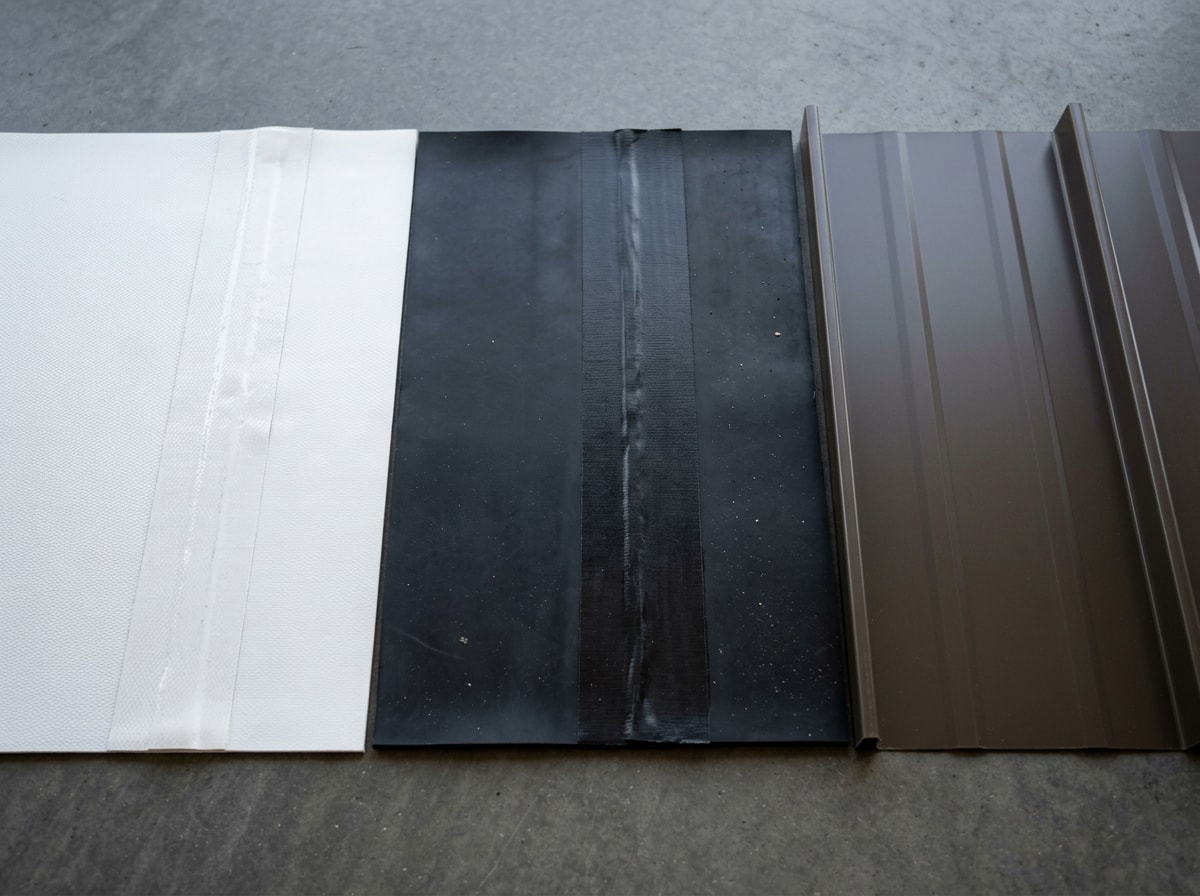
Material choice depends on your building's slope, size, budget, and local climate. There is no single "best" commercial roofing system, only the system that fits your building and how it's used.
| System | Common Material | Best For | Typical Lifespan |
|---|---|---|---|
| Single-ply (TPO/PVC) | Reflective white membrane | Flat roofs, energy-conscious buildings | 20-30 years |
| Single-ply (EPDM) | Black rubber membrane | Budget-conscious flat roofs | 20-25 years |
| Metal | Standing seam or screw-down panels | Steep or low-slope, long-term durability | 40-60 years |
| Modified bitumen | Asphalt-based rolled membrane | Low-slope roofs needing impact resistance | 15-20 years |
Choosing the Right System for Your Building
The best commercial roofing material depends on roof slope, foot traffic, and rooftop equipment load rather than personal preference. Low-slope roofs with minimal foot traffic often do well with standard single-ply membranes, while roofs with heavy rooftop equipment or frequent maintenance access may need a more puncture-resistant system or added walkway pads. Properties weighing a metal roofing installation over a membrane system should also factor in the building's structural load capacity before committing.
Reflective membranes like TPO and PVC can also reduce cooling costs in warmer climates. A cool roof is made of a material or has a coating that lowers the roof surface temperature, decreasing the amount of heat that passes into a home or commercial building. That matters for building type and long-term energy bills alike, as confirmed by ENERGY STAR's cool roof guidance.
Commercial Roof Repair vs. Replacement: How to Decide
The repair-versus-replacement decision comes down to a few concrete factors: how widespread the damage is, whether the insulation underneath is still dry and functional, the roof's age relative to its expected lifespan, and the cost-per-year of keeping the current system versus starting fresh.
| Scenario | Recommended Action | Rough Trade-Off |
|---|---|---|
| Isolated leak, roof under 10 years old | Repair | Low cost, extends life several more years |
| Multiple leaks, wet insulation found | Replacement likely | Repairs become recurring and costly |
| Roof near or past expected lifespan | Replacement | Higher upfront cost, resets warranty and lifespan |
| Storm damage, otherwise sound roof | Repair | Insurance may offset cost |
A proper roof condition assessment should always precede this decision, since remaining useful life varies by system and maintenance history. On flat buildings, our crews frequently find that undetected ponding, not storm damage, is the leading cause of early membrane failure across humid North Texas summers.
Ready for a straightforward number instead of guesswork? Get a free estimate before the next storm season puts a borderline roof over the edge.
How Long Does a Commercial Roof Replacement Take?
Replacement timelines vary by building size and system type, but most projects run anywhere from a few days for smaller roofs to several weeks for large, complex buildings. Weather delays, multiple existing layers, and tear-off complexity can all extend the schedule.
Safety requirements add to the timeline too, and they're often left out of online estimates. OSHA requires fall protection on all roofs, including flat commercial roofs, when working six feet or more above a lower level with unprotected sides or edges. Per OSHA's fall protection standard, that typically means guardrails, safety nets, or personal fall arrest systems stay set up for the full duration of a replacement, which is a cost and schedule factor many quotes skip over.
Commercial Roof Maintenance Checklist
A documented maintenance routine does double duty: it protects the physical roof and it protects your warranty coverage, since many manufacturers require proof of scheduled maintenance.
Key Maintenance Items
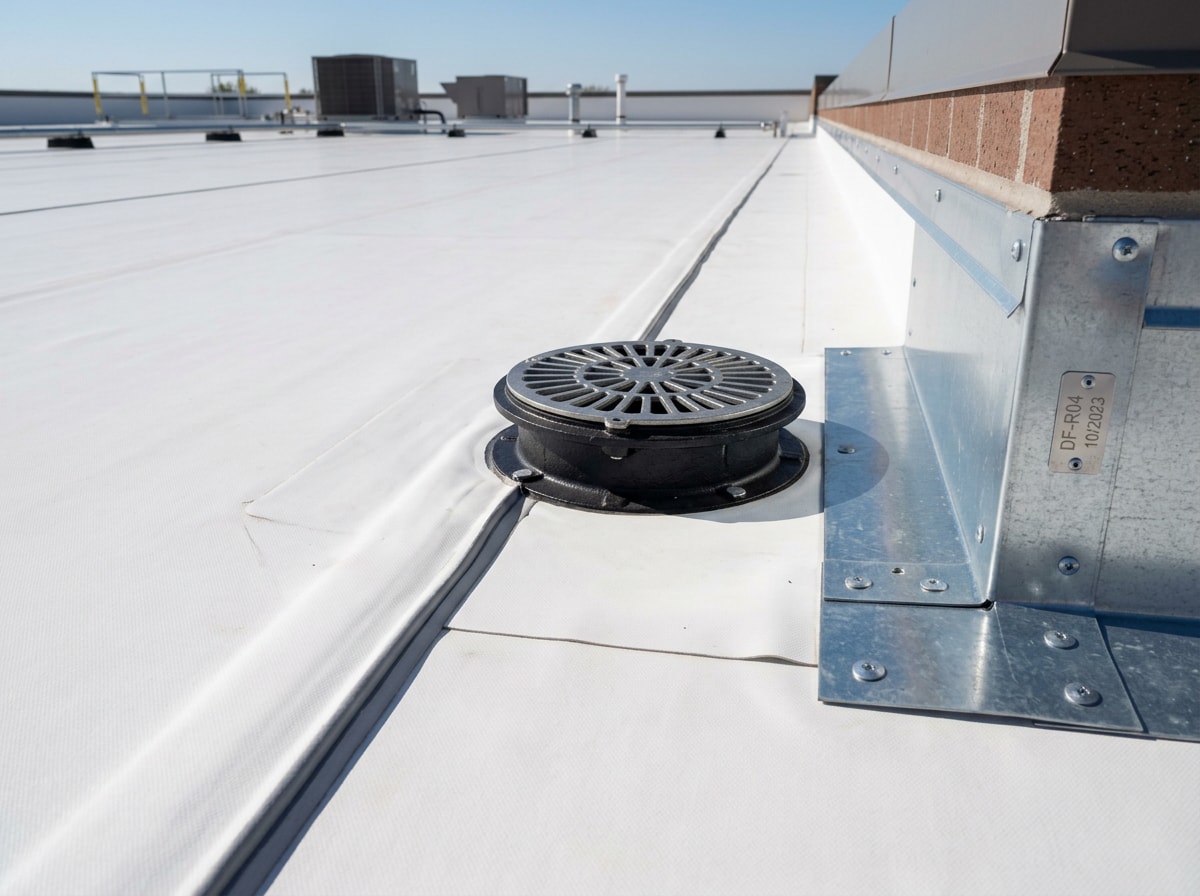
- Clear roof drains, scuppers, and gutters of debris
- Inspect flashing around every roof penetration
- Check membrane seams for separation or blistering
- Remove debris after storms before it traps moisture
- Log every finding in writing for warranty documentation
- Schedule seasonal checks ahead of winter and after major weather events
Why Hire a Full-Service Commercial Roofing Contractor
A single roofing contractor handling inspection, repair, replacement, and maintenance means consistent documentation, one warranty point of contact, and crews who already know your roof's history when something goes wrong. That continuity shortens response times on emergency calls and keeps small issues from falling through the cracks between vendors.
We provide commercial roofing services for business properties throughout Frisco, Dallas, McKinney, Plano, Fort Worth, Denton, and Allen, TX. Building owners researching waterproofing options for membrane roofs can also review our commercial roof waterproofing guide for a closer look at protecting flat roof systems between replacements.
Visit our homepage to see the full range of exterior services we handle beyond the roof.
FAQ
How Often Should Commercial Roofs Be Inspected?
Most commercial roofs should be inspected twice a year, in spring and fall, with an added inspection after any major storm to catch storm-related damage early.
What's the Average Lifespan of a Commercial Roof?
Lifespan varies by system: EPDM and TPO typically last 20 to 25 years and PVC can reach 20 to 30 years. According to the NRCA, a well-maintained commercial roof lasts approximately 21 years on average, with maintenance history and local climate as the biggest swing factors.
Do You Offer Emergency Commercial Roof Repair?
Yes. Emergency repair is available for active leaks and storm damage. Cover any exposed areas if it's safe to do so and call for service as soon as possible.
How Much Does a Commercial Roof Replacement Cost?
Cost depends on roof size, chosen material, and project complexity. See the repair vs. replacement section above for how those factors shape the decision.
Can You Repair Storm Damage on Commercial Roofs?
Yes, storm damage repair is a core service, and documentation can be provided to support insurance claims. Contact us for a quote.
Can a Commercial Roof Inspection Be Done in Winter?
Yes, inspections can happen in winter, but spring and fall remain preferable since snow and ice can hide membrane damage that's easier to spot in milder weather.
How Soon Should a New Commercial Roof Get Its First Inspection?
Most manufacturer warranties call for an inspection within the first 12 months of installation to catch any installation-related issues before the warranty clock erases the paper trail.
About the Author
This guide was reviewed by the commercial roofing team at Project Revitalize, a licensed and insured roofing and exterior remodeling contractor serving the Dallas-Fort Worth metro. Questions about your roof? Reach out directly for a free, no-obligation estimate.